
The Executive Summary of
Payoff
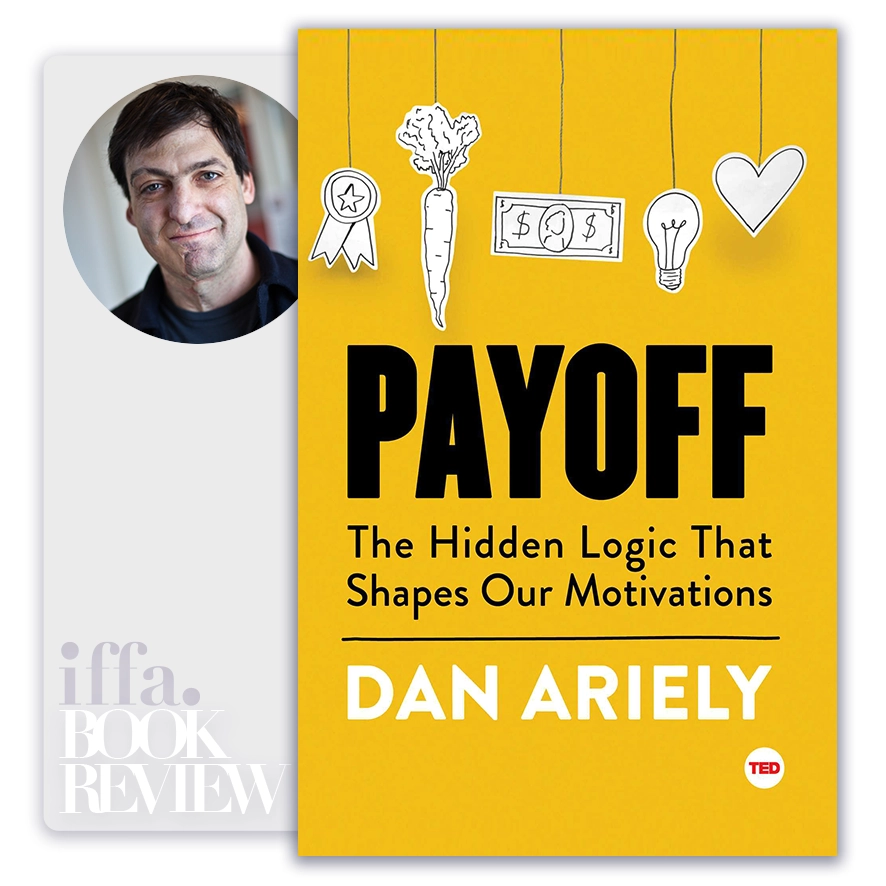
by Dan Ariely
Summary Overview:
Most organizations still operate on a flawed assumption: people work primarily for money. Compensation, bonuses, KPIs, and targets dominate management thinking, while deeper human drivers are treated as secondary or “soft.” Payoff dismantles this assumption with behavioral evidence, showing that meaning, progress, recognition, and purpose often matter more than pay in driving sustained performance.
This book matters because many organizations suffer from disengagement, burnout, quiet quitting, and declining trust—despite competitive compensation. Ariely reveals that these problems are not failures of work ethic, but failures of motivation design. For executives, HR leaders, founders, policymakers, and boards, Payoff provides a scientifically grounded framework for designing work that people actually care about, without relying on ever-increasing financial incentives.
At an executive level, the book reframes a critical question:
What truly motivates people to do great work—and why do many management practices destroy that motivation?
About The Author
Dan Ariely is one of the world’s most influential behavioral economists, known for his research on irrational decision-making, motivation, ethics, and human behavior. His work bridges academic rigor and real-world application, making it widely used by global organizations and policymakers.
In Payoff, Ariely synthesizes years of experimental research to challenge traditional incentive-based management, offering leaders a behavioral science lens on motivation that is practical, counterintuitive, and deeply relevant.
Core Idea:
At the heart of Payoff lies a simple but disruptive insight:
Money is a weak and unreliable motivator once basic needs are met; meaning and purpose are far more powerful and durable drivers of performance.
Ariely argues that people are motivated by a combination of:
- Meaning – feeling that work matters
- Progress – seeing forward movement
- Recognition – knowing effort is noticed
- Ownership – feeling responsible for outcomes
- Purpose – contributing to something larger
People don’t just want to be paid, they want to matter
Key Concepts:
- Meaning Outperforms Money
Through experiments, Ariely shows that people:
- Work harder when their work has meaning
- Quit sooner when work feels pointless
- Accept lower pay for meaningful work
Once pay is “fair enough,” meaning becomes the primary motivator. This explains why high-paying roles still suffer from burnout and attrition.
- Acknowledgment Is a Powerful Motivator
People care deeply about whether their effort is seen and acknowledged.
Ariely demonstrates that:
- Simple recognition increases effort
- Ignoring work reduces motivation dramatically
- Indifference is more demotivating than criticism
Being ignored is more demoralizing than being corrected. Managers often underestimate the motivational power of basic acknowledgment.
- Seeing Progress Sustains Effort
Motivation thrives on visible progress.
When people:
- See tasks moving forward
- Understand how their work fits the whole
- Observe tangible outcomes
They persist longer and perform better.
Progress fuels motivation more reliably than rewards. Leaders must design workflows that make progress visible.
- Ownership Increases Commitment
People value work more when they feel ownership over it.
Ariely shows that:
- Autonomy increases engagement
- Participation strengthens responsibility
- Control enhances pride and care
People protect what they help create. This insight applies directly to empowerment, decentralization, and agile teams.
- Incentives Can Crowd Out Motivation
Excessive focus on pay and bonuses can:
- Narrow attention
- Reduce creativity
- Undermine intrinsic motivation
When people work for money alone, they stop working for meaning. This is especially damaging in knowledge work, leadership, and innovation roles.
- Work Without Meaning Feels Like Punishment
Ariely’s experiments show that meaningless tasks:
- Feel more exhausting
- Are abandoned sooner
- Reduce willingness to help
The absence of meaning turns effort into suffering. This explains disengagement in highly structured but purposeless roles.
- Purpose Must Be Lived, Not Declared
Mission statements alone do not create meaning.
Meaning emerges when:
- Leaders model purpose
- Decisions reflect stated values
- Trade-offs are transparent
Purpose is credible only when it shapes real decisions. Symbolic purpose without behavioral alignment breeds cynicism.
- Motivation Is Contextual, Not Universal
Different people are motivated by different combinations of:
- Autonomy
- Mastery
- Purpose
- Recognition
One-size-fits-all motivation systems inevitably fail. Leaders must design flexible motivation environments, not rigid formulas.
- Ethical Behavior Is Linked to Meaning
Ariely connects lack of meaning with ethical drift.
When work feels pointless:
- Rule-breaking increases
- Justifications become easier
- Moral disengagement rises
People are more ethical when their work feels meaningful. Meaning acts as an ethical anchor.
- Motivation Is a Design Problem
Ariely emphasizes that motivation is not a personality trait.
If people are disengaged, the system is poorly designed. Leaders must redesign work, not lecture workers.
Once pay is “fair enough,” meaning becomes the primary motivator.
Executive Insights:
Payoff reframes leadership as motivation architecture, not incentive engineering.
Strategic Implications for Executives and Boards:
- Pay motivates entry—but meaning sustains performance
- Recognition costs little and yields high returns
- Purpose reduces burnout and turnover
- Poor incentive design destroys intrinsic motivation
- Ethical culture depends on meaningful work
- Motivation is a leadership responsibility, not an HR program
Organizations that rely solely on financial incentives buy effort but lose commitment.
Actionable Takeaways:
For Executives
- Ensure pay is fair—then stop over-optimizing it
- Make purpose visible in daily decisions
- Model appreciation and acknowledgment
- Protect autonomy where possible
- Design roles around contribution, not tasks
For HR & People Leaders
- Shift from incentive-heavy to meaning-rich systems
- Redesign performance reviews to emphasize growth
- Train managers in recognition and feedback
- Measure engagement drivers, not just compensation
Final Thoughts:
Payoff delivers a quietly radical message: people are not machines that run on money alone. Dan Ariely shows that meaning, recognition, and purpose are not luxuries—they are core drivers of performance, ethics, and resilience.
For leaders, the lesson is clear:
If you want people to work harder, pay them fairly.
If you want them to care, help them find meaning.
The organizations that thrive in the long run will not be those that pay the most—but those that make work worth doing.
The ideas in this book go beyond theory, offering practical insights that shape real careers, leadership paths, and professional decisions. At IFFA, these principles are translated into executive courses, professional certifications, and curated learning events aligned with today’s industries and tomorrow’s demands. Discover more in our Courses.
Applied Programs

- Course Code : SBM-409
- Delivery : In-class / Virtual / Workshop
- Duration : 2-4 Days
- Venue: DUBAI HUB

- Course Code : PMA-613
- Delivery : In-class / Virtual / Workshop
- Duration : 3-5 Days
- Venue: DUBAI HUB

- Course Code : CIF-505
- Delivery : In-class / Virtual / Workshop
- Duration : 3-5 Days
- Venue: DUBAI HUB

- Course Code : CIF-512
- Delivery : In-class / Virtual / Workshop
- Duration : 2-4 Days
- Venue: DUBAI HUB
Related Books