

The Executive Summary of
The Culture Code
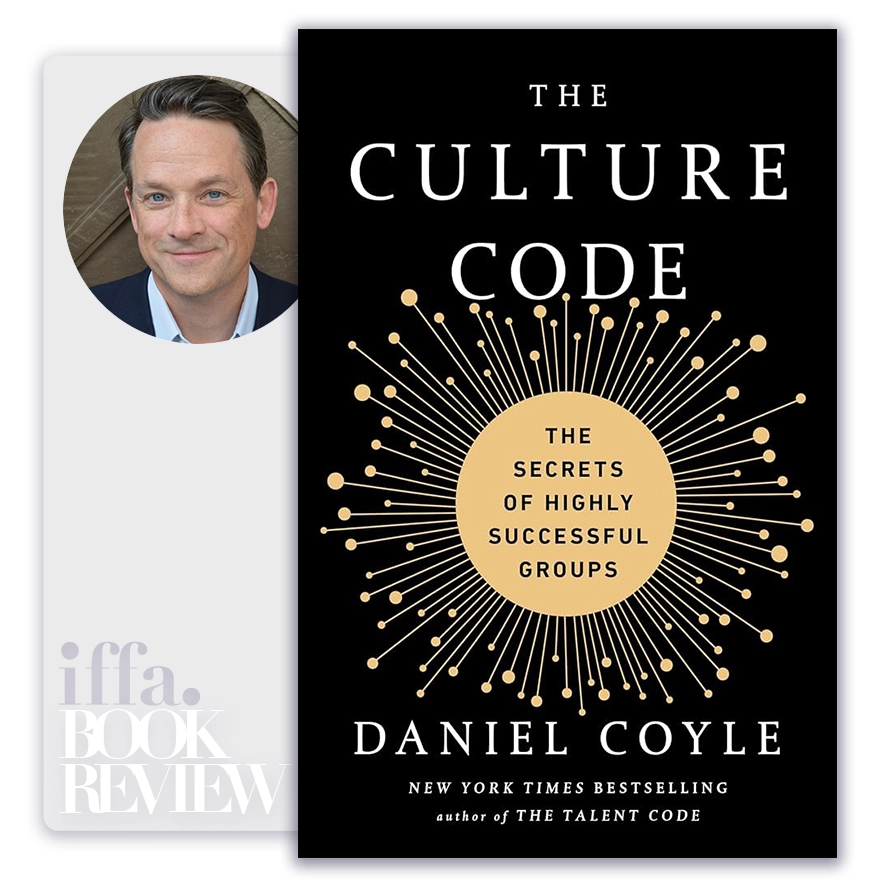
by Daniel Coyle
Summary Overview:
In high-performing organizations, culture often determines outcomes more reliably than strategy alone. The Culture Code examines how successful groups generate trust, cohesion, and sustained performance across industries ranging from elite sports teams to innovative corporations. Daniel Coyle argues that culture is not accidental chemistry, but a set of behaviors that signal belonging and shared purpose.
For executives navigating complexity and scale, this book sharpens organizational alignment, psychological safety, and leadership signaling. It reframes culture not as abstract values posted on walls, but as daily behavioral patterns embedded in interaction. In environments where talent mobility is high and collaboration is essential, the ability to cultivate cohesive culture becomes a structural advantage. The book remains relevant because it translates intangible group dynamics into observable patterns.
About The Author
Daniel Coyle is a journalist and author who has studied talent development, group dynamics, and performance psychology. Through immersive research across high-performing organizations, he analyzes how collective excellence emerges from repeated behavioral signals rather than individual brilliance. His distinctive perspective synthesizes neuroscience, sociology, and field observation, framing culture as a measurable pattern of interaction rather than an abstract ideal. His approach emphasizes practical behavioral insight over theoretical speculation.
Core Idea:
The central thesis of The Culture Code is that strong cultures are built through consistent signals of safety, vulnerability, and shared purpose. Coyle argues that trust does not arise from formal policy but from micro-behaviors that communicate belonging and mutual commitment.
At its foundation, the book asserts that culture is created through repeated interactions that signal “you are safe here” and “we are connected in pursuit of a common goal.” When safety exists, vulnerability becomes possible. When vulnerability is modeled, learning accelerates. When purpose is clarified, effort aligns. Sustained group success depends on this triad of safety, vulnerability, and purpose.
Vulnerability is strength when modeled by leaders.
Key Concepts:
- Building Safety
Psychological safety is the foundation of high performance. Coyle emphasizes that individuals must feel secure to contribute fully.
- Inclusion signals strengthen belonging
- Active listening reinforces respect
- Consistent responsiveness builds trust
When safety is present, creativity expands. Fear constrains collaboration; safety unlocks it.
- The Role of Vulnerability
Vulnerability fosters trust and accelerates learning. Contrary to traditional leadership norms, Coyle highlights that admitting uncertainty invites collective intelligence.
- Admitting mistakes reduces defensive posturing
- Transparency encourages reciprocity
- Shared struggle deepens cohesion
Teams grow stronger when leaders model openness. Strength emerges from collective honesty.
- Establishing Purpose
Clear purpose aligns action. Coyle observes that high-performing groups continuously reinforce why they exist.
- Purpose clarifies priorities
- Clarity reduces friction
- Reduced friction increases efficiency
Strategic focus requires constant reinforcement. Purpose directs effort with precision.
- Micro-Signals and Interaction
Culture is built through small behaviors. Eye contact, tone, follow-up, and acknowledgment shape group dynamics.
- Small signals compound trust
- Inconsistency erodes credibility
- Consistency builds cohesion
Leaders must be attentive to micro-interactions. Behavior communicates culture more than policy.
- The Loop of Belonging
Belonging is reinforced through active engagement. Coyle describes cycles of feedback that strengthen connection.
- Invitation signals inclusion
- Response signals respect
- Reciprocity signals commitment
Repeated loops deepen relational capital. Connection multiplies performance.
- Learning from Failure
High-performing cultures treat mistakes as data. Blame-focused environments inhibit experimentation.
- Fear suppresses reporting
- Suppression hides risk
- Transparency improves correction
Learning-oriented cultures adapt more rapidly. Openness accelerates resilience.
- Leadership Signaling
Leaders are the primary transmitters of culture. Their behavior establishes norms.
- Visible consistency strengthens trust
- Emotional steadiness stabilizes teams
- Humility encourages collaboration
Cultural health depends on leadership modeling. Signal discipline defines credibility.
- Clear Expectations and Standards
High standards coexist with safety. Coyle notes that strong cultures combine warmth with accountability.
- Clarity reduces ambiguity
- Accountability reinforces excellence
- Balanced expectations prevent complacency
Performance thrives when expectations are explicit. Warmth and rigor are complementary.
- Repetition and Ritual
Culture solidifies through repeated reinforcement. Rituals and storytelling embed values.
- Stories transmit norms
- Rituals strengthen identity
- Identity sustains cohesion
Consistency anchors culture. Repetition stabilizes shared meaning.
- Scaling Culture
Growth tests cultural coherence. As organizations expand, preserving safety and purpose requires intentional effort.
- Expansion increases complexity
- Complexity strains communication
- Structured reinforcement preserves alignment
Institutionalizing cultural behaviors sustains performance. Scale demands cultural clarity.
Culture is transmitted through small, repeated signals.
Executive Insights:
At the executive level, The Culture Code reframes culture as operational infrastructure rather than abstract philosophy. Incentive systems that neglect psychological safety risk suppressing innovation. Long-term value creation depends on fostering trust, modeling vulnerability, and reinforcing purpose.
Judgment improves when leaders recognize the influence of micro-behaviors on macro outcomes. Risk exposure decreases when teams feel safe reporting issues early. Sustainable performance requires embedding behavioral norms that promote cohesion and accountability. Organizations that cultivate strong cultures outperform those relying solely on structural strategy.
Actionable Takeaways:
Culture must be designed through consistent behavioral signals.
- Start reinforcing psychological safety in daily interactions
- Stop equating authority with emotional distance
- Reframe vulnerability as leadership strength
- Embed clear purpose statements into communication routines
- Reduce blame-oriented responses to mistakes
- Encourage transparent dialogue across hierarchy levels
- Align performance standards with supportive feedback
- Protect rituals that reinforce shared identity
Final Thoughts:
The Culture Code reveals that high performance is rarely accidental. It emerges from deliberate cultivation of trust, vulnerability, and shared mission.
Long-term value creation depends not only on competitive strategy but on relational capital within teams. Institutions endure when safety coexists with accountability and purpose guides effort. In the end, the strongest competitive advantage lies in a culture where people feel secure enough to strive, honest enough to learn, and united enough to win together.
The ideas in this book go beyond theory, offering practical insights that shape real careers, leadership paths, and professional decisions. At IFFA, these principles are translated into executive courses, professional certifications, and curated learning events aligned with today’s industries and tomorrow’s demands. Discover more in our Courses.
Applied Programs

- Course Code : SBM-409
- Delivery : In-class / Virtual / Workshop
- Duration : 2-4 Days
- Venue: DUBAI HUB

- Course Code : PMA-613
- Delivery : In-class / Virtual / Workshop
- Duration : 3-5 Days
- Venue: DUBAI HUB

- Course Code : CIF-505
- Delivery : In-class / Virtual / Workshop
- Duration : 3-5 Days
- Venue: DUBAI HUB

- Course Code : CIF-512
- Delivery : In-class / Virtual / Workshop
- Duration : 2-4 Days
- Venue: DUBAI HUB
Related Books