
The Executive Summary of
The 7 Habits of Highly Effective People
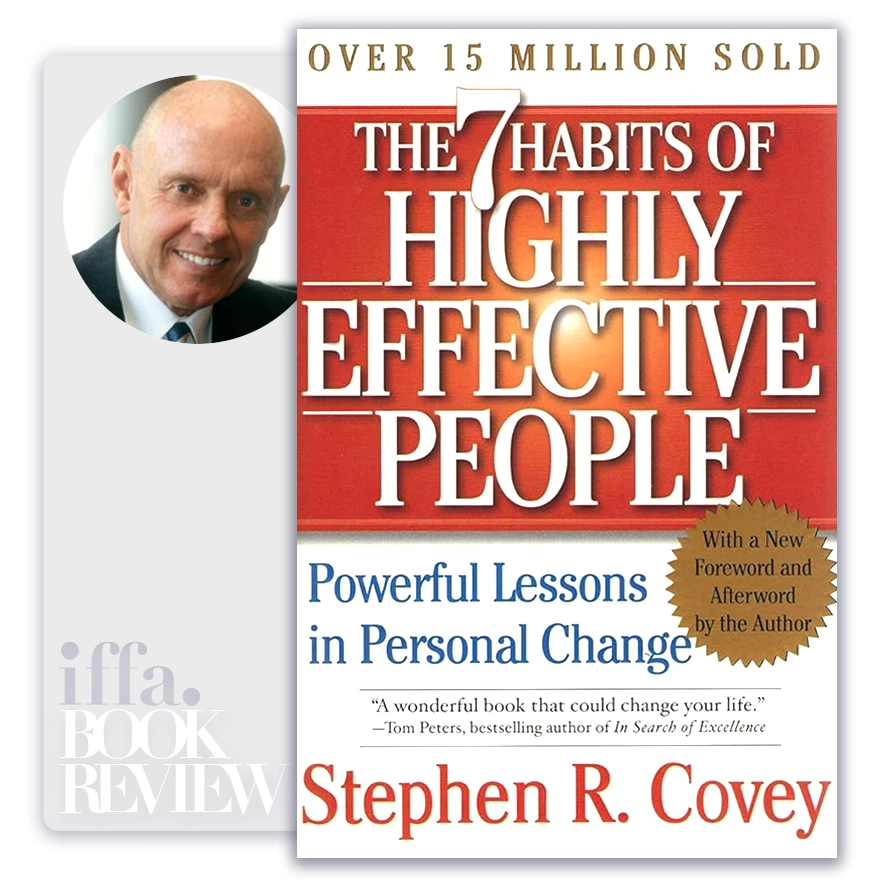
by Stephen R. Covey
Summary Overview:
In a world saturated with productivity techniques and performance optimization tools, The 7 Habits of Highly Effective People remains influential because it addresses a deeper variable: character before competence. Stephen R. Covey argues that sustainable effectiveness does not arise from tactics alone, but from principled internal alignment.
For executives and institutional leaders, this work sharpens judgment, self-governance, trust-building, and long-term relational capital. It reframes leadership as stewardship rooted in values rather than charisma. In complex systems where trust is fragile and incentives can distort behavior, principle-centered conduct becomes a strategic asset. The relevance of this book endures because it integrates personal discipline with institutional effectiveness.
About The Author
Stephen R. Covey was an educator, organizational consultant, and leadership thinker whose work focused on principle-centered leadership and character-based effectiveness. With academic training and decades of advisory experience across corporations and public institutions, he developed a framework that connects personal integrity with organizational performance. His perspective is distinctive in that it treats effectiveness as a function of internal values translated into consistent behavior, rather than situational technique.
Core Idea:
The central thesis of The 7 Habits of Highly Effective People is that lasting effectiveness emerges from alignment with universal principles rather than reactive behavior. Covey argues that many individuals and institutions operate from personality-driven habits shaped by external pressures. True effectiveness requires internal transformation.
At its foundation, the book asserts that private victories precede public victories. Self-mastery, responsibility, and clarity of purpose form the groundwork for leadership influence. Without internal alignment, external success becomes unstable. Effectiveness, therefore, is cumulative and character-based, built on disciplined habits that compound over time.
Character shapes destiny more reliably than strategy alone.
Key Concepts:
- Proactivity as Responsibility
Effectiveness begins with ownership of response. Covey emphasizes that individuals cannot control circumstances, but they can control their reactions.
- Reactive behavior amplifies volatility
- Proactive behavior stabilizes judgment
- Stability strengthens credibility
Organizations benefit when leaders assume responsibility rather than assign blame. Agency enhances resilience.
- Begin with the End in Mind
Clarity of purpose guides disciplined action. Covey argues that defining desired outcomes shapes present decisions.
- Vision aligns behavior
- Alignment reduces distraction
- Reduced distraction increases coherence
Strategic direction requires intentional design. Purpose prevents drift.
- Put First Things First
Prioritization reflects values. Covey distinguishes urgent tasks from important ones.
- Urgency creates pressure
- Importance creates progress
- Confusing the two erodes long-term impact
Leaders must allocate time to strategic priorities rather than operational noise. Focus compounds effectiveness.
- Think Win-Win
Abundance thinking strengthens relationships. Covey contrasts competitive zero-sum mentalities with collaborative opportunity.
- Win-lose breeds distrust
- Lose-win breeds resentment
- Win-win builds durable alliances
Strategic partnerships depend on mutual benefit. Trust amplifies influence.
- Seek First to Understand, Then to Be Understood
Listening precedes persuasion. Covey highlights empathetic understanding as foundational.
- Assumption distorts communication
- Understanding clarifies context
- Context refines response
Effective leaders diagnose before prescribing. Listening strengthens decision quality.
- Synergy as Collective Intelligence
Synergy arises from valuing differences. Covey argues that diverse perspectives create superior outcomes.
- Homogeneity limits creativity
- Respect fosters collaboration
- Collaboration enhances innovation
Strategic advantage often emerges from integrating contrasting viewpoints. Diversity managed well multiplies strength.
- Sharpen the Saw
Renewal sustains effectiveness. Covey emphasizes continuous improvement across physical, mental, emotional, and spiritual dimensions.
- Neglect erodes capacity
- Renewal restores clarity
- Clarity enhances performance
Leaders who invest in personal renewal avoid burnout and stagnation. Sustained growth requires disciplined replenishment.
- Principle-Centered Leadership
Principles anchor consistency. Covey stresses that values must guide behavior under pressure.
- Situational ethics breed inconsistency
- Consistency builds trust
- Trust strengthens institutional stability
Organizations grounded in principles withstand volatility. Integrity protects long-term credibility.
- Emotional Bank Account
Trust accumulates through consistent behavior. Covey frames relationships as deposits and withdrawals.
- Small commitments build confidence
- Broken promises erode influence
- Transparency strengthens bonds
Institutional culture depends on accumulated trust. Reputation compounds over time.
- Habit Formation as Discipline
Habits compound into destiny. Covey’s framework emphasizes that small, consistent behaviors shape long-term trajectory.
- Discipline shapes character
- Character shapes decisions
- Decisions shape outcomes
Sustained effectiveness is incremental rather than dramatic. Consistency outperforms intensity.
Private discipline precedes public credibility.
Executive Insights:
At the executive level, The 7 Habits of Highly Effective People reframes performance as the product of disciplined character. Incentive systems that prioritize short-term gains over integrity undermine institutional trust. Long-term value creation depends on embedding principle-centered thinking into governance and leadership development.
Judgment strengthens when leaders clarify purpose before acting. Risk exposure decreases when trust-based relationships reduce friction. Organizations that cultivate proactivity, empathy, and disciplined prioritization develop durable competitive advantage. Effectiveness compounds when internal alignment matches external ambition.
Actionable Takeaways:
Effectiveness must be institutionalized as a habit framework, not treated as episodic inspiration.
- Start embedding principle-centered leadership into executive development
- Stop rewarding reactive urgency over strategic importance
- Reframe performance metrics to include trust and alignment
- Embed clear purpose statements into decision-making processes
- Encourage win-win negotiation frameworks
- Reduce communication driven by assumption rather than understanding
- Invest in renewal and continuous learning at leadership levels
- Align incentives with long-term character-based outcomes
Final Thoughts:
The 7 Habits of Highly Effective People endures because it integrates internal discipline with external influence. Its strategic message is clear: effectiveness begins within.
Long-term value creation depends on leaders who cultivate character alongside capability. Institutions endure when trust, clarity, and disciplined prioritization guide action. In the end, the most sustainable competitive advantage is not speed or scale, but integrity practiced consistently over time.
The ideas in this book go beyond theory, offering practical insights that shape real careers, leadership paths, and professional decisions. At IFFA, these principles are translated into executive courses, professional certifications, and curated learning events aligned with today’s industries and tomorrow’s demands. Discover more in our Courses.
Applied Programs

- Course Code : SBM-409
- Delivery : In-class / Virtual / Workshop
- Duration : 2-4 Days
- Venue: DUBAI HUB

- Course Code : PMA-613
- Delivery : In-class / Virtual / Workshop
- Duration : 3-5 Days
- Venue: DUBAI HUB

- Course Code : CIF-505
- Delivery : In-class / Virtual / Workshop
- Duration : 3-5 Days
- Venue: DUBAI HUB

- Course Code : CIF-512
- Delivery : In-class / Virtual / Workshop
- Duration : 2-4 Days
- Venue: DUBAI HUB
Related Books