
The Executive Summary of
Shoe Dog
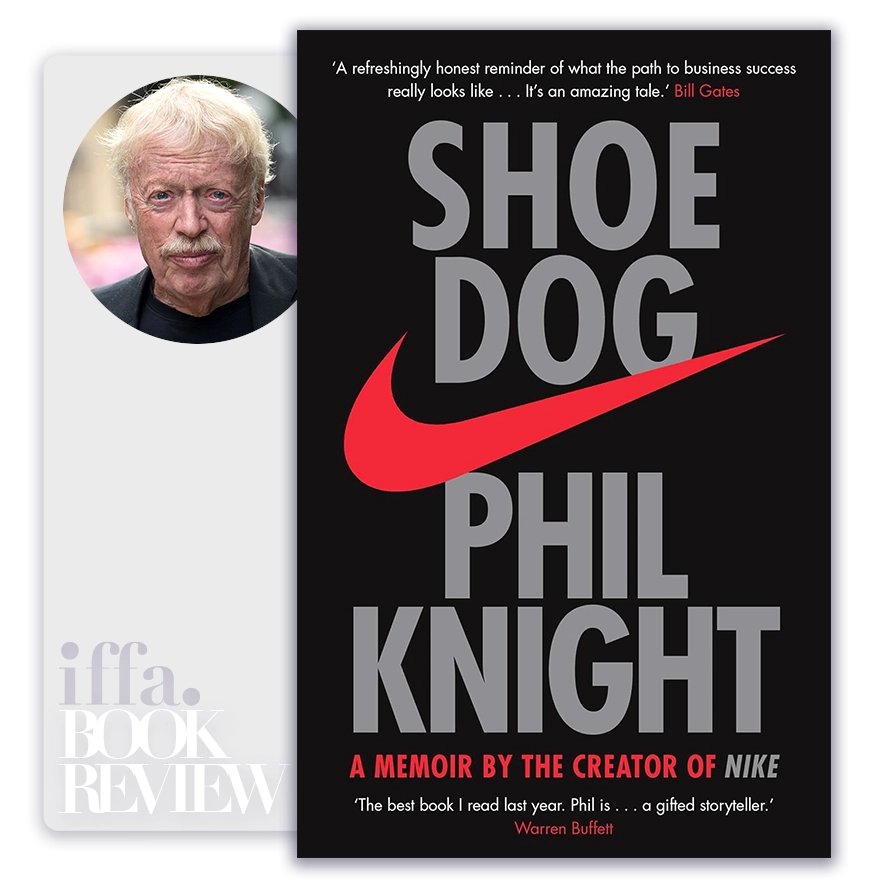
by Phil Knight
Summary Overview:
Shoe Dog stands apart from conventional business narratives because it does not present success as the outcome of superior planning, flawless execution, or managerial certainty. Instead, Phil Knight offers a candid account of building Nike amid uncertainty, cash shortages, unresolved risks, and persistent doubt. The book remains relevant because it reveals what leadership actually looks like before success is visible—messy, fragile, and driven more by belief than control.
For CEOs, founders, board members, and long-term investors, the book addresses a core leadership tension: how to keep going when outcomes are unclear and validation is absent. Knight’s story matters because it shows that many iconic organizations were not engineered through master plans, but held together by persistence, trust, and a willingness to endure prolonged ambiguity. Shoe Dog reframes entrepreneurship and leadership as acts of long-term faith rather than short-term optimization.
About The Author
Phil Knight is the co-founder of Nike and one of the most influential figures in global business and brand building. His journey transformed a small importing venture into a cultural and commercial institution.
Knight’s perspective is distinctive because he writes not as a polished executive strategist, but as a founder reflecting honestly on decades of uncertainty. His authority comes from having lived through the invisible years of struggle, offering rare insight into how companies survive before they succeed.
Core Idea:
The central idea of Shoe Dog is that great companies are built by enduring uncertainty longer than others are willing to tolerate. Knight argues, implicitly, that leadership is less about certainty and more about commitment to a mission when clarity is unavailable.
At a deeper level, the book presents a worldview in which progress emerges from motion, not perfect foresight. Decisions are made with incomplete information, mistakes accumulate, and meaning is constructed retrospectively. Success belongs not to those who avoid risk, but to those who remain engaged despite fear, doubt, and repeated near-failures.
Endurance under uncertainty is the hidden advantage behind most enduring companies.
Key Concepts:
- Action Precedes Clarity
Knight repeatedly shows that progress comes from acting before certainty exists.
- Waiting for perfect information stalls momentum.
- Learning occurs through engagement, not planning.
- Cash Flow Is the Founder’s Constant Anxiety
The book highlights how fragile early-stage success is, even amid growth.
- Revenue does not equal stability.
- Liquidity pressure shapes strategic behavior.
- Persistence Is a Strategic Asset
Knight’s defining trait is not brilliance, but refusal to quit.
- Persistence absorbs shocks.
- Time rewards those who stay in the game.
- Trust Enables Scale
Nike’s early growth depended on trust with suppliers, employees, and partners.
- Relationships substitute for formal systems.
- Trust extends operational capacity.
- Mission Outlasts Tactics
Knight’s attachment to the idea of serving athletes sustained Nike through crises.
- Purpose anchors decision-making.
- Tactics evolve, mission persists.
- Founders Carry Invisible Burdens
Leadership isolation is a recurring theme.
- Responsibility intensifies with growth.
- Decision-making often happens alone.
- Growth Magnifies Disorder Before Order
Expansion initially increases chaos rather than reducing it.
- Systems lag ambition.
- Leaders must tolerate instability.
- Culture Emerges Before It Is Designed
Nike’s culture formed organically through shared struggle.
- Early behaviors set long-term norms.
- Culture reflects lived experience, not statements.
- External Validation Comes Late
Recognition and legitimacy arrive only after endurance.
- Early skepticism is normal.
- Persistence precedes credibility.
- Success Is Understood Only in Retrospect
Knight emphasizes that meaning is assigned after outcomes unfold.
- Narratives simplify reality.
- Leaders live forward, understand backward.
Belief sustained over time matters more than early clarity or confidence.
Executive Insights:
Shoe Dog reframes leadership as the capacity to endure ambiguity without losing direction. Knight’s experience suggests that many organizations fail not because their ideas are flawed, but because leaders abandon them prematurely. The book underscores that long-term value creation requires emotional resilience as much as strategic insight.
For boards and investors, the implication is that early-stage and transformative ventures cannot be judged solely on conventional metrics. Belief, persistence, and founder temperament often determine outcomes long before financial indicators stabilize.
- Endurance is a form of competitive advantage.
- Leadership resilience matters as much as strategy.
- Trust-based relationships enable early survival.
- Cash discipline is existential, not technical.
- Long-term vision requires patience from governance.
Actionable Takeaways:
Enduring organizations are built through sustained commitment.
- Accept uncertainty as a permanent condition of growth.
- Prioritize survival and liquidity before optimization.
- Invest in trust-based relationships early.
- Anchor decisions in mission during instability.
- Measure progress over long arcs, not short intervals.
Final Thoughts:
Shoe Dog strips away the mythology of effortless success and replaces it with a more honest account of leadership: persistent effort in the absence of assurance. Knight’s story is not about domination or genius, but about staying engaged when quitting would be rational.
For executives, founders, and long-term stewards of capital, the book offers a quiet but powerful lesson: most great enterprises are not built by certainty, but by people willing to keep moving forward despite fear and doubt.
In the long run, those who endure uncertainty with conviction shape outcomes that hindsight later calls inevitable.
The ideas in this book go beyond theory, offering practical insights that shape real careers, leadership paths, and professional decisions. At IFFA, these principles are translated into executive courses, professional certifications, and curated learning events aligned with today’s industries and tomorrow’s demands. Discover more in our Courses.
Applied Programs

- Course Code : SBM-409
- Delivery : In-class / Virtual / Workshop
- Duration : 2-4 Days
- Venue: DUBAI HUB

- Course Code : PMA-613
- Delivery : In-class / Virtual / Workshop
- Duration : 3-5 Days
- Venue: DUBAI HUB

- Course Code : CIF-505
- Delivery : In-class / Virtual / Workshop
- Duration : 3-5 Days
- Venue: DUBAI HUB

- Course Code : CIF-512
- Delivery : In-class / Virtual / Workshop
- Duration : 2-4 Days
- Venue: DUBAI HUB
Related Books