
The Executive Summary of
Organizational Behavior
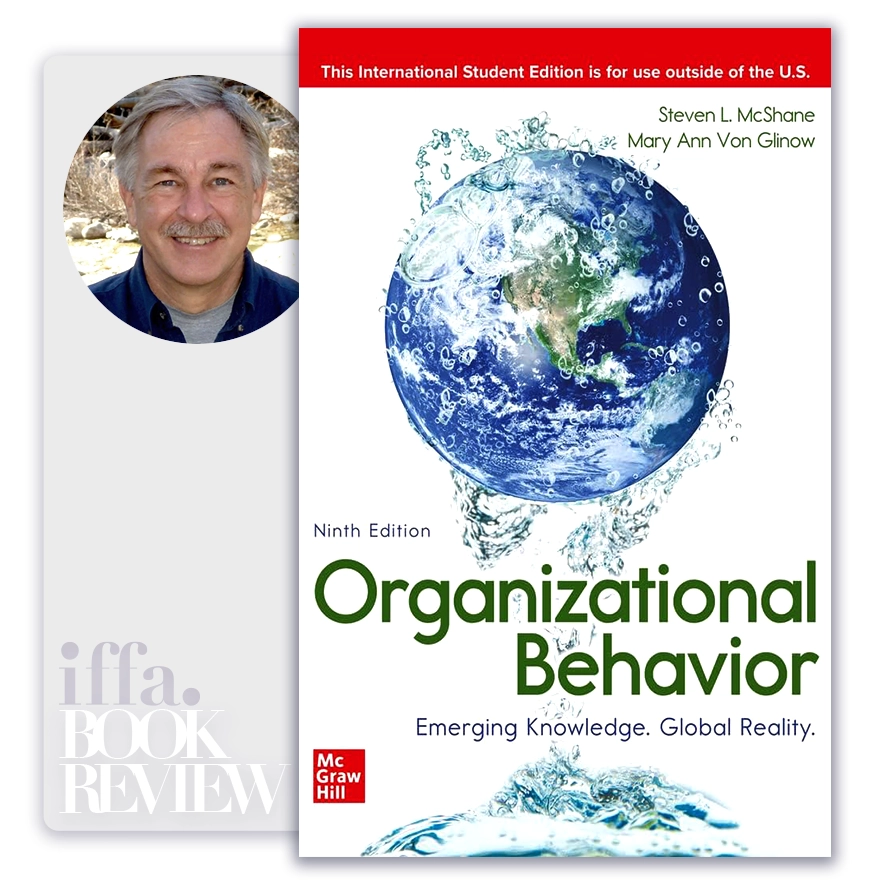
by Steven L. McShane
Summary Overview:
Organizational Behavior matters because it addresses a reality that every executive eventually confronts: organizational performance is constrained less by strategy than by human behavior. Markets, technologies, and business models can be replicated; the way people think, decide, collaborate, and respond to change cannot. This book provides a clear lens for understanding those dynamics without ideology or jargon.
For leaders, the relevance of organizational behavior has only intensified. Hybrid work, rapid change, cultural fragmentation, and rising expectations have made it harder to align people around shared goals. McShane’s work helps executives see organizations not as charts and processes, but as systems of motivation, perception, power, and relationships that shape outcomes every day.
What makes this book especially valuable is its balance. It avoids abstract theory while resisting simplistic advice. Instead, it equips leaders with conceptual clarity—the ability to recognize patterns in behavior, diagnose root causes of performance issues, and design environments where people can contribute effectively. In that sense, it is less about managing people and more about leading human systems responsibly.
About The Author
Steven L. McShane is a globally recognized scholar in organizational behavior and management education, known for translating academic research into practical insight. His work is distinctive for its evidence-based approach, combining psychology, management science, and real organizational experience.
Core Idea:
The core idea of Organizational Behavior is that individual behavior, team dynamics, and organizational outcomes are deeply interconnected, and leaders must understand these connections to lead effectively. Performance does not emerge from rules or incentives alone; it arises from how people interpret their roles, experience fairness, find meaning, and interact with others.
McShane presents organizations as living systems shaped by motivation, perception, culture, and structure. Leaders who understand these forces can influence outcomes more reliably than those who rely solely on authority, targets, or formal processes. The book argues that effective leadership begins with understanding how people actually behave—not how policies assume they should behave.
Organizational success depends on how people experience their work, not just how work is designed.
Key Concepts:
- Behavior Is Context-Driven, Not Personality-Driven
A central insight is that most workplace behavior is shaped by context rather than individual traits. Systems, norms, incentives, and leadership signals strongly influence how people act. For executives, this shifts accountability from “fixing people” to designing better environments. - Motivation Is Multifaceted
The book explains that motivation is not driven by pay alone. Purpose, autonomy, competence, and fairness play major roles. Leaders who rely only on financial incentives often undermine intrinsic motivation, leading to compliance rather than commitment. - Perception Shapes Reality
Employees act based on how they interpret situations, not on objective facts. Misalignment often arises from different perceptions of fairness, intent, or priorities. Leaders who ignore perception gaps unintentionally create resistance and disengagement. - Learning and Adaptability Are Behavioral Capabilities
Organizations learn through people. Psychological safety, feedback, and openness to error determine whether learning occurs. Without these, knowledge remains trapped in silos and mistakes are repeated. - Emotions Are Central to Decision-Making
The book emphasizes that emotions are not distractions from rationality; they are inputs into judgment. Stress, fear, and uncertainty influence choices, especially during change. Leaders must manage emotional climate, not suppress it. - Team Effectiveness Depends on Roles and Trust
High-performing teams are built on clarity, mutual accountability, and trust—not just talent. Ambiguity in roles or unresolved conflict erodes performance faster than skill gaps. - Power and Influence Operate Informally
Formal authority explains only part of how decisions are made. Informal networks, expertise, and credibility shape influence. Executives who ignore informal power structures often misjudge how change actually happens. - Culture Guides Behavior When Rules Are Absent
Culture acts as an invisible control system. Shared values, norms, and assumptions guide behavior when supervision is limited. Leaders shape culture through what they reward, tolerate, and model—not slogans. - Stress and Well-Being Affect Performance
Sustained stress reduces judgment, creativity, and ethical behavior. McShane treats well-being as a performance variable, not a personal issue. Healthy organizations manage workload, expectations, and recovery. - Change Is a Human Process, Not a Technical One
Resistance to change often reflects uncertainty and loss rather than opposition. Leaders who treat change as communication plus compliance miss its human dimension, increasing failure risk.
Leaders shape performance primarily by shaping the environment in which decisions and behaviors occur.
Executive Insights:
Organizational Behavior reinforces a critical truth: strategy succeeds or fails through people. Leaders cannot delegate culture, motivation, or trust to HR functions alone; these are core leadership responsibilities. The book encourages executives to think systemically about behavior rather than reactively addressing symptoms.
At a strategic level, the work shows that organizational resilience depends on behavioral foundations. Companies with strong learning cultures, psychological safety, and aligned incentives adapt faster and make better decisions under pressure.
Key implications include:
- Performance problems often reflect system design flaws, not individual weakness
- Leadership influence is exercised through context and signals, not control
- Culture and motivation shape execution more than formal plans
- Sustainable change requires emotional as well as rational alignment
- Well-being and judgment are closely linked
Actionable Takeaways:
The book’s value lies in applying behavioral understanding consistently, not dramatically.
For Executives:
- Design roles, goals, and incentives that reinforce desired behaviors
- Treat motivation as a system, not a reward mechanism
- Pay attention to how decisions are perceived, not just intended
- Create psychological safety to encourage learning and candor
- Clarify roles and expectations to reduce friction
- Address conflict early before it becomes structural
- Evaluate culture through behaviors, not stated values
- Ensure leadership incentives align with long-term organizational health
- Recognize well-being as a driver of judgment and performance
Final Thoughts:
Organizational Behavior offers a grounded reminder that organizations are human systems before they are economic ones. Its strength lies in helping leaders understand why well-designed strategies often fail—and how thoughtful attention to behavior can close that gap.
The enduring lesson of the book is simple but demanding: leaders get the behavior they design for, tolerate, and model. Those who understand this shape organizations that are not only more productive, but more resilient, adaptive, and capable of long-term success.
The ideas in this book go beyond theory, offering practical insights that shape real careers, leadership paths, and professional decisions. At IFFA, these principles are translated into executive courses, professional certifications, and curated learning events aligned with today’s industries and tomorrow’s demands. Discover more in our Courses.
Applied Programs

- Course Code : SBM-409
- Delivery : In-class / Virtual / Workshop
- Duration : 2-4 Days
- Venue: DUBAI HUB

- Course Code : PMA-613
- Delivery : In-class / Virtual / Workshop
- Duration : 3-5 Days
- Venue: DUBAI HUB

- Course Code : CIF-505
- Delivery : In-class / Virtual / Workshop
- Duration : 3-5 Days
- Venue: DUBAI HUB

- Course Code : CIF-512
- Delivery : In-class / Virtual / Workshop
- Duration : 2-4 Days
- Venue: DUBAI HUB
Related Books