
The Executive Summary of
Linchpin
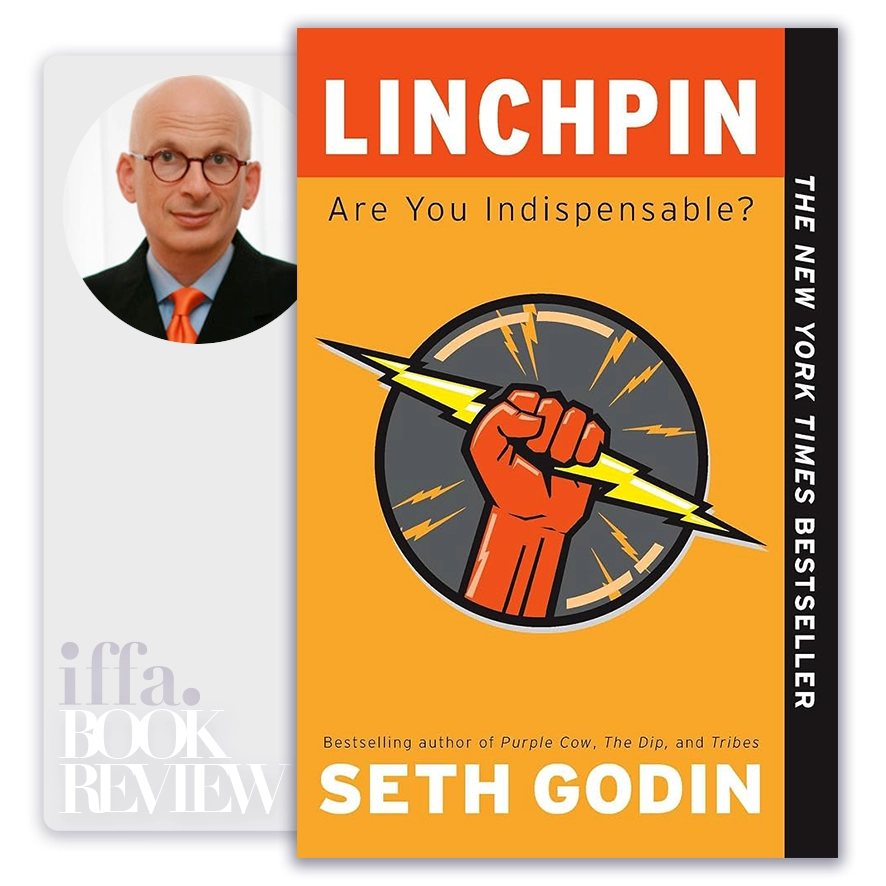
by Seth Godin
Summary Overview:
In an economy defined by automation, outsourcing, artificial intelligence, and constant disruption, traditional job security has quietly disappeared. Linchpin addresses this new reality with a clear, provocative thesis: the most valuable professionals are not replaceable workers—but indispensable contributors. Seth Godin argues that organizations no longer reward compliance, obedience, or job descriptions; they reward initiative, creativity, emotional labor, and leadership without authority.
Linchpin matters because many professionals still operate under an outdated industrial mindset—doing exactly what is asked, avoiding risk, and waiting for permission. Godin shows why this approach leads to commoditization and irrelevance. For executives, founders, managers, and ambitious professionals, Linchpin reframes career development as a personal strategic choice: become someone who merely follows instructions—or become someone the system cannot function without.
About The Author
Seth Godin is a globally recognized entrepreneur, marketing strategist, and thought leader known for redefining how organizations think about value, leadership, and creativity. He has founded multiple companies, advised global brands, and written influential works on marketing, tribes, and innovation.
Godin’s perspective is unique because he focuses not on corporate theory, but on human behavior inside organizations—how fear, culture, and systems shape performance, and how individuals can rise above them without formal power.
Core Idea:
At the heart of Linchpin is a bold and empowering idea:
Anyone can choose to become indispensable—and organizations desperately need such people.
Godin defines a linchpin as someone who brings emotional labor, creativity, insight, and leadership to their role—regardless of title or hierarchy. Linchpins solve problems that were never written into job descriptions. They connect people, challenge assumptions, create meaning, and take responsibility when no one is watching.
The book argues that the old economic model rewarded obedience and replaceability. The new economy rewards initiative, originality, and generosity. Linchpins are not managed; they are trusted. They do not wait for instructions; they invent their work. Becoming indispensable is not about working harder—it is about working differently.
The job is no longer to follow instructions, it is to invent your contribution.
Key Concepts:
- From Industrial Workers to Knowledge Creators
The industrial economy valued:
- Compliance
- Efficiency
- Standardization
- Replaceable labor
The modern economy values:
- Creativity
- Problem-solving
- Emotional intelligence
- Initiative without permission
Godin argues that organizations still pretend they want innovation while rewarding safe behavior. Linchpins operate beyond this contradiction—they create value regardless of the system’s limitations.
The job is no longer to follow instructions—it is to invent your contribution.
- Emotional Labor Is the New Competitive Advantage
Emotional labor is the effort required to:
- Care deeply about outcomes
- Build trust and relationships
- Navigate ambiguity and resistance
- Deliver generosity without immediate reward
Unlike mechanical tasks, emotional labor cannot be automated or outsourced. Linchpins willingly perform this work because they understand that value today is human, contextual, and relational.
Godin emphasizes that emotional labor is uncomfortable by nature—and that discomfort is precisely why it matters.
- The Resistance (Fear in Disguise)
One of the book’s most powerful ideas is “The Resistance”—the internal voice that creates fear, hesitation, and self-doubt whenever meaningful work is about to begin.
The Resistance manifests as:
- Procrastination
- Perfectionism
- Seeking approval
- Fear of criticism
- Waiting for instructions
Godin reframes fear as a sign that the work matters. Linchpins do not eliminate fear; they work through it. Fear is not the enemy—it is the compass pointing to important work.
- Art as a Way of Working (Not a Product)
Godin uses the word “art” broadly—not to mean painting or music, but any work done with care, originality, and personal expression.
Art, in this sense, includes:
- Designing a better process
- Writing a thoughtful email
- Leading a difficult conversation
- Creating clarity where confusion exists
Linchpins bring art into their work by choosing to care, even when the system discourages it.
- Leadership Without Authority
Traditional leadership relies on titles and hierarchy. Linchpins lead differently—they lead through trust, initiative, and contribution.
They:
- See problems before others do
- Take responsibility without being asked
- Influence through credibility, not power
- Build momentum instead of waiting for consensus
Godin argues that the most effective leaders often have no formal authority—they earn influence by being useful.
- The Myth of Job Security
Linchpin dismantles the illusion that following rules leads to safety. In reality:
- Replaceable workers are easiest to replace
- Compliance creates vulnerability, not protection
- Silence is not safety—it is invisibility
True security comes from being so valuable that replacement is unthinkable.
Innovation does not come from processes, it comes from people who choose to lead.
Executive Insights:
Linchpin challenges leaders to rethink how value is created inside organizations. The book makes it clear that innovation does not come from processes—it comes from people who choose to lead.
Strategic Implications for Executives:
- Organizations must reward initiative, not obedience
- Management systems often suppress the very creativity they claim to want
- Indispensable people create disproportionate value
- Culture is shaped by what is tolerated—not what is stated
- The future belongs to contributors, not task-followers
For leaders, the challenge is not hiring more talent—but removing fear, micromanagement, and bureaucracy that prevent linchpins from emerging.
Actionable Takeaways:
Becoming a linchpin is a decision, not a promotion. Godin offers a roadmap for professionals willing to take responsibility for their relevance.
Practical Actions Individuals Can Take:
- Stop waiting for instructions—start inventing your role
- Do work that cannot be easily replaced or automated
- Lean into emotional labor instead of avoiding it
- Treat fear as a signal, not a stop sign
- Deliver generosity, insight, and leadership without being asked
- Focus on contribution over compliance
Actions Leaders Can Take:
- Create space for initiative and experimentation
- Reward problem-solving, not rule-following
- Eliminate systems that punish creativity
- Encourage ownership at every level
- Build cultures where people are trusted to lead
Final Thoughts:
Linchpin is a manifesto for meaningful work in the modern economy. Seth Godin’s message is both demanding and liberating: no one is coming to make you indispensable—you must choose it yourself.
In a world of replaceable labor, the greatest career strategy is to become irreplaceable.
The ideas in this book go beyond theory, offering practical insights that shape real careers, leadership paths, and professional decisions. At IFFA, these principles are translated into executive courses, professional certifications, and curated learning events aligned with today’s industries and tomorrow’s demands. Discover more in our Courses.
Applied Programs

- Course Code : SBM-409
- Delivery : In-class / Virtual / Workshop
- Duration : 2-4 Days
- Venue: DUBAI HUB

- Course Code : PMA-613
- Delivery : In-class / Virtual / Workshop
- Duration : 3-5 Days
- Venue: DUBAI HUB

- Course Code : CIF-505
- Delivery : In-class / Virtual / Workshop
- Duration : 3-5 Days
- Venue: DUBAI HUB

- Course Code : CIF-512
- Delivery : In-class / Virtual / Workshop
- Duration : 2-4 Days
- Venue: DUBAI HUB
Related Books