
The Executive Summary of
Leaders Eat Last
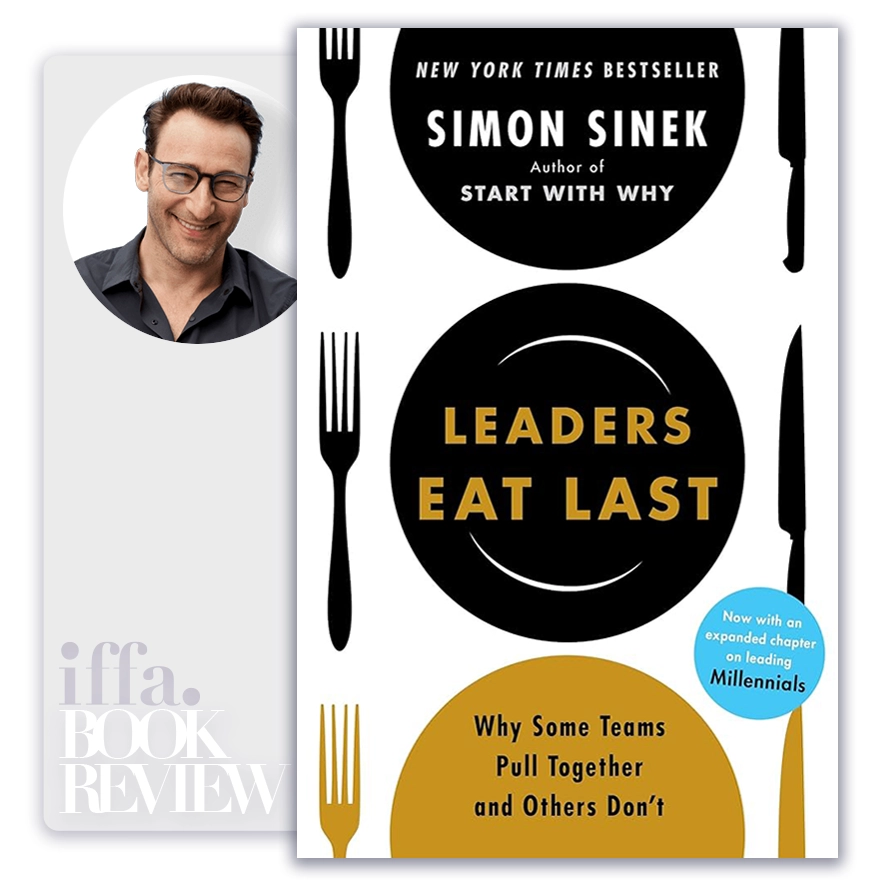
by Simon Sinek
Summary Overview:
In organizations facing burnout, disengagement, low trust, and high turnover, Leaders Eat Last reframes leadership around a simple but demanding principle: great leaders prioritize the well-being of their people before their own interests. Simon Sinek argues that sustainable performance is not driven by incentives alone, but by trust, safety, and shared purpose. For executives and senior leaders, this book offers a human-centered framework for building resilient, high-performing cultures.
Leaders Eat Last matters because many organizations optimize for short-term results while unintentionally eroding the social fabric that enables long-term success. Sinek shows that when people feel safe, valued, and protected, they collaborate more effectively, innovate faster, and remain loyal during adversity. In volatile environments, culture becomes strategy—and leadership becomes stewardship.
About The Author
Simon Sinek is a bestselling author, speaker, and organizational thinker known for his work on purpose-driven leadership and trust-based cultures. His ideas have influenced leaders across business, government, and the military.
Sinek’s authority comes from combining behavioral science, real-world case studies, and moral clarity, translating complex human dynamics into accessible leadership principles.
Core Idea:
The central thesis of Leaders Eat Last is both intuitive and demanding:
Organizations perform best when leaders create environments of trust and psychological safety—where people feel protected rather than exploited.
The title refers to military tradition, where leaders eat last to ensure their teams are taken care of first. Sinek uses this metaphor to argue that leadership is not about rank or privilege, but about responsibility and service.
When leaders prioritize people:
- Trust increases
- Cooperation strengthens
- Performance sustains under pressure
When they do not, fear replaces loyalty—and performance collapses when conditions worsen.
Leadership is not about being in charge, it is about taking care of those in your charge.
Key Concepts:
- The Circle of Safety
At the heart of the book is the Circle of Safety—an environment where employees feel secure from internal threats so they can focus on external challenges.
Inside the circle:
- Trust replaces fear
- Collaboration replaces politics
- Energy goes to performance, not self-protection
When people feel safe, they will naturally work together to face danger.
- Biology of Leadership and Trust
Sinek explains leadership through human biology. Four key chemicals shape behavior:
- Endorphins – mask pain and enable endurance
- Dopamine – reward achievement
- Serotonin – reinforce pride and status
- Oxytocin – build trust and human connection
High-performing cultures balance achievement with deep human connection, not constant dopamine-driven pressure.
- Leadership Is a Responsibility, Not a Rank
Authority does not create leadership—behavior does. Leaders earn trust by:
- Protecting their teams
- Taking responsibility for failure
- Sharing credit for success
Leadership is not about being in charge—it is about taking care of those in your charge.
- The Cost of Short-Termism
Sinek critiques environments driven solely by:
- Quarterly results
- Incentive manipulation
- Fear-based management
Such systems may deliver short-term gains but destroy loyalty, creativity, and resilience over time. Long-term success requires patience, consistency, and ethical leadership.
- Trust as a Performance Multiplier
Trust accelerates:
- Decision-making
- Knowledge sharing
- Innovation
- Crisis response
Low-trust cultures pay a hidden tax through friction, disengagement, and turnover.
- Courageous Leadership in Adversity
True leadership is revealed during hardship. Leaders who protect people during difficult times:
- Build lasting loyalty
- Preserve culture
- Enable faster recovery
Those who sacrifice people for numbers may survive briefly—but lose the organization’s soul.
When people feel safe, they will naturally work together to face danger.
Executive Insights:
Leaders Eat Last reframes leadership from control and incentives to trust, care, and long-term stewardship. It challenges executives to see culture not as a “soft issue,” but as a hard driver of performance.
Strategic Implications for Leaders:
- Trust is a strategic asset
- Psychological safety drives performance
- Culture determines resilience
- Leadership behavior sets the tone
- Short-term gains can destroy long-term strength
Actionable Takeaways:
The principles of Leaders Eat Last can be applied immediately across leadership development, organizational culture, governance, and talent strategy.
Practical Actions for Executives and Leaders:
- Model selfless leadership behaviors
- Create and protect a Circle of Safety
- Reward collaboration, not just results
- Prioritize long-term trust over short-term wins
- Invest in human connection and empathy
- Hold leaders accountable for cultural health
- Lead visibly during difficult moments
Final Thoughts:
Leaders Eat Last is a leadership manifesto grounded in human reality. Its message is clear and enduring: when leaders put people first, performance follows—and endures.
In uncertain times, the strongest organizations are those where leaders choose service over status and trust over fear.
The ideas in this book go beyond theory, offering practical insights that shape real careers, leadership paths, and professional decisions. At IFFA, these principles are translated into executive courses, professional certifications, and curated learning events aligned with today’s industries and tomorrow’s demands. Discover more in our Courses.
Applied Programs

- Course Code : SBM-409
- Delivery : In-class / Virtual / Workshop
- Duration : 2-4 Days
- Venue: DUBAI HUB

- Course Code : PMA-613
- Delivery : In-class / Virtual / Workshop
- Duration : 3-5 Days
- Venue: DUBAI HUB

- Course Code : CIF-505
- Delivery : In-class / Virtual / Workshop
- Duration : 3-5 Days
- Venue: DUBAI HUB

- Course Code : CIF-512
- Delivery : In-class / Virtual / Workshop
- Duration : 2-4 Days
- Venue: DUBAI HUB
Related Books