
The Executive Summary of
High Road Leadership
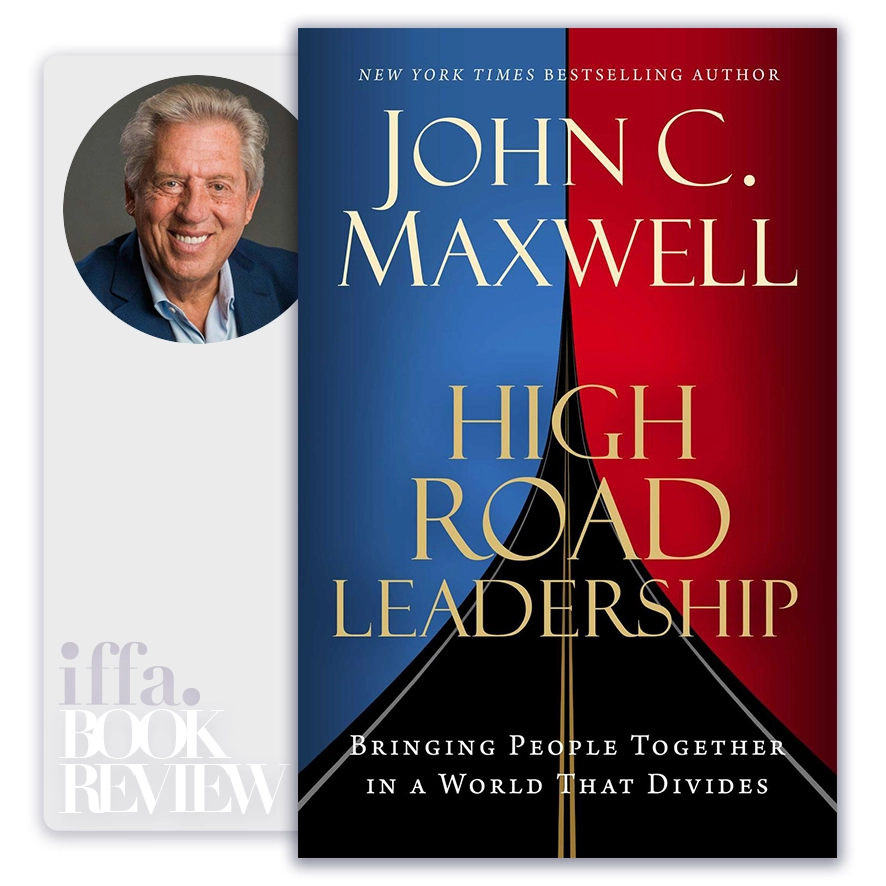
by John C. Maxwell
Summary Overview:
Leadership today is increasingly exercised in environments defined by polarization, distrust, emotional volatility, and zero-sum thinking. Organizations are fractured by ideology, generational divides, cultural tension, and competing narratives of truth. In such conditions, technical competence and authority are no longer enough. High Road Leadership matters because it addresses the central leadership challenge of our time: how to lead people forward without deepening division.
John C. Maxwell argues that many leaders—often unintentionally—choose the “low road”: reacting emotionally, defending positions, winning arguments, or protecting ego. The “high road,” by contrast, requires intentional character, emotional discipline, and people-centered leadership. For executives, board members, public leaders, and founders, this book offers a practical and moral framework for building trust, restoring dialogue, and sustaining influence in complex, divided environments.
About The Author
John C. Maxwell is one of the world’s most influential leadership thinkers, with decades of experience advising CEOs, governments, nonprofits, and global organizations. His work focuses on leadership as influence rooted in values, character, and relationships, rather than authority alone.
Maxwell’s credibility lies not only in scale—millions of leaders trained worldwide—but in consistency. Across his body of work, he emphasizes that who a leader is matters as much as what a leader does. High Road Leadership represents a culmination of this philosophy, applied directly to today’s polarized reality.
Core Idea:
At the heart of High Road Leadership is a defining principle:
Leadership is revealed most clearly not when things are easy—but when people disagree, emotions run high, and stakes feel personal.
Maxwell defines High Road Leadership as choosing:
- Character over convenience
- Relationship over reaction
- Understanding over judgment
- Long-term influence over short-term victory
Leaders do not unite people by winning arguments—they do it by earning trust. The high road is harder, slower, and often lonelier—but it is the only path to sustainable leadership influence.
The low road wins moments; the high road wins futures.
Key Concepts:
- The Low Road vs. the High Road
Maxwell clearly distinguishes between two leadership paths:
- Low Road Leadership
- Reacts emotionally
- Seeks to win, dominate, or shame
- Prioritizes being right over being effective
- Deepens division
- High Road Leadership
- Responds intentionally
- Seeks understanding before agreement
- Prioritizes people over positions
- Builds long-term trust
The low road wins moments; the high road wins futures.
- Emotional Control Is a Leadership Competency
Maxwell emphasizes that leaders must manage themselves before leading others.
High road leaders:
- Pause before reacting
- Separate issues from identity
- Regulate tone under pressure
When leaders lose emotional control, they lose moral authority. In polarized environments, emotional discipline is strategic—not optional.
- Listening Is the Gateway to Influence
One of the book’s strongest themes is intentional listening.
High road leaders:
- Listen to understand, not to respond
- Validate people without endorsing positions
- Create psychological safety
Executive Insight:
People will not follow leaders who do not feel heard. Listening reduces defensiveness and opens space for progress.
- Respect Precedes Agreement
Maxwell argues that respect is not a reward for agreement—it is a prerequisite for dialogue.
You can disagree deeply without devaluing people. High road leadership separates human dignity from ideological difference.
- Values Must Be Modeled, Not Declared
In divided environments, credibility comes from consistency.
High road leaders:
- Align words and actions
- Apply standards fairly
- Refuse double standards
Values lose power when they are selectively applied. This is especially critical for executive leadership and governance.
- Humility Strengthens Authority
Maxwell reframes humility as a strength, not weakness.
High road leaders:
- Admit mistakes
- Remain open to learning
- Invite challenge
Humility expands influence; ego shrinks it. Leaders who cannot self-correct cannot unite others.
- Unity Does Not Require Uniformity
The book makes a crucial distinction between unity and agreement.
You don’t need people to think alike to move forward together. High road leaders focus on:
- Shared goals
- Common ground
- Mutual respect
This allows diverse teams to function effectively.
- Language Shapes Culture
Words matter—especially in tense environments.
Maxwell urges leaders to:
- Avoid inflammatory language
- Choose clarity over provocation
- Frame issues constructively
Leaders either cool conflict or ignite it with their words. Communication is a leadership lever.
- The High Road Requires Courage
Choosing the high road often invites criticism.
The high road is rarely applauded in the moment—but it is respected over time. Leaders must be willing to absorb discomfort for the sake of long-term trust.
- Influence Is the Ultimate Goal of Leadership
Maxwell returns to his foundational definition:
Leadership is influence—and influence flows through trust. High road leadership preserves and compounds trust, even in disagreement.
When leaders lose emotional control, they lose moral authority.
Executive Insights:
High Road Leadership reframes leadership as relational stewardship in complex systems.
Strategic Implications for Executives and Boards:
- Polarization is a leadership risk
- Emotional intelligence is a strategic asset
- Trust enables execution
- Culture mirrors leadership behavior
- Short-term wins can destroy long-term influence
- Character scales further than authority
Organizations led from the low road move faster in conflict—but fracture under pressure.
Actionable Takeaways:
For CEOs & Senior Executives
- Model calm under pressure
- Listen publicly and privately
- Separate disagreement from disrespect
- Align actions with stated values
- Choose long-term trust over short-term dominance
For Leadership Teams
- Set norms for respectful disagreement
- Encourage psychological safety
- Avoid internal polarization
- Focus on shared objectives
Final Thoughts:
High Road Leadership delivers a timely and principled message: how leaders behave during disagreement determines whether organizations fracture or strengthen. John C. Maxwell reminds us that leadership is not about winning debates, silencing opposition, or asserting authority—it is about lifting people, preserving dignity, and guiding progress through trust.
In a divided world, the high road is not naïve.
It is strategic, courageous, and enduring.
Anyone can take the low road.
True leaders choose the high road—again and again.
The ideas in this book go beyond theory, offering practical insights that shape real careers, leadership paths, and professional decisions. At IFFA, these principles are translated into executive courses, professional certifications, and curated learning events aligned with today’s industries and tomorrow’s demands. Discover more in our Courses.
Applied Programs

- Course Code : SBM-409
- Delivery : In-class / Virtual / Workshop
- Duration : 2-4 Days
- Venue: DUBAI HUB

- Course Code : PMA-613
- Delivery : In-class / Virtual / Workshop
- Duration : 3-5 Days
- Venue: DUBAI HUB

- Course Code : CIF-505
- Delivery : In-class / Virtual / Workshop
- Duration : 3-5 Days
- Venue: DUBAI HUB

- Course Code : CIF-512
- Delivery : In-class / Virtual / Workshop
- Duration : 2-4 Days
- Venue: DUBAI HUB
Related Books