

The Executive Summary of
Competitive Strategy
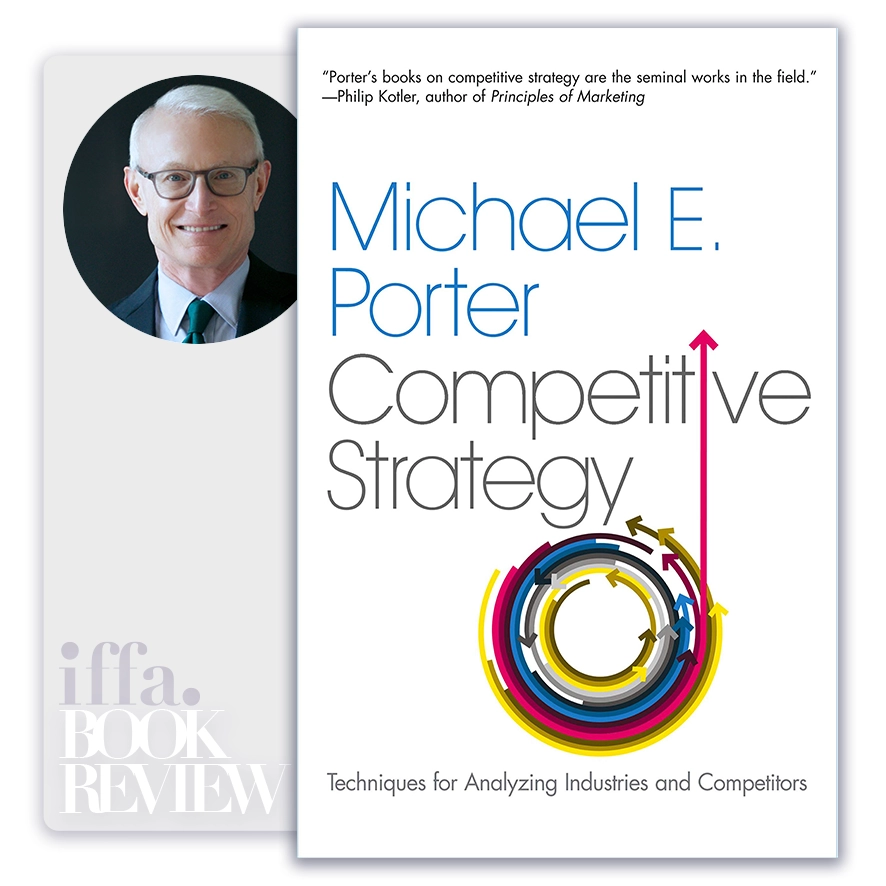
by Michael E. Porter
Executive Summary:
In markets shaped by intensifying competition, margin pressure, and strategic convergence, Competitive Strategy provides a timeless framework for how firms achieve and sustain superior performance. Michael E. Porter moves strategy away from vague ambition and toward rigorous analysis of industry structure, competitive forces, and deliberate positioning. For executives and board members, this book establishes the grammar of strategy—how to think clearly about competition before choosing where and how to compete.
Competitive Strategy matters because many organizations confuse operational effectiveness with strategy. They pursue growth initiatives, cost programs, and innovation without a coherent view of competitive dynamics. Porter shows that profitability is not determined by effort alone, but by the structural attractiveness of an industry and a firm’s chosen position within it. In a world of fast imitation, this clarity is decisive.
About The Author
Michael E. Porter is a renowned Harvard Business School professor and one of the most influential thinkers in competitive strategy and economic performance. His frameworks have shaped executive decision-making across industries for decades.
Porter’s authority comes from analytical rigor, empirical grounding, and practical applicability, providing leaders with tools that endure beyond trends and management fashions.
Core Idea:
The central thesis of Competitive Strategy is precise and powerful:
Competitive advantage arises from choosing a distinct position within an industry and aligning activities to defend that position over time.
Porter argues that strategy is not about being the best—it is about being different in ways that matter economically. Firms must understand the structural forces that determine profitability and then choose a strategy that exploits those forces while creating trade-offs competitors cannot easily replicate.
Without a clear competitive strategy, firms drift toward imitation, price competition, and margin erosion.
Competition is broader than rivals—it includes customers, suppliers, substitutes, and entrants.
Key Concepts:
- The Five Forces Framework
Porter introduces the Five Forces that shape industry profitability:
- Threat of New Entrants
- Bargaining Power of Suppliers
- Bargaining Power of Buyers
- Threat of Substitute Products
- Rivalry Among Existing Competitors
Together, these forces determine long-term profit potential, not short-term performance.
- Industry Structure Over Market Share
High market share does not guarantee high profitability. What matters is industry structure—barriers, switching costs, differentiation, and scale economics.
Strategic analysis begins with:
- Understanding structural constraints
- Identifying sources of bargaining power
- Assessing vulnerability to substitutes
- Generic Competitive Strategies
Porter outlines three generic strategies to achieve competitive advantage:
- Cost Leadership – Being the lowest-cost producer
- Differentiation – Offering unique value customers are willing to pay for
- Focus – Targeting a specific segment with cost or differentiation
Attempting to pursue all simultaneously leads to being “stuck in the middle”, with no defensible advantage.
- Trade-Offs and Strategic Choice
Effective strategy requires making choices—and saying no. Trade-offs prevent imitation and preserve strategic clarity.
Examples include:
- Different product features
- Distinct value chains
- Incompatible operating models
- The Value Chain
Porter introduces the value chain to analyze how activities create cost or differentiation advantages.
By dissecting activities—from inbound logistics to after-sales service—leaders can:
- Identify cost drivers
- Locate sources of differentiation
- Align activities to reinforce strategy
Competitive advantage comes from fit across activities, not isolated excellence.
- Competitive Dynamics and Positioning
Porter cautions against reactive competition. Strategic moves should be evaluated for:
- Impact on industry structure
- Likelihood of retaliation
- Sustainability of advantage
Aggressive rivalry often destroys industry profitability rather than improving it.
Strategy is as much about what you don’t do as what you do.
Executive Insights:
Competitive Strategy reframes leadership away from tactical competition and toward structural advantage and disciplined positioning. It equips executives to compete intelligently, not aggressively.
Strategic Implications for Leaders:
- Profitability is shaped by structure, not intent
- Clear positioning beats operational excellence alone
- Trade-offs protect advantage
- Fit across activities sustains differentiation
- Industry analysis precedes growth decisions
Actionable Takeaways:
Porter’s frameworks translate directly into strategy formulation, competitive analysis, and governance.
Practical Actions for Executives and Boards:
- Analyze industry structure using the Five Forces
- Choose one clear generic strategy
- Design trade-offs competitors cannot match
- Align the value chain to reinforce positioning
- Avoid price wars that erode industry value
- Evaluate growth moves for structural impact
Final Thoughts:
Competitive Strategy remains a cornerstone of strategic thinking because it brings discipline where intuition often dominates. Porter’s enduring insight is simple and demanding: competitive advantage is earned through choice, coherence, and consistency.
In crowded markets, the winners are not those who try harder—but those who choose better.
To conclude, the ideas explored in this book go far beyond theory; they offer practical insight that can shape real careers, leadership paths, and professional decisions.
At IFFA, these same principles are transformed into structured executive training courses, professional certifications, and curated learning events designed to align with today’s industries and tomorrow’s demands. Find out more on Courses.
Applied Programs

- Course Code : SBM-409
- Delivery : In-class / Virtual / Workshop
- Duration : 2-4 Days
- Venue: DUBAI HUB

- Course Code : PMA-613
- Delivery : In-class / Virtual / Workshop
- Duration : 3-5 Days
- Venue: DUBAI HUB

- Course Code : CIF-505
- Delivery : In-class / Virtual / Workshop
- Duration : 3-5 Days
- Venue: DUBAI HUB

- Course Code : CIF-512
- Delivery : In-class / Virtual / Workshop
- Duration : 2-4 Days
- Venue: DUBAI HUB
Related Books