

The Executive Summary of
Passage Planning Guidelines
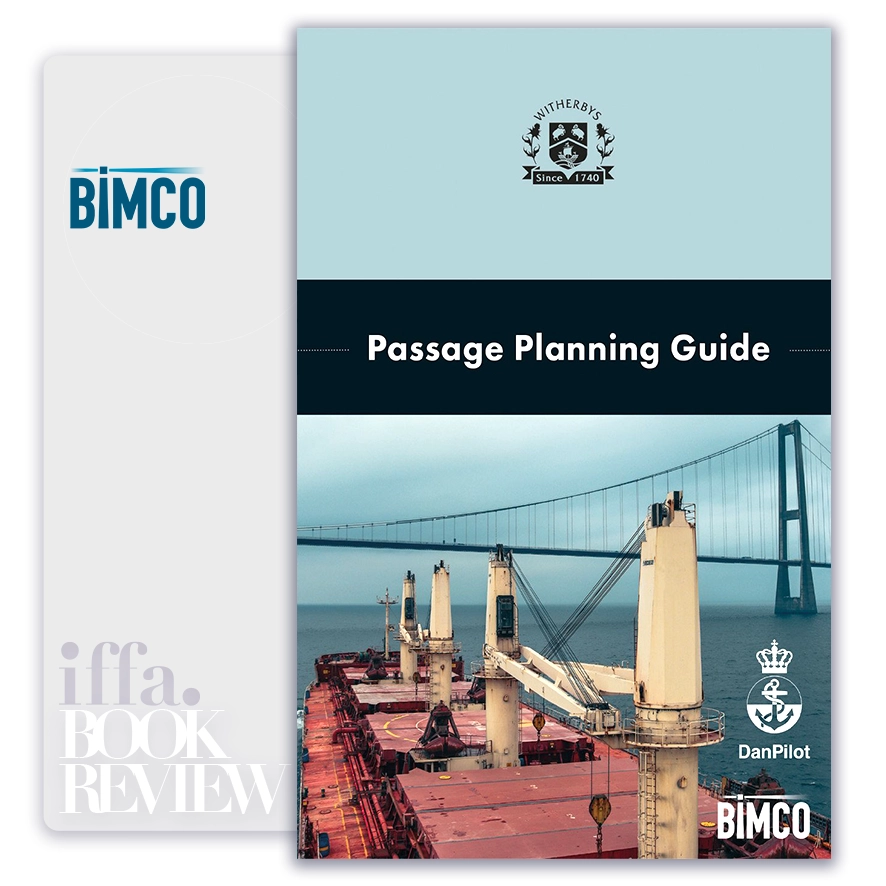
by BIMCO
Summary Overview:
Passage Planning Guidelines addresses one of the most fundamental yet consequential activities in maritime operations: how a voyage is conceived, assessed, and executed before the ship ever moves. While modern vessels are equipped with advanced navigation technology, accidents continue to occur not because of lack of data, but because of insufficient planning, poor integration of information, and breakdowns in bridge discipline. This guide matters because it restores passage planning to its proper role—as a core safety and governance process, not a procedural formality.
For shipowners, boards, senior executives, fleet managers, and masters, the relevance is strategic. Many serious casualties trace back to decisions made during planning stages: route selection, under-keel clearance assumptions, weather assessment, pilotage preparation, or contingency design. Witherbys’ guidance reframes passage planning as a risk-management system that protects lives, assets, schedules, and reputation. In an era of tighter regulatory scrutiny and reduced tolerance for error, structured passage planning is no longer optional—it is a leadership obligation.
About The Author
BIMCO, the Baltic and International Maritime Council, is one of the world’s leading international shipping associations, representing shipowners, operators, managers, and brokers globally. It develops widely used standard contracts, clauses, and operational guidance that shape maritime practice. The Witherbys is also a leading maritime publisher, globally recognized for producing authoritative guidance aligned with international conventions, industry best practice, and operational reality.
Core Idea:
The central thesis of Passage Planning Guidelines is that safe navigation is the outcome of disciplined preparation, not reactive decision-making. The guide emphasizes that passage planning is a continuous process—beginning before departure and extending through execution and monitoring—rather than a static document completed for compliance.
At a deeper level, the book advances a worldview in which planning is an expression of professional judgment and bridge leadership. Effective passage planning integrates human factors, environmental conditions, vessel limitations, and regulatory constraints into a coherent plan that supports decision-making under pressure. It transforms uncertainty into managed risk.
A well-planned passage reduces the need for heroic navigation.
Key Concepts:
- Passage Planning Is a Continuous Process
Planning does not end at departure.
- Appraisal, planning, execution, and monitoring are interlinked.
- Ongoing review preserves relevance.
- Appraisal Determines Risk Exposure
Information gathering sets the foundation.
- Charts, publications, weather, and vessel data must align.
- Incomplete appraisal creates blind spots.
- Route Selection Is a Strategic Decision
Shortest is not always safest.
- Traffic density, depth, and weather shape risk.
- Conservative choices preserve margins.
- Under-Keel Clearance Is a Governance Issue
Grounding risk is predictable.
- Dynamic factors must be considered.
- Assumptions must be explicit.
- Environmental Conditions Shape Execution
Weather and sea state are decisive variables.
- Forecasts inform contingency planning.
- Ignoring trends invites escalation.
- Bridge Team Integration Is Essential
Plans must be shared and understood.
- Briefing aligns intent and action.
- Communication reduces human error.
- Pilotage Requires Preparation
Local expertise complements planning.
- Master remains responsible.
- Role clarity prevents confusion.
- Monitoring Is as Important as Planning
Execution tests assumptions.
- Deviation must be detected early.
- Technology supports, not replaces, vigilance.
- Contingency Planning Preserves Control
Not everything goes as expected.
- Alternatives must be identified in advance.
- Preparedness reduces reaction time.
- Documentation Reflects Professional Discipline
Records support accountability.
- Clear documentation strengthens compliance.
- Evidence protects master and company.
Good seamanship begins long before the ship gets underway.
Executive Insights:
Passage Planning Guidelines reframes navigation planning as a cornerstone of safety management and corporate governance. Accidents attributed to “human error” often reveal deeper failures in planning, briefing, or oversight. Witherbys shows that structured passage planning reduces reliance on improvisation and protects crews from cognitive overload in critical moments.
For boards and senior leadership, the implication is clear: passage planning quality reflects organizational safety culture. Investment in training, tools, and time for proper planning reduces incidents, detentions, insurance claims, and reputational damage. Effective planning is not bureaucracy—it is a strategic risk-control mechanism.
- Planning discipline reduces navigational risk.
- Shared understanding strengthens bridge authority.
- Early risk identification prevents escalation.
- Documentation supports compliance and defense.
- Governance failures often precede navigational incidents.
Actionable Takeaways:
Safe navigation requires structured foresight.
- Treat passage planning as a core safety process.
- Allocate sufficient time and resources for appraisal.
- Ensure bridge teams are fully briefed and aligned.
- Embed monitoring and contingency thinking into execution.
- Govern passage planning standards across the fleet.
Final Thoughts:
Passage Planning Guidelines delivers a clear and enduring message: most navigational risks are known in advance—what matters is whether they are planned for. Witherbys demonstrates that safe voyages are rarely the result of last-minute brilliance, but of calm, methodical preparation supported by professional discipline.
For leaders responsible for ships, people, and reputation, the book offers a timeless insight: the quality of a voyage is decided long before the first order is given on the bridge. Where passage planning is respected, navigation becomes controlled and predictable. Where it is rushed or ignored, risk accumulates silently.
In the long run, the safest ships are not those with the best technology, but those guided by the best planning.
The ideas in this book go beyond theory, offering practical insights that shape real careers, leadership paths, and professional decisions. At IFFA, these principles are translated into executive courses, professional certifications, and curated learning events aligned with today’s industries and tomorrow’s demands. Discover more in our Courses.
Applied Programs

- Course Code : SBM-409
- Delivery : In-class / Virtual / Workshop
- Duration : 2-4 Days
- Venue: DUBAI HUB

- Course Code : PMA-613
- Delivery : In-class / Virtual / Workshop
- Duration : 3-5 Days
- Venue: DUBAI HUB

- Course Code : CIF-505
- Delivery : In-class / Virtual / Workshop
- Duration : 3-5 Days
- Venue: DUBAI HUB

- Course Code : CIF-512
- Delivery : In-class / Virtual / Workshop
- Duration : 2-4 Days
- Venue: DUBAI HUB
Related Books