

The Executive Summary of
Master’s Guide to Shipboard Disciplinary Procedures
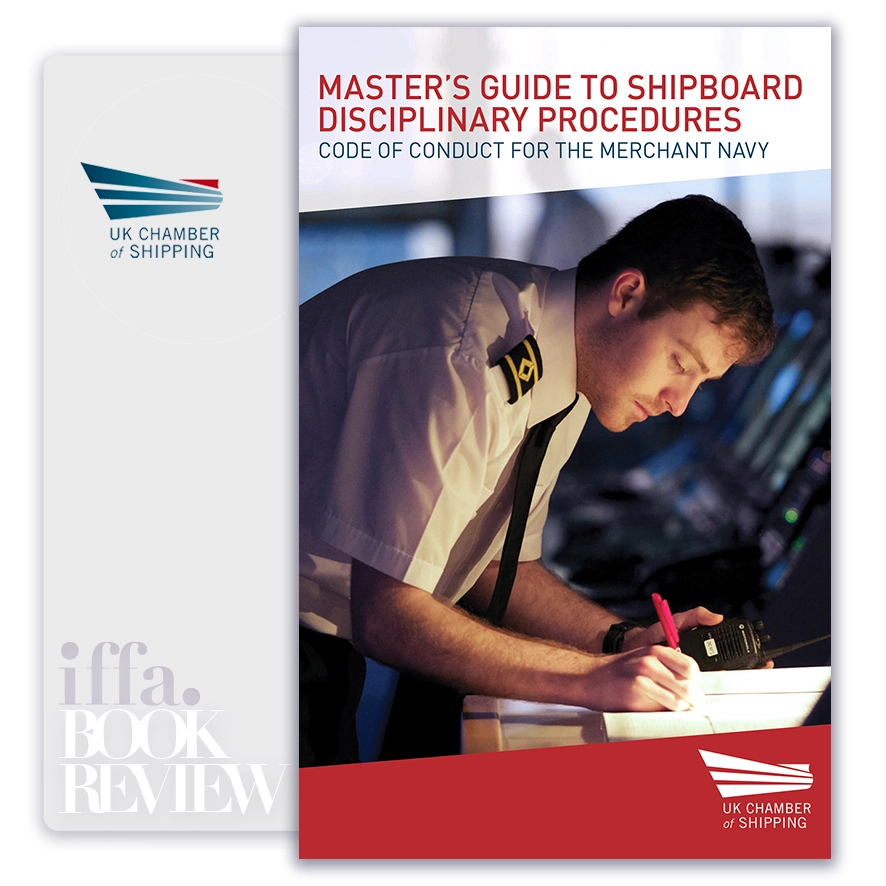
by UK Chamber of Shipping
Summary Overview:
Master’s Guide to Shipboard Disciplinary Procedures addresses one of the most sensitive and high-risk responsibilities aboard any vessel: the exercise of authority over people in a confined, safety-critical, and international workplace. Discipline at sea is not merely an employment issue; it directly affects safety, morale, compliance, and liability. This guide matters because it clarifies how discipline must be exercised lawfully, proportionately, and consistently, even under operational pressure.
For shipowners, boards, senior executives, fleet managers, and masters, the relevance is immediate. Mishandled disciplinary action can escalate into crew unrest, unsafe operations, reputational damage, and legal exposure across multiple jurisdictions. Conversely, failure to act decisively when conduct threatens safety can be equally damaging. The guide provides a structured framework that balances command authority with due process, ensuring that discipline strengthens, rather than undermines, shipboard governance.
About The Author
The UK Chamber of Shipping is the principal trade association representing the UK shipping industry, with longstanding involvement in maritime policy, safety standards, and operational best practice.
Its authority stems from industry-wide experience and regulatory alignment. The guidance reflects practical realities of shipboard life while remaining consistent with employment law, maritime conventions, and accepted international standards.
Core Idea:
The central thesis of the Master’s Guide to Shipboard Disciplinary Procedures is that effective discipline at sea must be lawful, fair, and procedurally sound in order to be effective. Authority alone is insufficient; legitimacy arises from process, documentation, and proportional response.
At a deeper level, the guide advances a worldview in which discipline is a governance function, not a punitive reflex. The master’s role is to maintain safety, order, and trust within a multicultural crew operating under stress. Proper disciplinary procedures protect not only the seafarer’s rights, but also the master, the company, and the vessel from escalation and liability.
Authority at sea is strongest when it is exercised with fairness and consistency.
Key Concepts:
- The Master’s Authority Is Real but Not Absolute
Command powers are substantial but bounded.
- Authority must be exercised lawfully.
- Abuse of power undermines legitimacy.
- Discipline Is a Safety Function
Misconduct can endanger lives and assets.
- Unsafe behavior requires timely response.
- Delay can escalate risk.
- Due Process Is Essential
Fair procedure protects outcomes.
- Investigation precedes sanction.
- Assumptions create liability.
- Proportionality Determines Credibility
Sanctions must fit conduct.
- Excessive punishment erodes trust.
- Consistency reinforces authority.
- Documentation Is a Legal Shield
Records are critical.
- Written evidence supports decisions.
- Poor records weaken defense.
- Cultural and Human Factors Matter
Crews are diverse and isolated.
- Communication affects compliance.
- Sensitivity reduces conflict.
- Serious Misconduct Requires Escalation
Not all issues are handled onboard.
- Company and flag state involvement may be required.
- Jurisdictional awareness is essential.
- Suspension and Dismissal Carry Risk
Termination must follow strict process.
- Procedural errors invite claims.
- Careful handling protects employer and master.
- Discipline and Welfare Are Linked
Harshness without support fails.
- Support mechanisms stabilize crews.
- Welfare reduces recurrence.
- Governance Extends Beyond the Vessel
Shipboard actions affect shore-side exposure.
- Company policies must align with onboard practice.
- Consistency protects enterprise reputation.
Discipline protects safety only when it is governed by due process.
Executive Insights:
This guide reframes shipboard discipline as an extension of corporate governance at sea. Poorly managed disciplinary actions often surface later as employment claims, union disputes, port state scrutiny, or reputational damage—long after the voyage ends. The master’s conduct, therefore, reflects directly on the company’s culture and risk posture.
For boards and senior leadership, the implication is clear: disciplinary competence is a safety and liability issue, not a human-resources formality. Investment in training, clear procedures, and alignment between shore management and shipboard command strengthens authority while reducing exposure.
- Fair process reinforces command legitimacy.
- Documentation protects against future claims.
- Consistency reduces conflict and escalation.
- Cultural awareness improves compliance.
- Governance failures often originate onboard.
Actionable Takeaways:
Effective shipboard discipline requires structured leadership.
- Equip masters with clear disciplinary procedures.
- Align shipboard practice with company policy.
- Emphasize documentation and procedural fairness.
- Support proportional responses over punitive instinct.
- Treat discipline as part of safety management systems.
Final Thoughts:
The Master’s Guide to Shipboard Disciplinary Procedures delivers a quiet but powerful message: discipline at sea succeeds when authority is exercised with judgment, restraint, and respect for process. The UK Chamber of Shipping demonstrates that effective command is not weakened by fairness—it is strengthened by it.
For leaders responsible for people and assets in one of the world’s most demanding workplaces, the enduring insight is clear: the legitimacy of authority at sea depends not on power alone, but on how that power is used. Ships run safest not under fear, but under trust reinforced by clear, lawful discipline.
In the long run, the strongest masters are those whose authority is never questioned—because it is always exercised correctly.
The ideas in this book go beyond theory, offering practical insights that shape real careers, leadership paths, and professional decisions. At IFFA, these principles are translated into executive courses, professional certifications, and curated learning events aligned with today’s industries and tomorrow’s demands. Discover more in our Courses.
Applied Programs

- Course Code : SBM-409
- Delivery : In-class / Virtual / Workshop
- Duration : 2-4 Days
- Venue: DUBAI HUB
- Course Code : PMA-613
- Delivery : In-class / Virtual / Workshop
- Duration : 3-5 Days
- Venue: DUBAI HUB

- Course Code : CIF-505
- Delivery : In-class / Virtual / Workshop
- Duration : 3-5 Days
- Venue: DUBAI HUB

- Course Code : CIF-512
- Delivery : In-class / Virtual / Workshop
- Duration : 2-4 Days
- Venue: DUBAI HUB
Related Books