

The Executive Summary of
Ballast Water Management Convention and BWMS Code
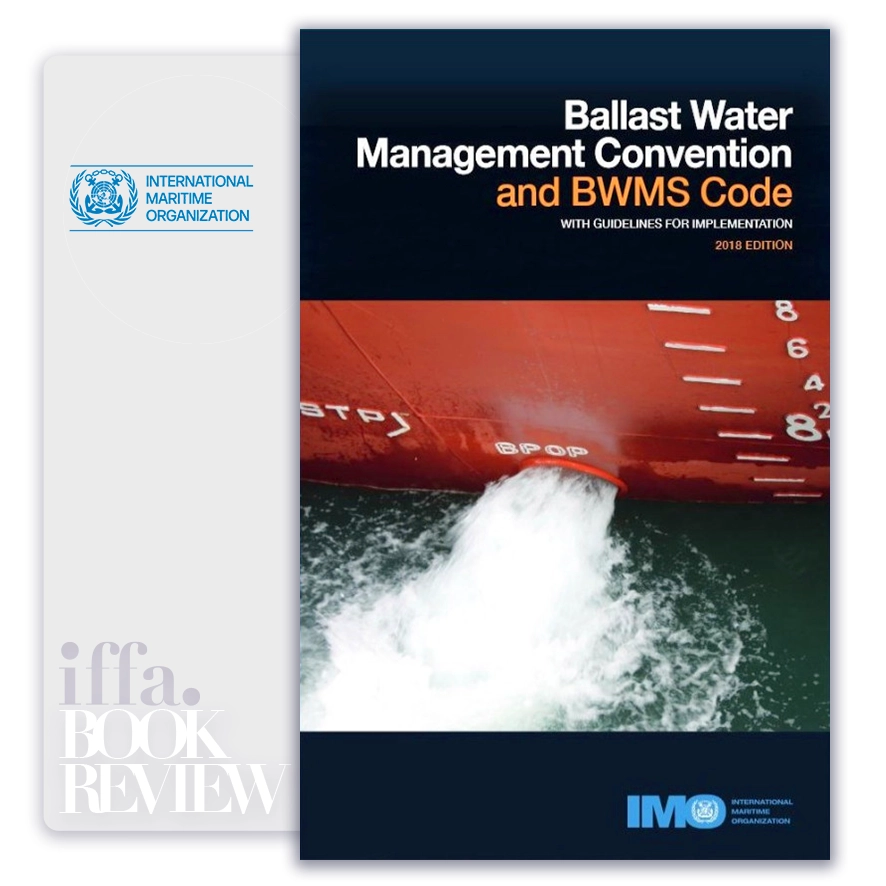
by International Maritime Organization (IMO)
Summary Overview:
Global shipping operates across ecological boundaries that were never designed to absorb uncontrolled biological transfer. The Ballast Water Management Convention and BWMS Code reframes ballast water not as routine operational fluid, but as a vector of ecological and regulatory risk. The International Maritime Organization established a binding framework to prevent the spread of invasive aquatic species through ballast discharge.
For shipowners, technical managers, and maritime executives, this convention sharpens regulatory compliance, capital planning, environmental governance, and operational discipline. Ballast water compliance is no longer optional or reputational; it is enforceable across port state regimes. In an era of increasing environmental scrutiny, ballast water management intersects directly with asset value, trading flexibility, and ESG credibility. Its relevance endures because biological risk management has become embedded in global maritime law.
About The Author
The International Maritime Organization (IMO) is the United Nations specialized agency responsible for regulating international shipping. It develops and maintains global standards covering safety, environmental performance, and operational integrity. The Ballast Water Management Convention and the accompanying BWMS Code reflect IMO’s role in harmonizing environmental protection with maritime commerce. Their authority is rooted in international treaty law and global port state enforcement.
Core Idea:
The central thesis of the Ballast Water Management Convention is that uncontrolled ballast water discharge poses significant ecological and economic risk through the transfer of invasive species. The Convention establishes mandatory performance standards and procedural controls to mitigate this threat.
At its foundation, the framework asserts that compliance requires both procedural discipline and technological capability. Ships must meet specific discharge standards, implement approved ballast water management systems, and maintain documentation evidencing conformity. The BWMS Code standardizes system approval and operational expectations. Environmental protection becomes an enforceable operational requirement rather than a voluntary commitment.
Ballast water is an environmental liability if unmanaged.
Key Concepts:
- Ecological Risk of Invasive Species
Ballast discharge can introduce non-native organisms into fragile ecosystems. These species disrupt biodiversity and economic stability.
- Ecological imbalance increases regulatory intervention
- Regulatory intervention increases compliance burden
- Compliance burden affects operational cost
Environmental stewardship aligns with commercial prudence. Prevention protects both ecosystems and enterprise value.
- D-1 and D-2 Standards
The Convention defines performance thresholds. The D-1 standard governs ballast water exchange; the D-2 standard sets biological discharge limits.
- D-1 relies on mid-ocean exchange
- D-2 requires onboard treatment systems
- Treatment systems demand capital investment
Transition toward D-2 compliance reshapes fleet economics. Technology adoption ensures regulatory alignment.
- Ballast Water Management Systems (BWMS)
Approved treatment systems form the compliance backbone. Systems must meet IMO type-approval standards.
- Installation requires technical integration
- Integration affects vessel downtime
- Downtime influences commercial scheduling
Technology strategy becomes central to fleet planning. Infrastructure investment safeguards trading rights.
- The BWMS Code
The Code standardizes approval and operational procedures. It defines performance testing, system reliability, and compliance expectations.
- Standardization enhances regulatory clarity
- Clarity reduces inspection ambiguity
- Reduced ambiguity minimizes detention risk
Harmonized rules increase predictability. Uniform standards stabilize compliance strategy.
- Survey and Certification Requirements
Compliance requires documentation and certification. Ships must carry an International Ballast Water Management Certificate.
- Certificates validate system conformity
- Lapses increase detention risk
- Inspections test operational adherence
Administrative discipline underpins operational continuity. Certification protects voyage schedule.
- Port State Control and Enforcement
Port authorities enforce compliance. Non-compliant vessels risk detention or penalties.
- Enforcement delays impact charter performance
- Delays increase reputational exposure
- Exposure affects commercial relationships
Proactive compliance mitigates disruption. Preparedness reduces regulatory friction.
- Retrofit and Capital Allocation
Existing fleets require retrofitting. Installation planning must align with drydock schedules and capital budgets.
- Retrofit timing affects cash flow
- Delayed compliance increases exposure
- Integrated planning reduces inefficiency
Strategic scheduling preserves financial stability. Capital discipline supports compliance.
- Operational Procedures and Crew Training
Technology alone does not ensure compliance. Crew must operate systems correctly and maintain accurate logs.
- Procedural lapses create violations
- Training reduces error
- Documentation strengthens defense
Human discipline complements technical investment. Execution determines conformity.
- Environmental and ESG Alignment
Ballast water management aligns with broader ESG frameworks. Regulatory compliance reinforces environmental credibility.
- Sustainability performance influences investor perception
- Investor perception affects capital access
- Capital access shapes growth potential
Environmental governance strengthens competitive positioning. Compliance enhances corporate resilience.
- Long-Term Strategic Implications
Environmental regulation will continue to intensify. The Convention signals broader decarbonization and biodiversity protection trends.
- Compliance infrastructure builds institutional capability
- Capability enhances adaptability
- Adaptability sustains long-term viability
Environmental foresight reduces strategic shock. Preparation strengthens longevity.
Compliance depends on both technology and procedural rigor.
Executive Insights:
At the executive level, the Ballast Water Management Convention reframes environmental compliance as strategic infrastructure rather than regulatory overhead. Incentive systems that defer investment increase detention risk and trading restriction exposure. Sustainable fleet management requires integrating environmental regulation into capital planning.
Judgment improves when ballast compliance is treated as part of broader ESG and decarbonization strategy. Risk exposure decreases when certification, documentation, and training are embedded into governance systems. Long-term value creation depends on aligning operational performance with environmental law. Shipping enterprises that institutionalize compliance readiness maintain uninterrupted market access.
Actionable Takeaways:
Ballast water compliance must be embedded within enterprise risk governance.
- Start aligning retrofit schedules with long-term fleet strategy.
- Stop treating ballast compliance as isolated technical expense.
- Reframe BWMS investment as protection of trading flexibility.
- Embed certification monitoring into compliance dashboards.
- Reduce detention risk through structured crew training programs.
- Align environmental compliance with ESG reporting frameworks.
- Integrate ballast planning with drydock and capital budgeting cycles.
- Protect documentation discipline as a core operational priority.
Final Thoughts:
The Ballast Water Management Convention and BWMS Code illustrate how environmental stewardship has become embedded within maritime governance. Its significance lies in formalizing biological risk control as an operational obligation.
Long-term value creation in global shipping depends on disciplined compliance, technological integration, and environmental foresight. Institutions that anticipate regulatory evolution preserve both ecological responsibility and commercial continuity. In the end, effective ballast water governance safeguards ecosystems while protecting the strategic freedom to trade globally.
The ideas in this book go beyond theory, offering practical insights that shape real careers, leadership paths, and professional decisions. At IFFA, these principles are translated into executive courses, professional certifications, and curated learning events aligned with today’s industries and tomorrow’s demands. Discover more in our Courses.
Applied Programs

- Course Code : SBM-409
- Delivery : In-class / Virtual / Workshop
- Duration : 2-4 Days
- Venue: DUBAI HUB

- Course Code : PMA-613
- Delivery : In-class / Virtual / Workshop
- Duration : 3-5 Days
- Venue: DUBAI HUB

- Course Code : CIF-505
- Delivery : In-class / Virtual / Workshop
- Duration : 3-5 Days
- Venue: DUBAI HUB

- Course Code : CIF-512
- Delivery : In-class / Virtual / Workshop
- Duration : 2-4 Days
- Venue: DUBAI HUB
Related Books