
The Executive Summary of
The Richest Man in Babylon
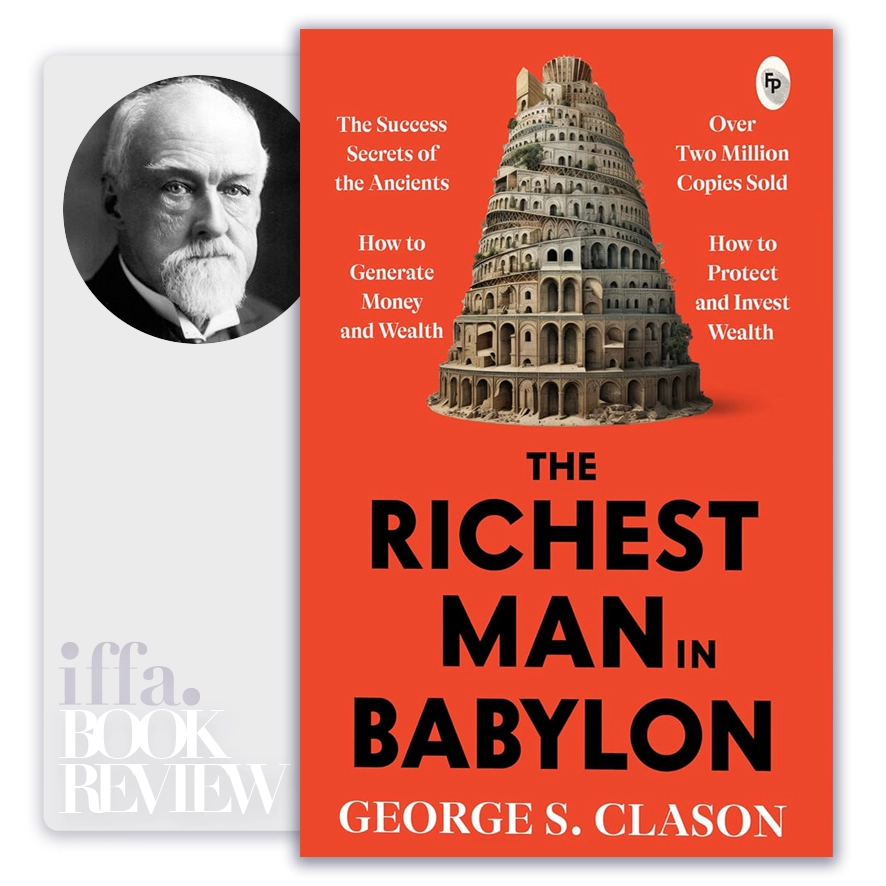
by George S. Clason
Summary Overview:
The Richest Man in Babylon endures because it addresses a problem that transcends markets, cycles, and technologies: how individuals and societies mismanage surplus when discipline is absent. Written as a series of parables, the book remains relevant not for its historical setting but for its clarity about incentives, habits, and compounding. For CEOs, board members, policymakers, and long-term investors, its value lies in reframing wealth not as income or luck, but as a function of behavior repeated consistently over time. In an era of financial sophistication, leverage, and complexity, the book’s simplicity is its strength—it reveals the first principles of capital stewardship that modern tools still depend on.
About The Author
George S. Clason was a businessman and writer who sought to communicate financial principles through accessible narratives rather than technical instruction. His authority stems not from academic theory, but from translating enduring economic truths into memorable frameworks.
What distinguishes Clason’s perspective is his focus on human behavior over financial instruments. He understood that prosperity is constrained less by opportunity than by habits, discipline, and judgment—an insight that remains unchanged despite evolving markets.
Core Idea:
The core idea of The Richest Man in Babylon is that wealth is built through disciplined allocation of surplus, prudent risk management, and patience, not through income level or financial sophistication. Money that is not governed by rules will be consumed; money that follows rules will multiply.
Clason frames wealth as a moral and behavioral outcome. Capital grows when individuals consistently separate saving from spending, invest conservatively, and protect principal from avoidable loss. The book treats financial success as a process of self-governance, where habits determine outcomes more reliably than intelligence or ambition.
Wealth grows where discipline governs desire.
Key Concepts:
- Paying Yourself First as Capital Formation
The principle of setting aside a fixed portion of income before expenses establishes automatic capital accumulation. It prioritizes future optionality over present consumption. - Expense Control as Strategic Discipline
Unchecked lifestyle inflation erodes surplus. The book emphasizes distinguishing necessary costs from habitual wants, a discipline equally relevant to personal finance and corporate budgeting. - Capital Must Work, Not Rest
Idle savings lose potential. Wealth grows when capital is deployed productively, reinforcing the principle that returns require participation in value creation, not hoarding. - Risk Management and Principal Protection
Clason repeatedly warns against speculative loss. Preserving capital is framed as a prerequisite for compounding, not a conservative weakness. - Seek Wise Counsel Before Investing
Expertise matters. The book highlights the cost of investing outside one’s understanding, underscoring knowledge asymmetry as a hidden risk. - Time as the True Multiplier
Compounding rewards patience. Wealth grows slowly at first, then accelerates, reinforcing long-term orientation over short-term gratification. - Debt as a Constraint on Freedom
Excessive debt enslaves future income. The book treats debt reduction as risk reduction, restoring autonomy and resilience. - Opportunity Favors Prepared Capital
Luck benefits those who are ready. Accumulated capital enables participation when opportunity arises, aligning preparation with optionality. - Habitual Behavior Over Windfalls
Windfalls without discipline evaporate. Sustainable wealth arises from repeatable behavior, not episodic success. - Wealth as Responsibility, Not Status
Clason frames wealth as stewardship. Capital carries an obligation to be managed wisely, aligning personal prosperity with social stability.
Money that is not directed will inevitably disappear.
Executive Insights:
The Richest Man in Babylon reframes wealth creation as governance of behavior, not mastery of tools. Organizations and individuals with similar resources diverge sharply based on whether leaders enforce disciplined allocation, risk controls, and long-term thinking—or allow consumption and optimism to dominate.
For boards and senior executives, the implication is clear: capital discipline precedes strategic advantage. Without it, even the best opportunities fail to translate into enduring value.
- Discipline compounds faster than ingenuity
- Expense control preserves strategic flexibility
- Capital protection enables longevity
- Time rewards consistency, not brilliance
- Stewardship underpins sustainable prosperity
Actionable Takeaways:
Senior leaders should translate Clason’s principles into governance-level behavior and systems:
- Institutionalize surplus allocation before discretionary spending
- Enforce expense discipline to protect strategic capacity
- Prioritize principal protection over speculative upside
- Invest only within understood domains or with trusted expertise
- Design for compounding, not quarterly gratification
Final Thoughts:
The Richest Man in Babylon is ultimately a book about temperament in the presence of money. It rejects the idea that wealth is a function of cleverness and instead insists on self-mastery, patience, and respect for risk. Its lessons endure because human nature has not changed; only the instruments have.
The book’s lasting contribution is its reminder that financial systems amplify behavior. Discipline creates resilience; indulgence creates fragility. Modern finance may be complex, but its foundations remain governed by simple truths.
The closing insight is timeless and authoritative: lasting wealth is not created by how much one earns or invests, but by how consistently one governs surplus, protects capital, and allows time to compound sound judgment into enduring prosperity.
The ideas in this book go beyond theory, offering practical insights that shape real careers, leadership paths, and professional decisions. At IFFA, these principles are translated into executive courses, professional certifications, and curated learning events aligned with today’s industries and tomorrow’s demands. Discover more in our Courses.
Applied Programs

- Course Code : SBM-409
- Delivery : In-class / Virtual / Workshop
- Duration : 2-4 Days
- Venue: DUBAI HUB

- Course Code : PMA-613
- Delivery : In-class / Virtual / Workshop
- Duration : 3-5 Days
- Venue: DUBAI HUB

- Course Code : CIF-505
- Delivery : In-class / Virtual / Workshop
- Duration : 3-5 Days
- Venue: DUBAI HUB

- Course Code : CIF-512
- Delivery : In-class / Virtual / Workshop
- Duration : 2-4 Days
- Venue: DUBAI HUB
Related Books