
The Executive Summary of
1929: Inside the Story of the Greatest Crash on Wall Street
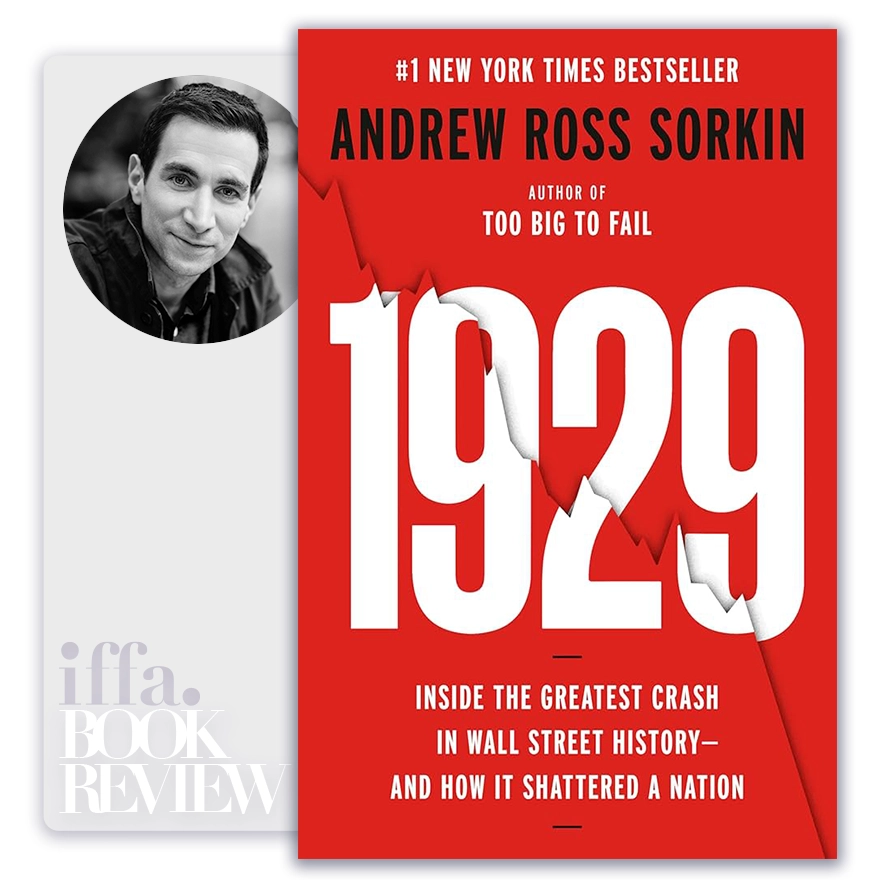
by Andrew Ross Sorkin
Summary Overview:
The Wall Street Crash of 1929 was not merely a market correction—it was a systemic collapse of confidence, governance, and judgment that reshaped capitalism, regulation, and global politics for decades. In 1929: Inside the Story of the Greatest Crash on Wall Street, Andrew Ross Sorkin revisits the anatomy of the crash with a modern investigative lens, revealing how speculation, leverage, narrative contagion, and institutional blindness combined to trigger one of the most devastating economic breakdowns in history.
This book matters because the forces that drove the 1929 crash—financial exuberance, weak oversight, moral hazard, complexity without transparency, and belief in perpetual growth—are not relics of the past. They recur whenever markets outpace governance. For executives, board members, regulators, and investors, the 1929 crash is not history; it is a pattern. Understanding it is essential to managing systemic risk, corporate governance, and crisis leadership in any era.
About The Author
Andrew Ross Sorkin is an influential financial journalist known for reconstructing major financial crises through first-hand accounts, institutional analysis, and decision-level detail. His reporting emphasizes how human behavior, incentives, and power structures interact with markets under stress.
Sorkin’s strength lies in showing that crashes are not accidents—they are processes, built over time by choices that seemed rational until they became catastrophic.
Core Idea:
The central thesis of 1929 is clear and unsettling:
The Great Crash was not caused by a single shock, but by a long chain of reinforced illusions—about value, risk, growth, and control.
The book demonstrates that the crash emerged from:
- Speculative excess fueled by leverage
- Narratives of permanent prosperity
- Lack of institutional guardrails
- Delayed recognition of systemic fragility
- Psychological contagion once confidence broke
When trust collapsed, markets did not merely fall—they disintegrated.
When speculation becomes culture, risk disappears from perception, but not from reality.
Key Concepts:
- Speculation Disguised as Investment
In the late 1920s, speculation was normalized and celebrated. Ordinary citizens, banks, and institutions increasingly treated stocks as guaranteed vehicles of wealth, not risk-bearing assets.
Key drivers included:
- Buying on margin (high leverage)
- Popular belief that prices only moved upward
- Media reinforcement of success stories
- Social pressure to participate
- Leverage as an Accelerator of Collapse
Margin buying magnified gains—but guaranteed collapse once prices turned. Small declines triggered forced selling, which drove prices down further, creating self-reinforcing feedback loops.
The book shows how leverage:
- Converts volatility into instability
- Turns corrections into cascades
- Makes liquidity vanish at speed
- Narrative Contagion and Market Psychology
Sorkin emphasizes that markets are social systems, not purely rational mechanisms. Optimism spreads socially—and so does panic.
In 1929:
- Confidence evaporated overnight
- Selling became reflexive
- Rumors replaced analysis
- Fear replaced valuation
Once belief in the system cracked, no price felt safe.
- Institutional Blindness and Regulatory Absence
The crash exposed the absence of effective market oversight. There were:
- No central mechanisms to stabilize markets
- No coordinated response authority
- No transparency requirements for leverage
- No systemic risk monitoring
Institutions assumed markets would self-correct—until they couldn’t. Markets correct excess only when the system can survive the correction.
- The Illusion of Permanently Rising Prosperity
The 1920s were marked by technological progress, industrial growth, and rising consumerism. This progress created a false equivalence between innovation and invulnerability.
Economic growth was mistaken for:
- Risk elimination
- Structural stability
- Permanent prosperity
The book shows how macro optimism blinded leaders to micro fragility.
- Liquidity Is Confidence—Until It Isn’t
Liquidity vanished not because assets disappeared, but because trust disappeared. When confidence broke:
- Buyers retreated
- Credit froze
- Cash became king
- Institutions hoarded liquidity
Liquidity exists only as long as people believe they can exit.
- Cascading Failure Across the Economy
The crash did not remain confined to Wall Street. It spread rapidly into:
- Banking failures
- Industrial shutdowns
- Mass unemployment
- Deflationary spirals
- Political instability
The market collapse triggered a system-wide economic contraction that policy tools of the time were ill-equipped to handle.
- Leadership Failure in Early Crisis Response
Sorkin highlights how early leadership responses were:
- Fragmented
- Hesitant
- Politically constrained
- Underestimating scale
Delayed acknowledgment worsened outcomes. By the time decisive action was taken, damage had already compounded. In systemic crises, delay is itself a decision—with consequences.
- The Cost of Moral Certainty
Many leaders believed:
- Markets should discipline themselves
- Intervention would “reward irresponsibility”
- Pain was necessary for correction
While philosophically coherent, these views ignored systemic interdependence. The result was collapse rather than correction.
Leverage does not create risk, it concentrates and accelerates it.
Executive Insights:
1929 reframes financial crises as failures of systems, governance, and collective judgment, not isolated miscalculations.
Strategic Implications for Leaders and Boards:
- Excess optimism is a risk signal
- Leverage multiplies fragility
- Narratives can override fundamentals
- Liquidity is psychological as much as financial
- Regulation exists to protect systems, not actors
- Crisis leadership demands early, decisive action
- Resilience matters more than efficiency
Actionable Takeaways:
The lessons of 1929 apply broadly—to finance, technology platforms, supply chains, and global systems.
Practical Actions for Executives and Policymakers:
- Monitor leverage aggressively
- Stress-test narratives, not just numbers
- Identify feedback loops and contagion paths
- Design institutions for systemic failure scenarios
- Build buffers, not just returns
- Prepare crisis authority structures in advance
- Align incentives with long-term stability
- Intervene early when confidence erodes
Final Thoughts:
1929: Inside the Story of the Greatest Crash on Wall Street is a masterclass in systemic failure. It shows that markets do not collapse because people stop believing in numbers—but because they stop believing in the system that gives numbers meaning.
Andrew Ross Sorkin’s account reminds us that every era believes itself more sophisticated than the last—until history repeats. The 1929 crash teaches a timeless lesson:
When optimism replaces discipline, leverage replaces judgment, and narratives replace governance, collapse becomes not a possibility—but an inevitability.
For leaders today, the real question is not whether markets will rise or fall—but whether institutions are designed to survive the fall when it comes.
The ideas in this book go beyond theory, offering practical insights that shape real careers, leadership paths, and professional decisions. At IFFA, these principles are translated into executive courses, professional certifications, and curated learning events aligned with today’s industries and tomorrow’s demands. Discover more in our Courses.
Applied Programs

- Course Code : SBM-409
- Delivery : In-class / Virtual / Workshop
- Duration : 2-4 Days
- Venue: DUBAI HUB

- Course Code : PMA-613
- Delivery : In-class / Virtual / Workshop
- Duration : 3-5 Days
- Venue: DUBAI HUB

- Course Code : CIF-505
- Delivery : In-class / Virtual / Workshop
- Duration : 3-5 Days
- Venue: DUBAI HUB

- Course Code : CIF-512
- Delivery : In-class / Virtual / Workshop
- Duration : 2-4 Days
- Venue: DUBAI HUB
Related Books