
The Executive Summary of
Gaudí
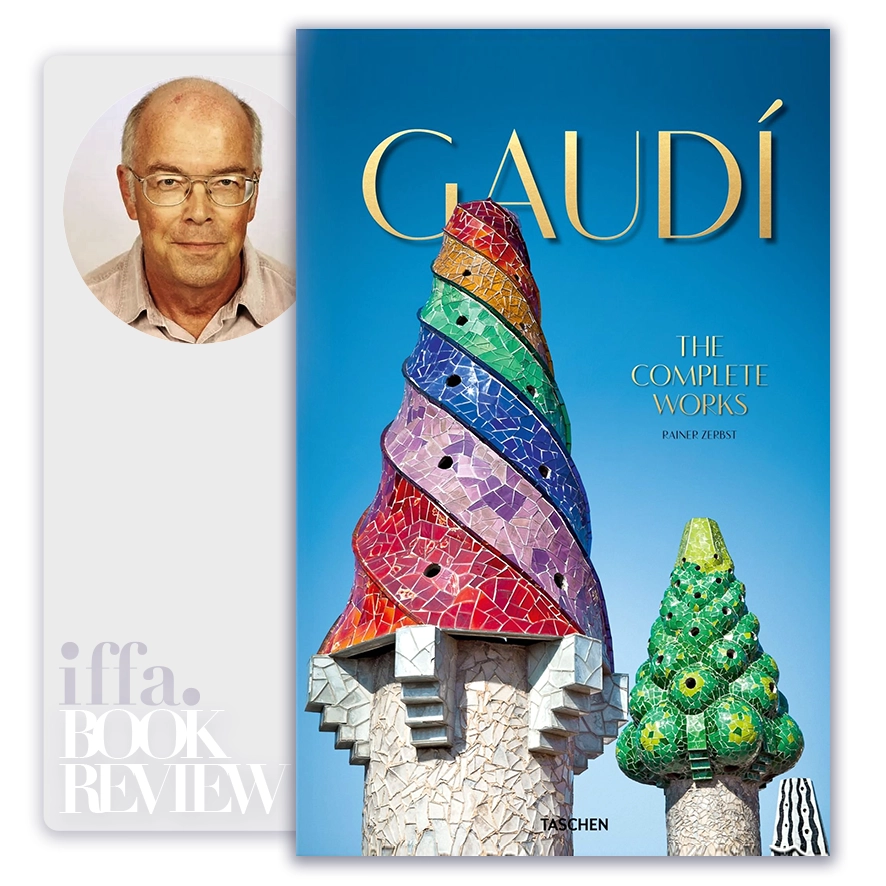
by Rainer Zerbst
Summary Overview:
In an era where architecture is often reduced to efficiency metrics and standardized design language, Gaudí by Rainer Zerbst examines the enduring relevance of radical originality. Antoni Gaudí’s work defied conventional geometry, material logic, and aesthetic norms, yet achieved structural coherence and cultural permanence. Zerbst’s study reframes Gaudí not merely as an artist, but as a systems thinker operating beyond linear convention.
For architects, developers, and design-driven executives, this book sharpens long-term vision, material experimentation, and integration of form with function. It demonstrates that innovation emerges from disciplined conviction rather than stylistic novelty. In environments where architectural identity defines brand and legacy, Gaudí’s synthesis of engineering rigor and symbolic imagination becomes strategically instructive. The book remains relevant because it challenges the assumption that efficiency must suppress individuality.
About The Author
Rainer Zerbst is an architectural historian and scholar known for his analytical exploration of design evolution and structural innovation. His work on Gaudí contextualizes the architect’s creations within historical, technical, and cultural frameworks. Zerbst’s perspective is distinctive in that it balances aesthetic appreciation with structural analysis, presenting Gaudí as both visionary artist and disciplined engineer. His study situates Gaudí’s work within broader architectural discourse rather than isolating it as eccentric anomaly.
Core Idea:
The central thesis of Gaudí is that architecture can unify structural innovation, natural form, spiritual symbolism, and material experimentation into a coherent system. Zerbst illustrates how Gaudí’s buildings integrate organic geometry with engineering logic.
At its foundation, the book asserts that Gaudí’s originality was not impulsive but methodical. His use of catenary arches, ruled surfaces, and natural analogies reflected deep structural understanding. Creativity and technical rigor were inseparable in his practice. Architecture, in Gaudí’s philosophy, became a living organism rather than a static structure.
Nature provides both aesthetic inspiration and engineering logic.
Key Concepts:
- Organic Structural Logic
Gaudí derived geometry from natural forms. Rather than imposing symmetry, he studied curves, branching systems, and load-bearing patterns found in nature.
- Natural forms distribute stress efficiently
- Efficiency reduces structural compromise
- Structural coherence enhances durability
Design inspired by nature integrates beauty with function. Biomimicry supports structural longevity.
- The Sagrada Família as Vision
The Sagrada Família represents long-horizon thinking. Gaudí’s masterpiece was conceived beyond his lifetime.
- Long-term projects require generational commitment
- Commitment sustains architectural integrity
- Integrity reinforces cultural identity
Strategic architecture transcends immediate completion. Vision extends beyond individual tenure.
- Material Experimentation
Gaudí experimented extensively with stone, ceramic, iron, and glass. His materials were not decorative additions but structural contributors.
- Material innovation enhances performance
- Performance strengthens resilience
- Resilience sustains legacy
Material choice shapes structural narrative. Craftsmanship underpins creativity.
- Geometry as Engineering Tool
Gaudí used physical models to test load distribution. Hanging-chain models translated gravity into design insight.
- Modeling reveals structural behavior
- Insight reduces design error
- Error reduction increases stability
Empirical testing strengthens architectural integrity. Experimentation reduces uncertainty.
- Integration of Art and Structure
Ornamentation was inseparable from engineering. Decorative elements carried symbolic and structural weight.
- Symbolism enriches meaning
- Meaning deepens cultural relevance
- Relevance sustains public engagement
Integrated design multiplies impact. Form and function coexist.
- Urban Identity and Place
Gaudí’s buildings shaped Barcelona’s cultural identity. Architecture influenced urban perception and tourism.
- Iconic design enhances brand value
- Brand value increases economic return
- Economic return supports preservation
Architectural vision influences city-scale strategy. Design defines identity.
- Spiritual and Symbolic Framework
Spiritual symbolism informed structural choices. Gaudí’s Catholic worldview influenced proportion and motif.
- Narrative deepens engagement
- Engagement strengthens continuity
- Continuity preserves legacy
Architecture communicates beyond utility. Meaning sustains longevity.
- Resistance to Convention
Gaudí resisted prevailing architectural norms. His divergence from neoclassical symmetry represented disciplined independence.
- Convention limits experimentation
- Experimentation fosters innovation
- Innovation differentiates legacy
Strategic originality demands conviction. Differentiation ensures memorability.
- Craftsmanship and Detail
Attention to detail reinforced coherence. Gaudí oversaw construction personally to maintain integrity.
- Detail reflects discipline
- Discipline strengthens execution
- Execution defines outcome
Precision underlies innovation. Excellence resides in refinement.
- Enduring Influence
Gaudí’s impact extends across modern architecture. His integration of structure and organic form influenced contemporary biomorphic design.
- Influence compounds cultural value
- Cultural value enhances global recognition
- Recognition strengthens historical permanence
Legacy extends beyond physical structure. Endurance validates vision.
Innovation requires structural discipline as much as imagination.
Executive Insights:
At the executive level, Gaudí reframes innovation as disciplined integration rather than stylistic experimentation. Incentive systems that prioritize short-term efficiency may undermine long-term identity. Sustainable architectural value emerges when structural rigor aligns with symbolic clarity.
Judgment improves when leaders evaluate projects through both functional and cultural lenses. Risk exposure decreases when experimentation is grounded in structural testing. Long-term value creation in design industries depends on authenticity, patience, and material integrity. Institutions that invest in visionary coherence create assets that outlast cycles.
Actionable Takeaways:
Architectural innovation must align imagination with structural rigor.
- Start integrating biomimetic principles into structural design thinking
- Stop separating aesthetic ambition from engineering discipline
- Reframe long-term projects as generational commitments
- Embed experimental modeling into design development
- Reduce short-term compromise of material quality
- Align urban development with cultural identity strategy
- Encourage design teams to pursue originality grounded in analysis
- Protect craftsmanship as a strategic differentiator
Final Thoughts:
Gaudí by Rainer Zerbst illustrates how architectural genius emerges from disciplined integration of imagination and engineering. Its enduring insight lies in demonstrating that originality and rigor are not opposites.
Long-term value creation in architecture requires courage to diverge, patience to refine, and discipline to execute. Structures endure when they reflect authenticity and structural intelligence. In the end, architecture achieves permanence when creativity is guided by uncompromising structural integrity and visionary coherence.
The ideas in this book go beyond theory, offering practical insights that shape real careers, leadership paths, and professional decisions. At IFFA, these principles are translated into executive courses, professional certifications, and curated learning events aligned with today’s industries and tomorrow’s demands. Discover more in our Courses.
Applied Programs

- Course Code : SBM-409
- Delivery : In-class / Virtual / Workshop
- Duration : 2-4 Days
- Venue: DUBAI HUB
- Course Code : PMA-613
- Delivery : In-class / Virtual / Workshop
- Duration : 3-5 Days
- Venue: DUBAI HUB

- Course Code : CIF-505
- Delivery : In-class / Virtual / Workshop
- Duration : 3-5 Days
- Venue: DUBAI HUB

- Course Code : CIF-512
- Delivery : In-class / Virtual / Workshop
- Duration : 2-4 Days
- Venue: DUBAI HUB
Related Books