The Executive Summary of
Sustainability Management
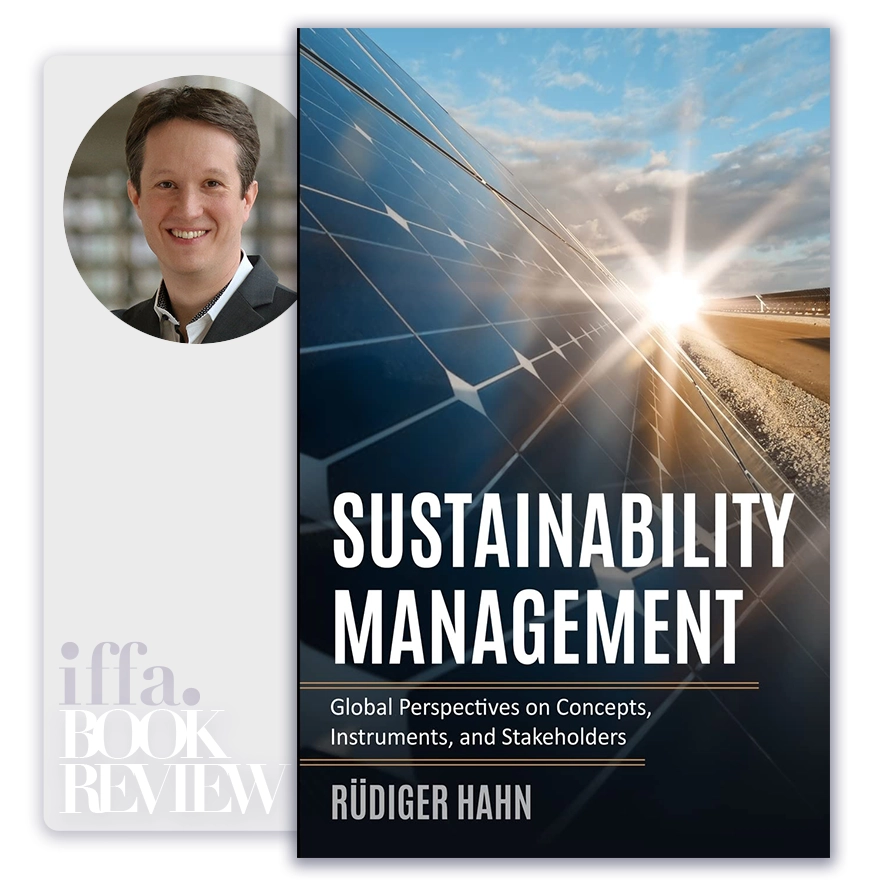
by Rüdiger Hahn
Summary Overview:
Sustainability Management addresses a central challenge facing modern leadership: how to move sustainability from aspiration to institutional reality. As environmental limits, social expectations, and regulatory pressures converge, sustainability is no longer a reputational add-on or reporting exercise—it has become a core determinant of long-term competitiveness and legitimacy. Rüdiger Hahn’s work remains highly relevant because it confronts the gap between sustainability rhetoric and actual managerial integration.
For CEOs, board members, and long-term investors, the book matters because unsystematic sustainability efforts create false confidence. Many organizations publish commitments while continuing to operate with short-term incentives, siloed decision-making, and incomplete metrics. Hahn reframes sustainability as a management discipline—one that requires structured governance, aligned incentives, and clear performance logic. Leaders should care because sustainability failures increasingly translate into financial risk, strategic disruption, and loss of trust.
About The Author
Rüdiger Hahn is an academic and researcher specializing in sustainability management, corporate responsibility, and integrated performance measurement. His work focuses on how organizations translate sustainability principles into managerial systems.
Hahn’s perspective is distinctive because he approaches sustainability not as ethics alone, but as organizational design and decision architecture. He emphasizes rigor, measurability, and integration rather than vision statements or isolated initiatives.
Core Idea:
The central thesis of Sustainability Management is that sustainability becomes effective only when it is embedded into core management processes. Hahn argues that environmental and social goals must be translated into decision criteria, operational targets, and performance indicators that guide everyday behavior across the organization.
At a deeper level, the book presents a worldview in which long-term value creation depends on managing trade-offs transparently. Sustainability is not about eliminating tension between economic, environmental, and social objectives, but about making those tensions visible and governable. Organizations that fail to integrate sustainability systematically rely on goodwill; those that succeed rely on structure.
Sustainability delivers value only when it is managed with the same discipline as financial performance.
Key Concepts:
- Sustainability Is a Management System Issue
Hahn positions sustainability as a design challenge.
- Isolated initiatives fail to scale.
- Integration determines impact.
- Strategy Must Internalize External Effects
Environmental and social impacts cannot remain externalities.
- Unpriced impacts become future risks.
- Strategy must anticipate constraint.
- Measurement Shapes Behavior
What organizations measure drives what they manage.
- Lack of metrics creates illusion.
- Indicators enable accountability.
- Trade-Offs Must Be Explicit
Sustainability involves competing objectives.
- Hidden trade-offs undermine credibility.
- Transparency improves decision quality.
- Governance Anchors Sustainability
Leadership structures determine seriousness.
- Clear responsibility prevents diffusion.
- Board oversight strengthens commitment.
- Incentives Drive Execution
Values without incentives remain rhetorical.
- Misaligned rewards sabotage intent.
- Incentives translate goals into action.
- Operational Integration Is Essential
Sustainability must reach daily operations.
- Strategy without execution erodes trust.
- Processes embed intent.
- Stakeholders Are Strategic Actors
Engagement is not symbolic consultation.
- Stakeholders influence legitimacy and risk.
- Dialogue improves foresight.
- Reporting Is a Management Tool, Not an End
Disclosure should inform decisions internally.
- Reporting without learning is hollow.
- Feedback loops matter.
- Sustainability Is Dynamic, Not Static
Standards and expectations evolve.
- Adaptive systems outperform fixed commitments.
- Continuous learning sustains relevance.
What is not integrated into decision systems remains symbolic.
Executive Insights:
Sustainability Management reframes sustainability as a leadership and governance competence, not a communications function. Hahn shows that organizations fail when sustainability is delegated to specialists without authority, or when it is disconnected from core planning, investment, and control systems.
For boards and senior executives, the implication is clear: sustainability risk is enterprise risk. Long-term performance depends on whether organizations can anticipate environmental and social constraints, integrate them into strategy, and manage unavoidable trade-offs openly. Firms that do so gain resilience and credibility; those that do not accumulate hidden liabilities.
- Sustainability integration protects long-term value.
- Transparency strengthens strategic credibility.
- Governance determines seriousness of intent.
- Metrics convert values into action.
- Learning capability sustains advantage.
Actionable Takeaways:
Effective sustainability leadership requires system design.
- Embed sustainability criteria into strategic decisions.
- Align incentives with environmental and social goals.
- Make trade-offs explicit and governable.
- Strengthen board-level sustainability oversight.
- Use reporting to improve decisions, not just disclosure.
Final Thoughts:
Sustainability Management strips away comforting narratives and replaces them with a demanding insight: good intentions do not change outcomes—systems do. Rüdiger Hahn’s work shows that sustainability succeeds only when leaders are willing to redesign how decisions are made, measured, and rewarded.
For executives responsible for long-term stewardship, the book offers a lasting conclusion: sustainability is not a constraint on management excellence; it is a test of it. Organizations that can integrate responsibility with rigor will define the future of competitive advantage.
In the long run, sustainability belongs not to those who promise most—but to those who manage best.
The ideas in this book go beyond theory, offering practical insights that shape real careers, leadership paths, and professional decisions. At IFFA, these principles are translated into executive courses, professional certifications, and curated learning events aligned with today’s industries and tomorrow’s demands. Discover more in our Courses.
Applied Programs

- Course Code : SBM-409
- Delivery : In-class / Virtual / Workshop
- Duration : 2-4 Days
- Venue: DUBAI HUB

- Course Code : PMA-613
- Delivery : In-class / Virtual / Workshop
- Duration : 3-5 Days
- Venue: DUBAI HUB
- Course Code : CIF-505
- Delivery : In-class / Virtual / Workshop
- Duration : 3-5 Days
- Venue: DUBAI HUB

- Course Code : CIF-512
- Delivery : In-class / Virtual / Workshop
- Duration : 2-4 Days
- Venue: DUBAI HUB
Related Books