The Executive Summary of
Ando
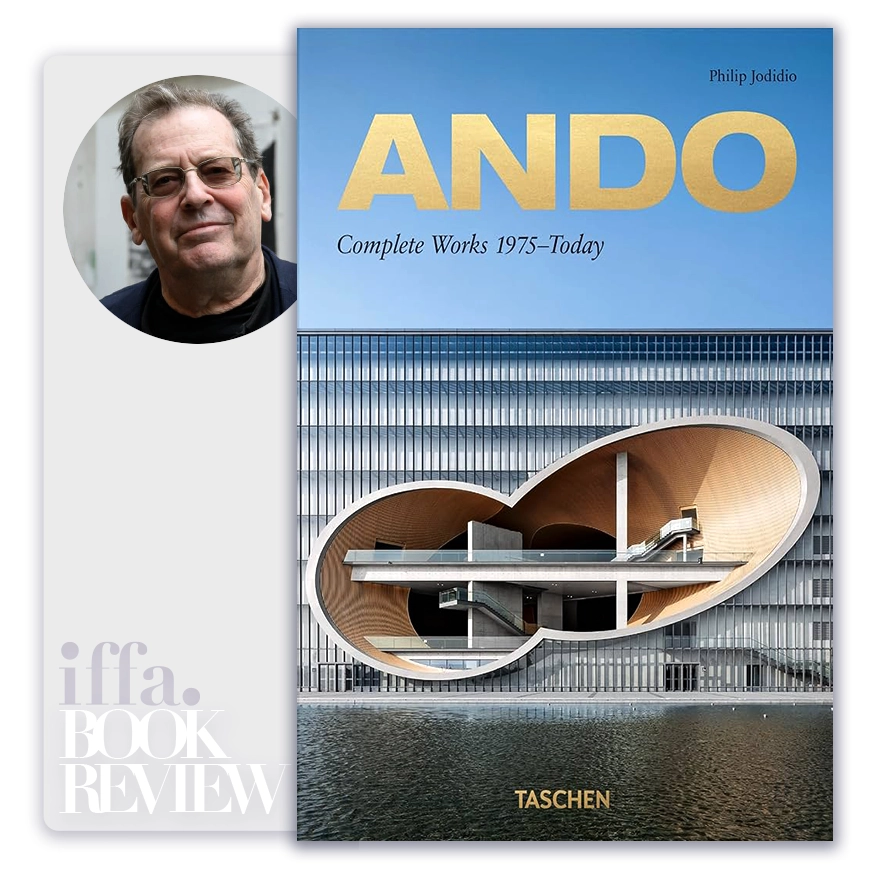
by Philip Jodido
Summary Overview:
Ando examines the work of one of the most influential architects of the late 20th and early 21st centuries, yet its relevance extends far beyond architecture. The book matters because it presents a philosophy of creation rooted in restraint, discipline, and moral clarity—qualities increasingly rare in a world of excess, spectacle, and speed. Through the lens of Tadao Ando’s work, Philip Jodido reveals how architecture can become an instrument of introspection rather than assertion, and how limitation can generate depth instead of compromise.
For senior leaders, developers, cultural institutions, and long-term investors, the book addresses a deeper strategic question: how does one create enduring value without relying on noise, scale, or constant novelty? Ando’s architecture demonstrates that authority can emerge from quiet consistency, and that environments designed with care can shape human experience more profoundly than those designed for attention. In an era of climate constraint and cultural fatigue, Ando’s work offers a disciplined alternative rooted in clarity, humility, and permanence.
About The Author
Philip Jodido is an internationally respected architecture editor and author known for documenting contemporary architecture with cultural sensitivity and editorial rigor. His long-standing work has introduced global audiences to influential architects and movements with clarity and depth.
Jodido’s perspective is distinctive in his ability to contextualize architecture as both cultural expression and lived experience. In documenting Ando’s work, he avoids stylistic reduction and instead foregrounds philosophy, spatial intention, and continuity—allowing the architecture to be understood as a long-term worldview rather than a collection of objects.
Core Idea:
The central idea of Ando is that architecture can serve as a medium for silence, reflection, and spiritual clarity. Jodido presents Ando’s work as a disciplined pursuit of essentiality—where concrete, light, water, and geometry are stripped of excess to create spaces that heighten awareness rather than distract from it.
At a deeper level, the book presents a worldview in which true strength in design comes from self-imposed limits. Ando’s buildings resist spectacle and trend, instead offering environments that demand presence and patience. Architecture, in this framing, is not a statement of ego, but a framework for human contemplation and ethical restraint.
Architecture gains authority when it withdraws from noise and speaks through restraint.
Key Concepts:
- Self-Taught Discipline as Creative Foundation
Ando’s unconventional path reinforces independence of thought.
- Mastery emerges from conviction, not credentials.
- Discipline replaces institutional conformity.
- Concrete as a Medium of Silence
Ando’s use of exposed concrete is not industrial, but meditative.
- Material consistency creates calm.
- Precision elevates austerity.
- Light as Spiritual Structure
Natural light is treated as a compositional force.
- Light animates stillness.
- Space is revealed gradually, not instantly.
- Geometry as Moral Order
Simple forms establish clarity and hierarchy.
- Geometry disciplines perception.
- Order reduces cognitive noise.
- Nature as Counterbalance
Water, sky, wind, and landscape are integral, not decorative.
- Architecture frames nature.
- Nature completes the experience.
- Restraint Over Expression
Ando avoids expressive excess in favor of continuity.
- Repetition builds identity.
- Excess undermines longevity.
- Architecture as a Journey
Movement through space is choreographed deliberately.
- Experience unfolds over time.
- Patience is rewarded.
- Cultural Continuity Without Imitation
Traditional Japanese philosophy informs modern form.
- Tradition is abstracted, not replicated.
- Continuity survives through reinterpretation.
- Minimalism as Ethical Choice
Minimalism is framed as responsibility, not style.
- Less reduces environmental burden.
- Simplicity clarifies intent.
- Longevity as Ultimate Measure
Ando’s work resists obsolescence.
- Timelessness outperforms novelty.
- Buildings age with dignity.
Enduring design emerges from discipline applied consistently over time.
Executive Insights:
Ando reframes excellence as the outcome of long-term consistency rather than constant reinvention. Jodido’s documentation shows that Ando’s influence comes not from diversification, but from deep commitment to a narrow set of principles applied rigorously over decades. This has direct relevance for leadership, brand stewardship, and institutional strategy.
For boards, cultural leaders, and long-term investors, the implication is clear: enduring value is built through restraint, clarity of philosophy, and resistance to short-term trends. Systems—whether architectural, organizational, or cultural—gain strength when they are governed by coherent principles rather than opportunistic expansion.
- Authority grows through consistency.
- Restraint improves longevity.
- Simplicity enhances resilience.
- Philosophy must precede expression.
- Long-term value favors depth over breadth.
Actionable Takeaways:
Enduring creation requires disciplined intention.
- Commit to a clear philosophy and apply it consistently.
- Use limitation as a design and governance tool.
- Prioritize experience over spectacle.
- Build systems meant to age, not impress immediately.
- Treat restraint as a form of leadership strength.
Final Thoughts:
Ando is not simply a monograph; it is a meditation on what it means to build with integrity over time. Through Philip Jodido’s lens, Tadao Ando’s architecture emerges as a quiet rebuttal to excess, reminding leaders that power need not be loud to be lasting.
For those shaping environments, institutions, or legacies, the book offers a timeless insight: clarity deepens when noise is removed, and influence endures when ego is restrained. Architecture, like leadership, reaches its highest form when it creates space—for thought, for dignity, and for human presence.
In the long run, what is built with discipline and silence often speaks the loudest.
The ideas in this book go beyond theory, offering practical insights that shape real careers, leadership paths, and professional decisions. At IFFA, these principles are translated into executive courses, professional certifications, and curated learning events aligned with today’s industries and tomorrow’s demands. Discover more in our Courses.
Applied Programs

- Course Code : SBM-409
- Delivery : In-class / Virtual / Workshop
- Duration : 2-4 Days
- Venue: DUBAI HUB

- Course Code : PMA-613
- Delivery : In-class / Virtual / Workshop
- Duration : 3-5 Days
- Venue: DUBAI HUB
- Course Code : CIF-505
- Delivery : In-class / Virtual / Workshop
- Duration : 3-5 Days
- Venue: DUBAI HUB

- Course Code : CIF-512
- Delivery : In-class / Virtual / Workshop
- Duration : 2-4 Days
- Venue: DUBAI HUB
Related Books