The Executive Summary of
Consumer Behaviour
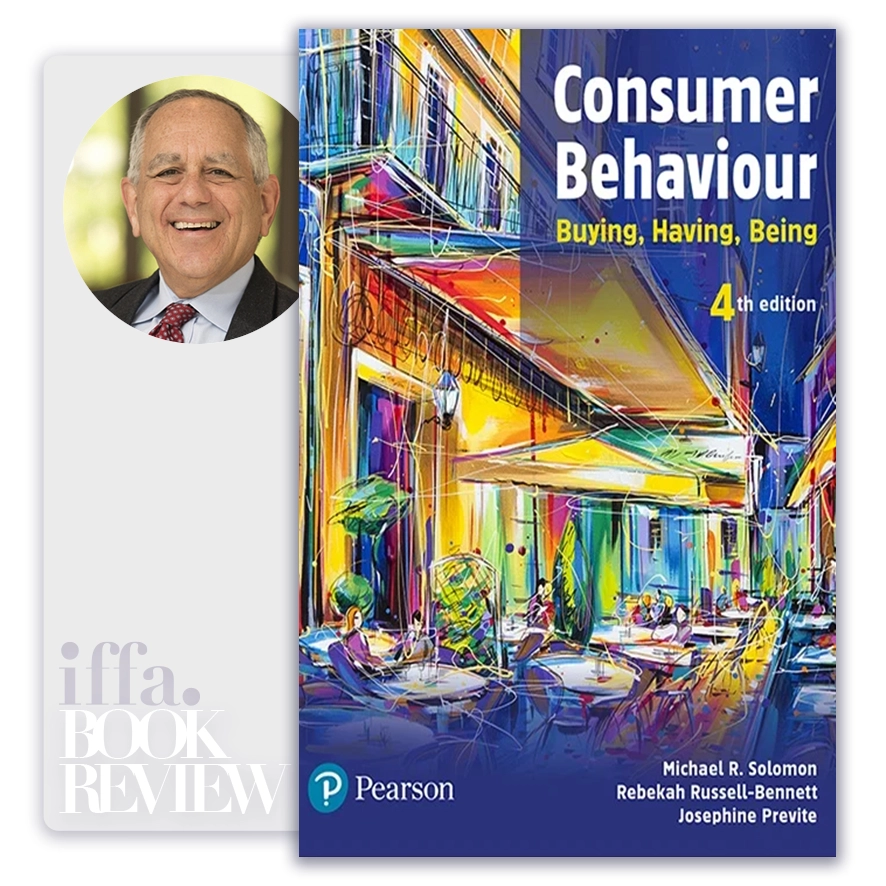
by Michael R. Solomon
Summary Overview:
In modern markets, competitive advantage is no longer created primarily through product features, pricing, or distribution reach. It is created through deep understanding of the consumer—how people make decisions, what consumption means to their identity, and how social and cultural forces shape buying behavior. Consumer Behaviour: Buying, Having, and Being remains one of the most authoritative frameworks for decoding this complexity.
This book matters because executives often oversimplify consumers as “rational decision-makers.” In reality, consumers buy to express identity, manage emotions, signal status, belong to groups, and construct meaning. Solomon shows that consumption is not merely transactional—it is psychological, social, and symbolic. For leaders in marketing, strategy, branding, retail, digital platforms, and innovation, this book provides a strategic lens for designing products, experiences, and messages that resonate at a human level.
At an executive level, the book answers a critical question:
How do organizations align offerings with the way consumers actually think, feel, and live?
About The Author
Michael R. Solomon is one of the world’s most influential scholars in consumer behavior, with decades of academic research, industry collaboration, and thought leadership. His work bridges psychology, sociology, anthropology, and marketing practice, making it foundational for both academic study and executive application.
Solomon’s credibility lies in his ability to translate complex behavioral science into practical, market-facing insight, widely adopted by global brands and institutions.
Core Idea:
At the heart of Buying, Having, and Being lies a powerful and enduring insight:
Consumers do not just buy products—they buy meanings, experiences, and identities.
Solomon reframes consumer behavior around three interconnected dimensions:
- Buying – how decisions are made
- Having – how products are used, shared, and valued
- Being – how consumption shapes identity and self-concept
Core Executive Insight:
Consumption is a form of self-expression as much as it is a response to need.
Understanding this triad allows organizations to move beyond functional differentiation toward emotional and cultural relevance.
People often buy to feel, not just to solve problems.
Key Concepts:
- Consumer Decision-Making Is Not Fully Rational
Solomon demonstrates that consumer decisions are influenced by:
- Emotions
- Cognitive biases
- Heuristics and shortcuts
- Social context
Rather than carefully evaluating all options, consumers often rely on mental rules of thumb.
Consumers simplify decisions—even when choices feel deeply personal. This explains why branding, familiarity, and perception often outweigh objective value.
- Perception Is More Powerful Than Reality
Consumers respond to what they perceive, not what firms intend.
Perception is shaped by:
- Sensory cues
- Packaging and design
- Pricing signals
- Brand associations
The same product can be experienced as premium or cheap depending on context. Design, storytelling, and presentation are therefore strategic levers.
- Motivation Goes Beyond Utility
Solomon identifies multiple layers of consumer motivation:
- Functional needs
- Emotional needs
- Social needs
- Aspirational and symbolic needs
People often buy to feel, not just to solve problems. This insight underpins lifestyle branding and experiential marketing.
- Identity and the Extended Self
One of the book’s most influential concepts is the extended self—the idea that possessions become part of who we are.
Consumers use products to:
- Signal identity
- Reinforce self-image
- Mark life stages
- Belong to social groups
Brands succeed when they help consumers become who they want to be. This is why strong brands evoke meaning, not just awareness.
- Social Influence and Reference Groups
Consumer behavior is deeply social.
Purchasing is shaped by:
- Family
- Peers
- Aspirational groups
- Cultural norms
Most buying decisions are socially negotiated—even when made alone. Influencer marketing and community-led brands leverage this dynamic.
- Culture as the Invisible Hand of Consumption
Culture defines:
- What is desirable
- What is acceptable
- What is taboo
Solomon shows that consumption patterns vary across:
- Nations
- Subcultures
- Generations
Global brands fail when they ignore local meaning systems. Cultural literacy is a strategic requirement, not a marketing add-on.
- The Role of Rituals in Consumption
Many consumption behaviors are ritualized:
- Morning coffee
- Holiday shopping
- Gifting
- Product unboxing
Rituals create emotional attachment and repeat behavior. Brands that integrate into rituals achieve stickiness and loyalty.
- Consumer Learning and Habit Formation
Consumers learn through:
- Experience
- Repetition
- Observation
Habits reduce cognitive effort and drive brand loyalty.
Once habits form, switching costs become psychological, not economic. This explains the power of first-mover advantage and onboarding experiences.
- Ownership, Sharing, and Access Economies
Solomon explores how meaning shifts when consumers:
- Own products
- Rent or share them
- Access services instead of goods
Value is increasingly defined by access and experience—not ownership. This insight foreshadows subscription models and platform economies.
- Ethical, Sustainable, and Conscious Consumption
Modern consumers increasingly evaluate brands based on:
- Ethics
- Sustainability
- Social responsibility
However, Solomon also highlights the attitude–behavior gap.
Consumers want to feel ethical—even when convenience wins. Brands must balance ideals with realistic consumer behavior.
Consumers simplify decisions, even when choices feel deeply personal.
Executive Insights:
Buying, Having, and Being reframes marketing and strategy as human-centered design disciplines.
Strategic Implications for Leaders:
- Brand meaning matters more than product parity
- Emotion and identity drive loyalty
- Social and cultural forces shape demand
- Experience design is as critical as product design
- Perception management is a strategic capability
- Consumer insight is a board-level asset
Organizations that rely solely on rational value propositions undervalue the real drivers of choice.
Actionable Takeaways:
The book offers simple, general principles for:
For CEOs & CMOs
- Invest in deep consumer insight, not just analytics
- Design brands around identity, not demographics
- Align offerings with consumer rituals
- Manage perception intentionally
For Product & Innovation Leaders
- Design for emotional and symbolic value
- Study usage contexts, not just purchase moments
- Build habit-forming experiences
Final Thoughts:
Consumer Behaviour: Buying, Having, and Being endures because it captures a fundamental truth of markets: consumption is about meaning, not just money. Michael Solomon shows that to understand consumers, leaders must look beyond transactions and into identity, culture, and lived experience.
In an age of data abundance and algorithmic targeting, this book offers a critical reminder:
Consumers are not data points.
They are people—buying, having, and becoming.
The organizations that win are those that understand this—and design accordingly.
The ideas in this book go beyond theory, offering practical insights that shape real careers, leadership paths, and professional decisions. At IFFA, these principles are translated into executive courses, professional certifications, and curated learning events aligned with today’s industries and tomorrow’s demands. Discover more in our Courses.
Applied Programs

- Course Code : SBM-409
- Delivery : In-class / Virtual / Workshop
- Duration : 2-4 Days
- Venue: DUBAI HUB

- Course Code : PMA-613
- Delivery : In-class / Virtual / Workshop
- Duration : 3-5 Days
- Venue: DUBAI HUB
- Course Code : CIF-505
- Delivery : In-class / Virtual / Workshop
- Duration : 3-5 Days
- Venue: DUBAI HUB

- Course Code : CIF-512
- Delivery : In-class / Virtual / Workshop
- Duration : 2-4 Days
- Venue: DUBAI HUB
Related Books