The Executive Summary of
Skin in the Game
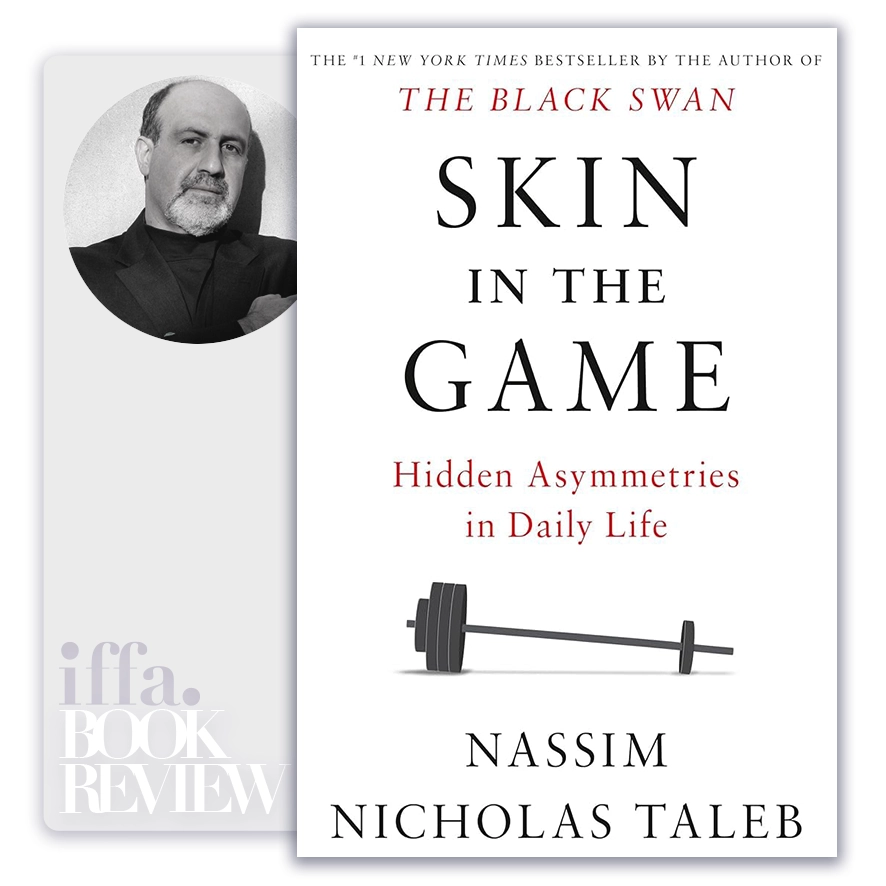
by Nassim Nicholas Taleb
Summary Overview:
In an age where decisions are increasingly separated from consequences, Skin in the Game delivers a blunt and necessary message: systems break when those who make decisions do not bear the risks of being wrong. Nassim Nicholas Taleb argues that many modern failures—financial crises, policy disasters, corporate collapses, and social instability—stem from asymmetry between power and accountability. For executives, regulators, investors, and leaders, this book provides a moral and strategic framework for decision-making under real-world risk.
Skin in the Game matters because expertise without accountability is dangerous. Taleb exposes how consultants, bureaucrats, executives, and intellectuals often benefit from upside while transferring downside to others. This imbalance not only erodes trust but also accumulates hidden fragility across systems. In complex, interconnected environments, sustainable leadership is not about credentials or authority—it is about exposure, responsibility, and shared risk.
About The Author
Nassim Nicholas Taleb is a Lebanese-American essayist and the former derivatives trader, risk specialist, and philosopher of uncertainty whose credibility is rooted in direct exposure to financial risk and real-world consequences. Unlike purely academic thinkers, Taleb writes from the perspective of someone who has personally absorbed losses.
His authority comes from combining probability theory, ethics, history, and lived experience, allowing him to challenge elites who operate safely insulated from the outcomes of their decisions.
Core Idea:
The core argument of Skin in the Game is direct and uncompromising:
A system is fair, stable, and functional only when decision-makers share in the risks they impose on others.
Taleb argues that throughout history, societies evolved rules—often informal but effective—that ensured symmetry between action and consequence. Modern systems, however, increasingly allow individuals to gain from success while being shielded from failure, creating moral hazard and systemic fragility.
Skin in the Game is not only about ethics—it is about survival of systems. When people face consequences, they act cautiously, think long-term, and avoid reckless behavior. When they do not, fragility grows invisibly until collapse becomes inevitable.
Never trust those who can benefit without bearing harm.
Key Concepts:
- Risk Asymmetry and Moral Hazard
Risk asymmetry occurs when one party benefits from upside while another absorbs downside.
This is the foundation of moral hazard and systemic failure.
Examples include:
- Executives rewarded for short-term gains without long-term liability
- Policymakers unaffected by the consequences of failed policies
- Financial institutions rescued after reckless risk-taking
Taleb argues that moral hazard is not an abstract flaw—it is a structural defect that destabilizes systems over time.
- Skin in the Game as a Filtering Mechanism
When individuals have skin in the game, poor ideas are filtered out naturally. Bad decisions lead to losses, reputations suffer, and fragile strategies disappear.
In contrast, systems without accountability:
- Reward persuasive narratives over results
- Promote confidence instead of competence
- Allow failure to repeat at larger scales
Skin in the game acts as an evolutionary mechanism, selecting for robustness rather than rhetoric.
- The Lindy Effect and Long-Term Survival
Taleb introduces the Lindy Effect, which suggests that the longer something has survived, the longer it is likely to continue surviving—if it has not been artificially protected.
Ideas, institutions, and practices that endure over centuries often do so because they are:
- Tested by repeated stress
- Anchored in real-world consequences
- Filtered through accountability
Fragile systems, by contrast, often appear impressive but collapse quickly once exposed.
- Bureaucrats, Experts, and the Illusion of Authority
Taleb is sharply critical of experts without exposure—those who advise, regulate, or command without personal risk. Credentials, titles, and institutional backing often mask fragility rather than signal competence.
Key dangers include:
- Overconfidence driven by insulation from failure
- Policies optimized for appearance, not reality
- Decision-making detached from feedback loops
- Ethics as Risk Sharing
For Taleb, ethics is not abstract morality—it is risk symmetry. A rule is ethical if it applies equally to those who make it and those who live under it.
Historical societies enforced this through:
- Honor codes
- Reputation systems
- Direct consequences for failure
Modern systems often replace ethics with compliance, creating rules without responsibility.
- Local Knowledge Over Central Planning
Taleb favors decentralized decision-making, where individuals close to the problem bear responsibility for outcomes. Centralized systems often fail because decision-makers:
- Lack contextual knowledge
- Are shielded from consequences
- Amplify errors at scale
Local risk-taking, even with frequent small failures, produces greater long-term stability.
True expertise reveals itself under risk, not behind a desk.
Executive Insights:
The principles in Skin in the Game translate directly into organizational design, governance, leadership, and investment strategy.
Practical Actions for Executives and Decision-Makers:
- Align incentives so decision-makers share outcomes
- Eliminate structures that reward upside without downside
- Decentralize authority where possible
- Favor leaders with proven exposure, not just credentials
- Design compensation and governance around long-term consequences
- Remove moral hazard before pursuing growth
Actionable Takeaways:
For Executives
- Identify your decision blindspots
- Design rules for high-stakes decisions
- Separate emotion from judgment
- Think long-term by default
- Protect against catastrophic downside
- Avoid ego-driven commitments
For Boards and Senior Teams
- Ask “What could go wrong?” first
- Challenge assumptions systematically
- Avoid urgency-driven decisions
- Track decision quality over time
- Design governance to prevent overreach
Final Thoughts:
Skin in the Game is both a moral indictment and a strategic blueprint. Taleb’s message is clear: systems endure only when responsibility cannot be outsourced. Fairness, resilience, and sustainability all begin with shared risk.
In a fragile world, the most trustworthy leaders are those who stand to lose when they are wrong.
The ideas in this book go beyond theory, offering practical insights that shape real careers, leadership paths, and professional decisions. At IFFA, these principles are translated into executive courses, professional certifications, and curated learning events aligned with today’s industries and tomorrow’s demands. Discover more in our Courses.
Applied Programs

- Course Code : SBM-409
- Delivery : In-class / Virtual / Workshop
- Duration : 2-4 Days
- Venue: DUBAI HUB

- Course Code : PMA-613
- Delivery : In-class / Virtual / Workshop
- Duration : 3-5 Days
- Venue: DUBAI HUB
- Course Code : CIF-505
- Delivery : In-class / Virtual / Workshop
- Duration : 3-5 Days
- Venue: DUBAI HUB

- Course Code : CIF-512
- Delivery : In-class / Virtual / Workshop
- Duration : 2-4 Days
- Venue: DUBAI HUB
Related Books