The Executive Summary of
ReCulturing
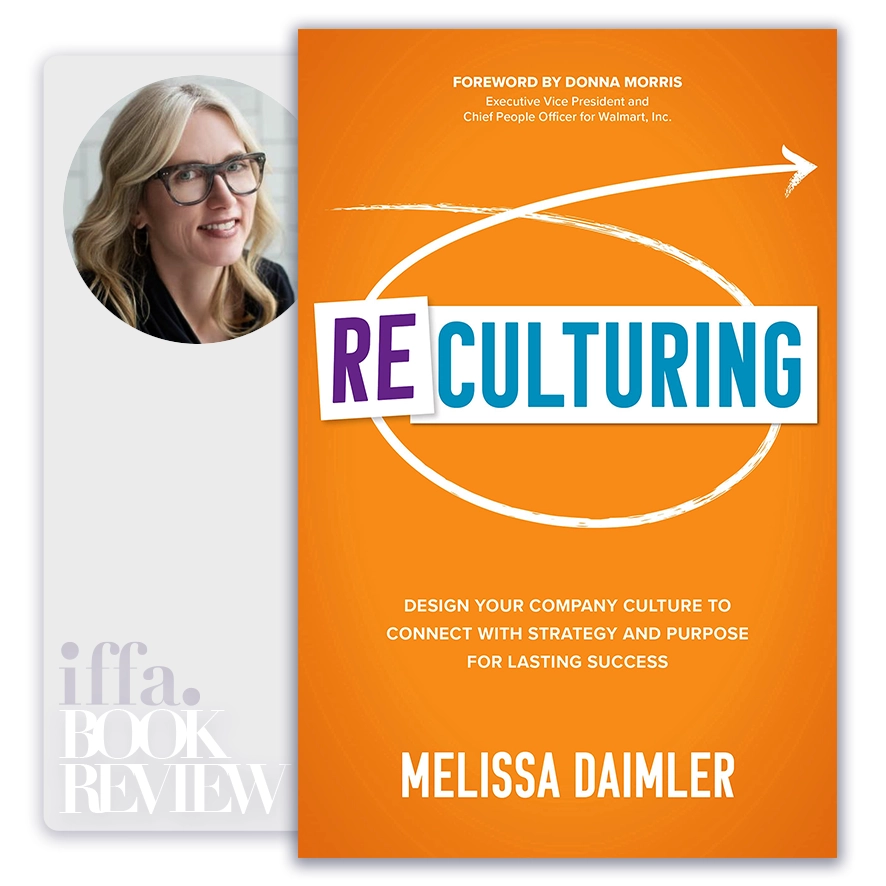
by Melissa Daimler
Summary Overview:
Most organizational transformations fail not because of flawed strategy, insufficient resources, or weak execution—but because culture was treated as an afterthought. Leaders often attempt to “change culture” through slogans, values statements, or one-off initiatives, only to discover that behaviors remain stubbornly unchanged. ReCulturing confronts this failure head-on by reframing culture not as a static trait to be fixed, but as a dynamic system that must be continuously designed, reinforced, and evolved.
This book matters because organizations today are no longer operating in stable environments. Remote and hybrid work, digital acceleration, workforce diversity, generational shifts, and constant disruption mean that culture can no longer be “set and forgotten.” For executives, HR leaders, transformation sponsors, and board members, ReCulturing provides a practical, human-centered blueprint for building cultures that enable adaptability, trust, inclusion, and sustained performance—especially during change.
About The Author
Melissa Daimler is a global expert in organizational culture and people strategy, with leadership experience at companies such as Adobe, Twitter, and WeWork. She has advised senior executives on culture transformation during periods of hypergrowth, restructuring, and crisis.
Her credibility comes from hands-on leadership at scale. Daimler does not approach culture as an abstract concept; she treats it as an operating system for how work actually gets done, informed by psychology, organizational design, and real-world constraints.
Core Idea:
At the heart of ReCulturing lies a clear and modern insight:
Culture is not something you fix once—it is something you continuously shape through everyday systems, behaviors, and decisions.
Daimler argues that culture is:
- Dynamic, not static
- Experienced locally, not declared centrally
- Reinforced by systems, not slogans
- Shaped by leadership behavior more than intent
Culture changes when the way work happens changes, not when values are rewritten.
Key Concepts:
- Culture Is What People Experience—Not What Leaders Announce
Daimler emphasizes that employees experience culture through:
- Decision-making processes
- Performance evaluations
- Who gets promoted
- How conflict is handled
- How safe it feels to speak up
Culture is the sum of daily signals—not the content of your values deck. If systems contradict stated values, systems win every time.
- ReCulturing vs. “Culture Change”
Rather than dramatic, one-time transformations, Daimler introduces ReCulturing as a continuous practice.
ReCulturing focuses on:
- Ongoing diagnosis
- Small, intentional shifts
- Adaptation to context
- Learning from feedback
In fast-changing environments, stable culture comes from adaptability—not rigidity.
- Culture Lives in Systems and Processes
Daimler highlights that culture is embedded in:
- Hiring and onboarding
- Goal setting and incentives
- Feedback and performance management
- Meeting norms and communication tools
If you want to change behavior, redesign the system that rewards it. Culture work therefore belongs in operations, governance, and leadership—not just HR.
- Psychological Safety Is Foundational
A recurring theme in the book is psychological safety—the belief that one can speak up without fear of punishment or humiliation.
Psychological safety enables:
- Learning
- Innovation
- Inclusion
- Ethical behavior
Without safety, people comply; with safety, they contribute. Leaders play a decisive role in modeling openness and curiosity.
- Inclusion Is a Culture Outcome, Not a Program
Daimler reframes inclusion away from isolated initiatives toward everyday experience.
Inclusive cultures are shaped by:
- Whose voices are heard
- How decisions are made
- Whether differences are valued or penalized
Inclusion is measured by participation and influence—not representation alone. This places accountability squarely on leadership behavior and system design.
- Leaders Are Culture Designers
The book stresses that leaders shape culture whether they intend to or not.
Leadership behaviors that matter most:
- How leaders respond under pressure
- How they handle mistakes
- What they prioritize in trade-offs
- How consistently they act
Leaders don’t just influence culture—they are the culture, made visible.
- Middle Managers Are the Cultural Multipliers
While executives set direction, middle managers translate culture into reality.
Daimler highlights the importance of:
- Manager capability building
- Clear decision rights
- Consistent expectations
Culture fails in the middle when managers lack clarity, tools, or support. ReCulturing must therefore invest heavily in manager enablement.
- Listening as a Strategic Capability
The book emphasizes structured listening:
- Pulse surveys
- Focus groups
- One-on-ones
- Continuous feedback loops
You cannot shape culture without understanding how it is actually experienced. Listening turns culture from assumption into data.
- Culture During Change and Crisis
Daimler shows that culture becomes most visible during:
- Layoffs
- Reorganizations
- Mergers
- Leadership transitions
How you treat people in hard moments defines culture more than success ever will. Crisis is a culture amplifier, not an exception.
- Culture Is a Leadership Discipline
ReCulturing positions culture as:
- Ongoing work
- A leadership skill
- A strategic differentiator
Culture excellence is not about control—it is about coherence.
If you want to change behavior, redesign the system that rewards it.
Executive Insights:
ReCulturing reframes culture as adaptive infrastructure, not a branding exercise.
Strategic Implications for Executives and Boards:
- Culture must evolve as strategy evolves
- Systems shape behavior more than values
- Leadership behavior is the strongest cultural signal
- Psychological safety enables performance
- Inclusion is operational, not symbolic
- Culture work is never “done”
Organizations that ignore culture design optimize strategy on paper and fail in practice.
Actionable Takeaways:
For CEOs & Senior Executives
- Model the behaviors you want scaled
- Align systems with stated values
- Use moments of change to reinforce trust
- Treat culture as a standing leadership agenda
For HR & People Leaders
- Embed culture into core processes
- Shift from programs to system design
- Enable managers as culture carriers
- Measure experience, not just engagement
Final Thoughts:
ReCulturing delivers a timely and pragmatic message: culture is not a destination—it is a continuous practice. Melissa Daimler shows that in a world of constant change, the strongest organizations are not those with the most rigid cultures, but those with the clearest, most humane, and most adaptable ones.
For leaders, the lesson is both simple and demanding:
Design how work happens.
Listen continuously.
Align systems with values.
Lead with consistency—especially when it’s hard.
Culture is not what you say.
It is what people experience—every day.
The ideas in this book go beyond theory, offering practical insights that shape real careers, leadership paths, and professional decisions. At IFFA, these principles are translated into executive courses, professional certifications, and curated learning events aligned with today’s industries and tomorrow’s demands. Discover more in our Courses.
Applied Programs

- Course Code : SBM-409
- Delivery : In-class / Virtual / Workshop
- Duration : 2-4 Days
- Venue: DUBAI HUB

- Course Code : PMA-613
- Delivery : In-class / Virtual / Workshop
- Duration : 3-5 Days
- Venue: DUBAI HUB
- Course Code : CIF-505
- Delivery : In-class / Virtual / Workshop
- Duration : 3-5 Days
- Venue: DUBAI HUB

- Course Code : CIF-512
- Delivery : In-class / Virtual / Workshop
- Duration : 2-4 Days
- Venue: DUBAI HUB
Related Books