
The Executive Summary of
The Innovator’s Dilemma
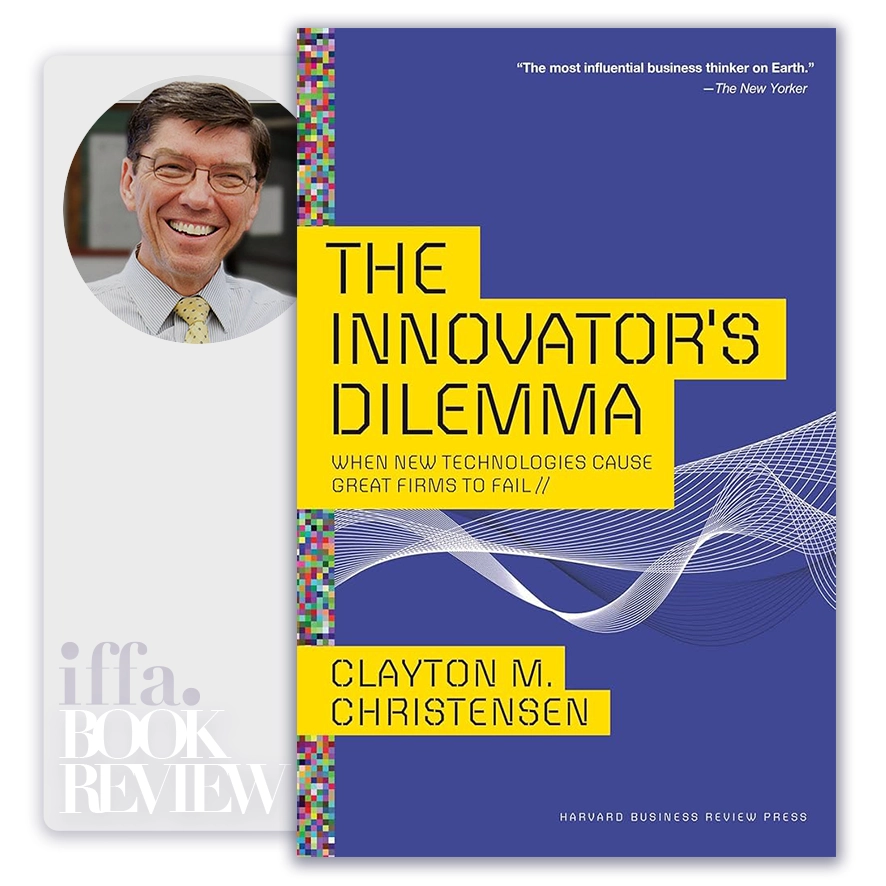
by Clayton M. Christensen
Executive Summary:
In markets driven by technological acceleration, platform shifts, and relentless competition, The Innovator’s Dilemma explains a paradox that continues to surprise leaders: great companies fail not because they are poorly managed—but because they are exceptionally well managed. Clayton Christensen shows how listening closely to customers, optimizing margins, and investing in proven products can systematically blind organizations to disruptive change.
This book matters because most strategic failures are predictable in hindsight but invisible in advance. Incumbent leaders often miss disruptive threats precisely because those threats look unattractive, low-margin, and irrelevant at first. For executives, boards, and innovators, The Innovator’s Dilemma provides a diagnostic framework for understanding why disruption happens—and how to respond without destroying the core business.
About The Author
Clayton M. Christensen was a renowned Harvard Business School professor, researcher, and thought leader in innovation and strategy. His work reshaped how executives understand technological disruption, market evolution, and organizational failure.
Christensen’s authority comes from deep empirical research across multiple industries, combined with a rare ability to translate theory into actionable guidance for real-world leaders.
Core Idea:
The central thesis of The Innovator’s Dilemma is both counterintuitive and enduring:
Successful companies fail when disruptive innovations emerge because those innovations initially underperform on the metrics their best customers value.
Disruptive technologies typically start as:
- Simpler
- Cheaper
- Lower-margin
- Inferior by traditional performance measures
Yet they improve rapidly and eventually redefine the basis of competition, overtaking established leaders who ignored them. The dilemma is that rational, customer-focused decision-making leads incumbents to reject precisely the innovations that will later destroy them.
Disruption does not begin at the top of the market—it begins where leaders are least motivated to look.
Key Concepts:
- Sustaining vs. Disruptive Innovation
Sustaining innovations improve existing products for current customers. They are predictable, profitable, and aligned with incumbent incentives.
Disruptive innovations:
- Serve new or overlooked customers
- Initially perform worse on traditional metrics
- Compete on simplicity, convenience, or cost
- Improve faster than customer expectations
- Why Great Management Practices Fail
Christensen demonstrates that the very practices taught in top business schools—customer focus, ROI discipline, and margin optimization—can become liabilities during disruption.
Managers are rewarded for:
- Serving existing customers
- Protecting current margins
- Avoiding uncertain investments
As a result, disruptive projects are rationally rejected, not mistakenly overlooked.
- The Role of Customers and Markets
Customers rarely ask for disruptive innovation. They request better versions of what they already use. As a result:
- Listening too closely to current customers can limit vision
- Emerging markets appear insignificant or unattractive
- Early disruptive demand is invisible to traditional metrics
Disruption thrives in new markets or low-end segments ignored by incumbents.
- Organizational Structure Determines Strategy
Christensen argues that organizations cannot do what their processes and incentives will not allow. Even when leaders recognize disruption, existing structures often prevent effective response.
Key constraints include:
- Cost structures optimized for premium products
- Performance metrics tied to established customers
- Cultural resistance to low-margin experimentation
- Separate Units for Disruptive Innovation
To respond effectively, Christensen recommends structural separation:
- Create independent teams or units
- Allow different cost structures and success metrics
- Protect disruptive efforts from core-business pressures
Disruptive innovation requires freedom to fail, iterate, and grow outside the dominant logic.
- Market Discovery Over Market Analysis
Disruptive markets cannot be forecasted using traditional planning tools. Instead, they must be discovered through experimentation.
This requires:
- Small, iterative investments
- Rapid learning cycles
- Acceptance of uncertainty
Planning gives way to adaptive discovery.
Resources don’t determine success—processes and priorities do.
Executive Insights:
The Innovator’s Dilemma reframes disruption from a technology problem to an organizational and incentive problem. It challenges leaders to examine not just what they invest in—but how their structures filter opportunity.
Strategic Implications for Leaders:
- Disruption is a process, not an event
- Customer focus can become a strategic blind spot
- Financial discipline may reject future growth
- Structure and incentives shape strategic outcomes
- Ignoring small markets creates existential risk
Actionable Takeaways:
Christensen’s insights translate directly into innovation governance, portfolio strategy, and organizational design.
Practical Actions for Executives:
- Identify potential disruptive threats early
- Separate disruptive initiatives from core operations
- Use discovery-driven planning, not rigid forecasts
- Allow lower margins and different success metrics
- Invest small, learn fast, and scale selectively
- Redesign incentives to support long-term innovation
Final Thoughts:
The Innovator’s Dilemma is a foundational work for leaders navigating change. Its enduring lesson is stark but empowering: failure in the face of disruption is not inevitable—but avoiding it requires challenging the very systems that created success.
In times of transformation, the greatest risk is doing exactly what made you great.
To conclude, the ideas explored in this book go far beyond theory; they offer practical insight that can shape real careers, leadership paths, and professional decisions.
At IFFA, these same principles are transformed into structured executive training courses, professional certifications, and curated learning events designed to align with today’s industries and tomorrow’s demands. Find out more on Courses.
Applied Programs

- Course Code : SBM-409
- Delivery : In-class / Virtual / Workshop
- Duration : 2-4 Days
- Venue: DUBAI HUB

- Course Code : PMA-613
- Delivery : In-class / Virtual / Workshop
- Duration : 3-5 Days
- Venue: DUBAI HUB
- Course Code : CIF-505
- Delivery : In-class / Virtual / Workshop
- Duration : 3-5 Days
- Venue: DUBAI HUB

- Course Code : CIF-512
- Delivery : In-class / Virtual / Workshop
- Duration : 2-4 Days
- Venue: DUBAI HUB
Related Books