The Executive Summary of
Atomic Habits
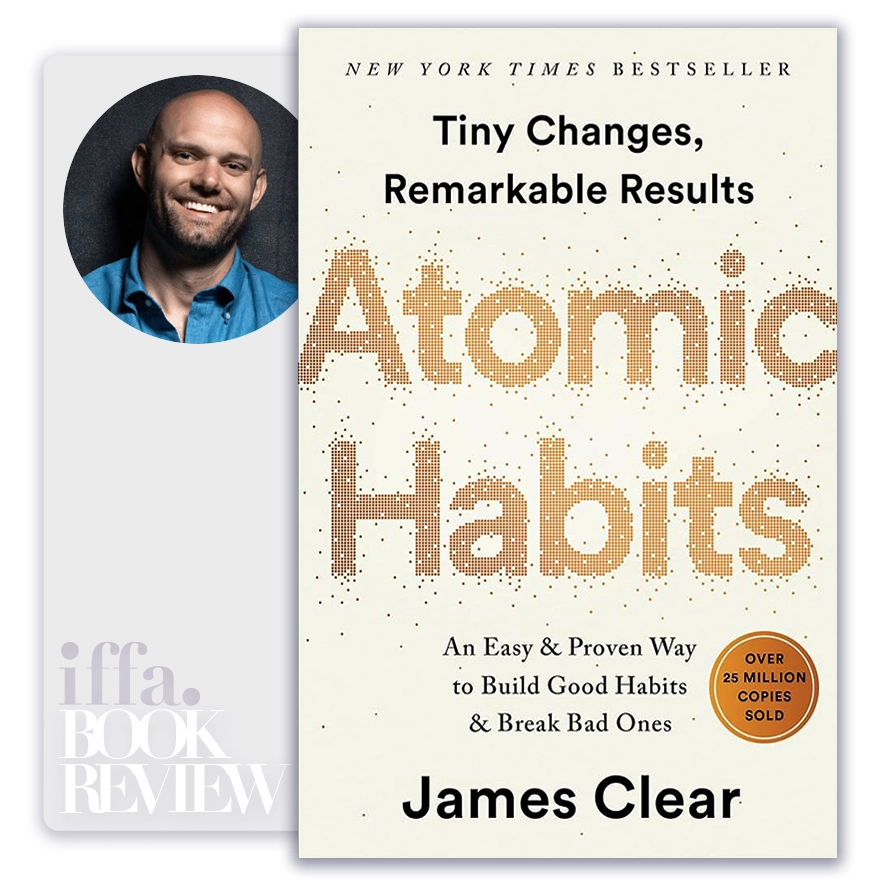
by James Clear
Executive Summary:
In a world where leaders chase breakthrough strategies, radical transformations, and overnight success, Atomic Habits delivers a powerful counter-message: lasting change comes from small, consistent improvements compounded over time. James Clear reframes performance and self-improvement away from motivation and willpower toward systems, environment design, and behavioral mechanics. For executives, founders, and professionals, this book offers a practical operating system for sustainable personal and organizational excellence.
Atomic Habits matters because most initiatives fail not due to lack of ambition, but due to poor systems and inconsistent execution. Organizations set bold goals but neglect the daily behaviors required to achieve them. Clear shows that success is not a single event—it is the inevitable outcome of well-designed habits repeated daily. In complex environments, where discipline outperforms inspiration, this book provides a scalable framework for continuous improvement.
About The Author
James Clear is a renowned writer, researcher, and speaker specializing in habits, decision-making, and continuous improvement. His work draws from behavioral psychology, neuroscience, and real-world case studies, translated into practical guidance.
Clear’s credibility comes from his ability to simplify complex behavioral science into actionable frameworks, making habit formation accessible for individuals, teams, and leaders alike.
Core Idea:
The central thesis of Atomic Habits is elegant and transformative:
Tiny changes—when repeated consistently—produce remarkable results.
Clear argues that success is not driven by goals, but by systems. Goals define direction, but systems determine progress. People often fail because they try to change outcomes without changing the processes and behaviors that produce those outcomes.
The book reframes improvement as a compound process, where 1% better each day leads to exponential gains over time—and neglect leads to silent decline.
Success is the product of daily habits—not once-in-a-lifetime transformations.
Key Concepts:
- Habits Are the Compound Interest of Self-Improvement
Small habits may seem insignificant in the moment, but their effects compound dramatically over time—positively or negatively.
- Good habits make success inevitable
- Bad habits make failure invisible until it is too late
- Identity-Based Habits
Clear introduces a critical shift: lasting change starts with identity, not outcomes.
Instead of asking:
- What do I want to achieve?
Effective people ask:
- Who do I want to become?
Habits are votes for identity. Repeated actions reinforce self-image, making behavior change durable.
- The Four Laws of Behavior Change
Clear distills habit formation into four practical laws:
- Make it obvious – Design cues and environments
- Make it attractive – Link habits to reward
- Make it easy – Reduce friction
- Make it satisfying – Reinforce completion
Breaking bad habits requires reversing these laws.
- Environment Design Beats Willpower
Behavior is heavily influenced by environmental cues, not motivation. Clear shows that the most effective way to change behavior is to redesign surroundings so that good habits are easier and bad habits are harder.
Discipline becomes optional when systems are well designed.
- The Plateau of Latent Potential
Progress is often invisible before it becomes visible. Many people quit because they do not see immediate results.
Clear calls this the plateau of latent potential—the gap between effort and outcome. Breakthroughs occur after consistency outlasts discouragement.
- Continuous Improvement and Habit Tracking
Measurement reinforces behavior. Tracking habits:
- Makes progress visible
- Builds accountability
- Strengthens identity
However, Clear warns against confusing motion with progress—systems must serve outcomes, not metrics alone.
Executive Insights & Strategic Implications
Atomic Habits reframes leadership away from dramatic change initiatives toward behavioral architecture and system design. It highlights that culture, performance, and excellence are built one habit at a time.
Strategic Implications for Leaders:
- Systems outperform motivation
- Culture is the sum of daily behaviors
- Small improvements scale faster than big reforms
- Environment shapes execution
- Consistency beats intensity
- Identity drives behavior
You do not rise to the level of your goals—you fall to the level of your systems.
Executive Insights:
The 80/20 Principle reframes leadership from managing complexity to curating impact. It challenges executives to abandon the myth of equal importance and instead embrace strategic imbalance.
Strategic Implications for Leaders:
- Equality of effort is inefficient
- Focus creates disproportionate advantage
- Most resources are misallocated
- Simplification improves performance
- Elimination is as important as execution
Actionable Takeaways:
The principles of Atomic Habits are immediately applicable across leadership development, organizational change, productivity, and personal performance.
Practical Actions for Executives and Leaders:
- Design systems that make success easy
- Focus on identity and behavior, not just targets
- Reduce friction for high-value actions
- Embed habits into routines and environments
- Track progress to reinforce consistency
- Commit to continuous, incremental improvement
Final Thoughts:
Atomic Habits is a masterclass in sustainable excellence. Its message is empowering and precise: you do not need massive change to achieve massive results—only the right habits, repeated consistently.
In the long run, the leaders who win are those who master the power of small actions done daily.
To conclude, the ideas explored in this book go far beyond theory; they offer practical insight that can shape real careers, leadership paths, and professional decisions.
At IFFA, these same principles are transformed into structured executive training courses, professional certifications, and curated learning events designed to align with today’s industries and tomorrow’s demands. Find out more on Courses.
Applied Programs

- Course Code : SBM-409
- Delivery : In-class / Virtual / Workshop
- Duration : 2-4 Days
- Venue: DUBAI HUB

- Course Code : PMA-613
- Delivery : In-class / Virtual / Workshop
- Duration : 3-5 Days
- Venue: DUBAI HUB
- Course Code : CIF-505
- Delivery : In-class / Virtual / Workshop
- Duration : 3-5 Days
- Venue: DUBAI HUB

- Course Code : CIF-512
- Delivery : In-class / Virtual / Workshop
- Duration : 2-4 Days
- Venue: DUBAI HUB
Related Books