The Executive Summary of
Against the Gods: The Remarkable Story of Risk
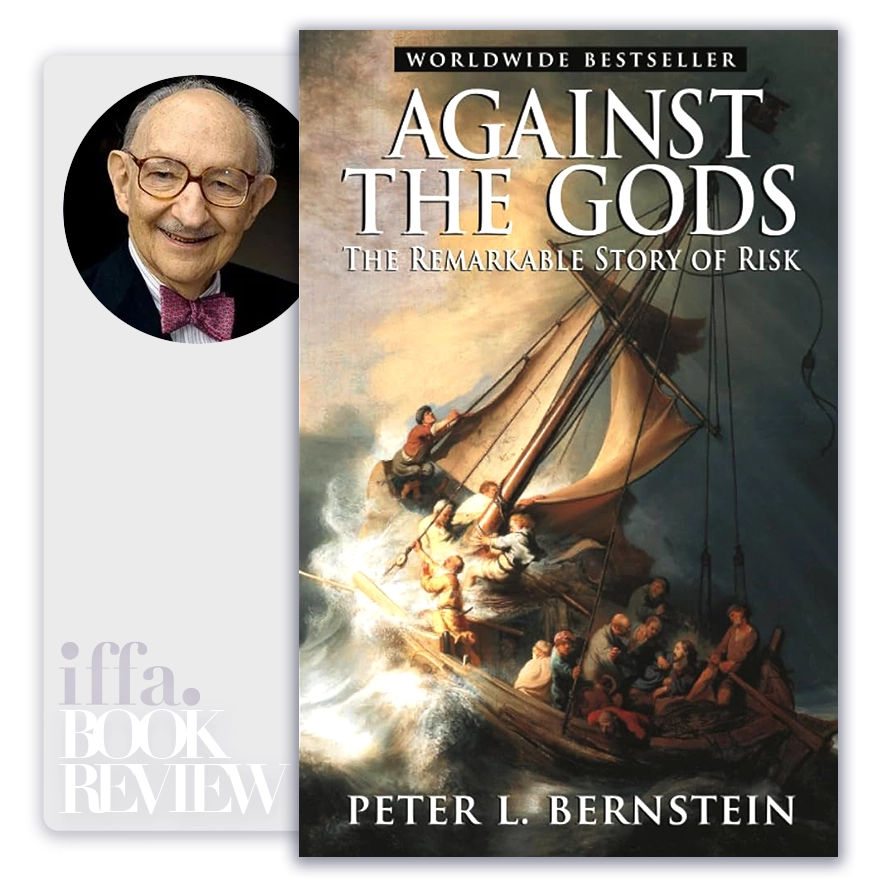
by Peter L. Bernstein
Summary Overview:
Every strategic decision—whether in finance, business, policy, or innovation—is ultimately a decision about risk. Yet for most of human history, risk was seen not as something to be measured or managed, but as the domain of fate, luck, or the will of the gods. Against the Gods tells the extraordinary story of how humanity gradually learned to measure uncertainty, quantify probability, and transform risk from a threat into a strategic tool.
This book matters because modern leadership operates in a world built entirely on this intellectual revolution. Capital markets, insurance, corporate strategy, project management, and even artificial intelligence rely on assumptions about risk that were unimaginable a few centuries ago. Bernstein shows that the ability to understand and price risk is one of the defining features of modern civilization—and that misunderstanding risk remains one of its greatest vulnerabilities. For executives and decision-makers, this book provides a deep foundation for thinking clearly about uncertainty, control, and the limits of prediction.
About The Author
Peter L. Bernstein was an economist, historian, and investment advisor, widely respected for his ability to connect financial theory, historical insight, and real-world practice. Unlike purely academic treatments of probability, Bernstein approached risk as a human story—shaped by culture, psychology, power, and belief.
His authority comes from synthesizing centuries of intellectual development into a narrative that explains not just how risk models work, but why they emerged—and where they fail.
Core Idea:
The central thesis of Against the Gods is profound and far-reaching:
The mastery of risk—rather than capital, technology, or force—is what enabled modern economic progress.
Bernstein argues that once humans learned to:
- Distinguish risk from uncertainty
- Measure probability
- Compare outcomes systematically
They gained the ability to plan, invest, insure, innovate, and grow. This shift marked a decisive break from fatalism and superstition, replacing divine explanation with rational choice under uncertainty.
Yet the book also warns: risk can never be eliminated—only misunderstood, mispriced, or mismanaged.
Risk became something to calculate, not fear blindly.
Key Concepts:
- Risk vs. Fate: A Civilizational Breakthrough
For most of history, misfortune was attributed to:
- Gods
- Destiny
- Astrology
- Moral judgment
Bernstein shows that the conceptual leap was recognizing that future outcomes could be described probabilistically, not mystically.
The revolutionary idea that defines the boundary between modern times and the past is the mastery of risk. This shift enabled humans to act proactively instead of reactively.
- Probability as a Human Invention
Probability is not a natural law—it is a human framework developed to make sense of uncertainty.
Key contributors include:
- Girolamo Cardano – early probability analysis
- Blaise Pascal & Pierre de Fermat – foundations of probability theory
- Jacob Bernoulli – law of large numbers
These thinkers transformed games of chance into tools for decision-making, laying the groundwork for insurance, finance, and statistics.
- The Birth of Expected Value
The concept of expected value—weighing outcomes by their probability—allowed people to compare choices rationally.
This idea:
- Enabled insurance markets
- Made long-term investment possible
- Reduced reliance on superstition
Risk became something to calculate, not fear blindly. Expected value remains the backbone of modern finance and strategy.
- Risk and the Rise of Capitalism
Bernstein connects risk management directly to:
- The growth of trade
- The development of banking
- The expansion of global markets
Merchants who could price risk:
- Traveled farther
- Invested more boldly
- Allocated capital more efficiently
Capitalism flourished not because risk disappeared—but because it was priced, shared, and diversified.
- Statistics, Data, and the Illusion of Control
As statistical tools advanced, confidence grew. Leaders began to believe that data could tame uncertainty entirely.
Bernstein cautions against this overconfidence. Models are:
- Simplifications
- Based on historical patterns
- Blind to rare, extreme events
The greatest danger is not risk itself—but the illusion that we have mastered it. This insight foreshadows modern financial crises and model failures.
- Volatility, Variance, and Modern Finance
The book explores the evolution of financial theory, including:
- Portfolio diversification
- Risk-return trade-offs
- Volatility as a proxy for risk
While these tools improved decision-making, Bernstein stresses that quantification can obscure judgment when users forget models are approximations—not reality.
- Psychology and Risk Perception
Bernstein emphasizes that risk is not just mathematical—it is psychological.
Humans:
- Overestimate rare dramatic events
- Underestimate slow-moving risks
- Seek certainty where none exists
These biases distort decision-making at both individual and institutional levels.
Risk resides as much in the mind as in the numbers.
- When Risk Management Becomes Risk Itself
One of the book’s most important warnings is that risk-management tools can create new risks.
Examples include:
- Excessive leverage enabled by perceived safety
- Overreliance on diversification
- Blind trust in models and ratings
When everyone uses similar models, systems become fragile rather than resilient.
- The Limits of Prediction
Bernstein does not argue against forecasting—but he insists on humility.
Uncertainty arises from:
- Incomplete information
- Structural change
- Human behavior
- Random shocks
Risk management should focus less on prediction and more on robustness and adaptability.
The revolutionary idea that defines the boundary between modern times and the past is the mastery of risk.
Executive Insights:
Against the Gods reframes risk as a strategic discipline rooted in history, psychology, and ethics, not just mathematics.
Strategic Implications for Leaders and Boards:
- Risk-taking drives progress—but must be conscious
- Quantification improves judgment but never replaces it
- Overconfidence in models is itself a major risk
- Diversification reduces exposure but not uncertainty
- Resilience matters more than precision
- Uncertainty cannot be eliminated—only managed wisely
Actionable Takeaways:
The lessons of Against the Gods apply across finance, strategy, innovation, and governance.
Practical Actions for Executives and Decision-Makers:
- Distinguish measurable risk from true uncertainty
- Use models as guides, not authorities
- Stress-test assumptions—not just outcomes
- Design systems for surprise, not stability alone
- Incorporate human behavior into risk assessments
- Avoid concentration disguised as diversification
- Balance quantitative insight with qualitative judgment
- Cultivate humility as a strategic asset
Final Thoughts:
Against the Gods is a foundational work because it reminds us that modern success is built not on eliminating risk—but on understanding it better than our predecessors. Yet the book’s ultimate lesson is cautionary: every advance in risk management creates the temptation to believe we are safer than we are.
Peter L. Bernstein shows that the true mastery of risk lies not in prediction or control, but in discipline, judgment, and respect for uncertainty.
Those who forget that risk can never be conquered are destined to relearn the lesson—at great cost.
For leaders navigating an increasingly complex and uncertain world, this book offers a timeless reminder:
Progress belongs to those who take risks intelligently—and survive the ones they cannot foresee.
The ideas in this book go beyond theory, offering practical insights that shape real careers, leadership paths, and professional decisions. At IFFA, these principles are translated into executive courses, professional certifications, and curated learning events aligned with today’s industries and tomorrow’s demands. Discover more in our Courses.
Applied Programs

- Course Code : SBM-409
- Delivery : In-class / Virtual / Workshop
- Duration : 2-4 Days
- Venue: DUBAI HUB

- Course Code : PMA-613
- Delivery : In-class / Virtual / Workshop
- Duration : 3-5 Days
- Venue: DUBAI HUB
- Course Code : CIF-505
- Delivery : In-class / Virtual / Workshop
- Duration : 3-5 Days
- Venue: DUBAI HUB

- Course Code : CIF-512
- Delivery : In-class / Virtual / Workshop
- Duration : 2-4 Days
- Venue: DUBAI HUB
Related Books