The Executive Summary of
The Power of Now
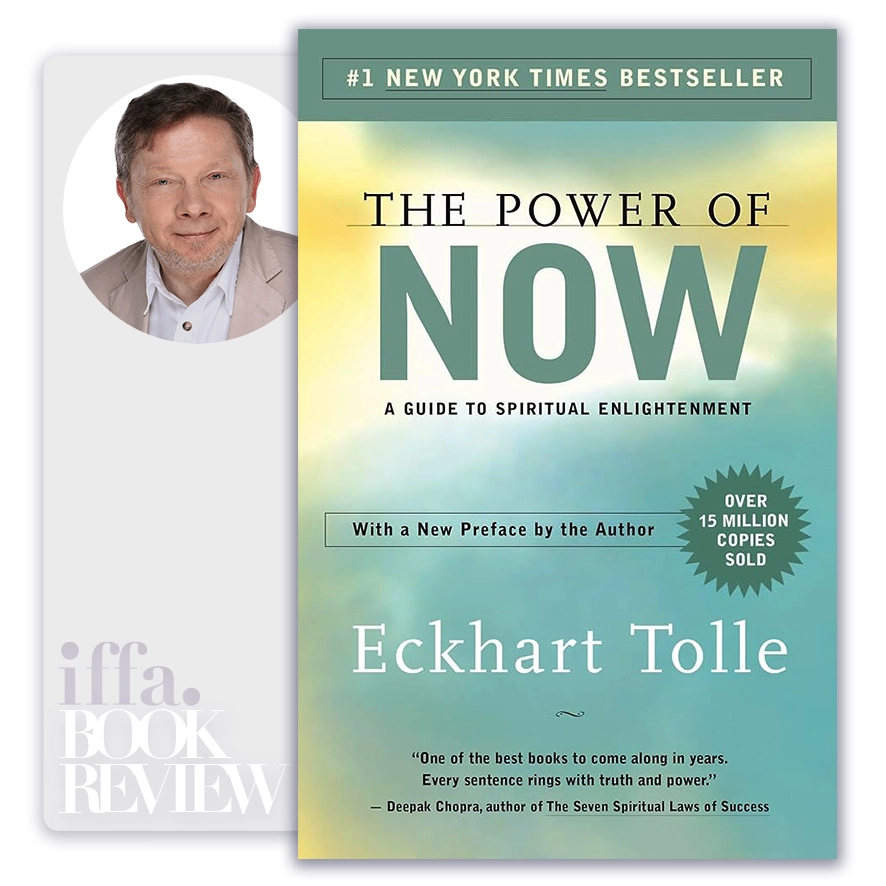
by Eckhart Tolle
Summary Overview:
In a world dominated by constant thinking, relentless planning, regret about the past, and anxiety about the future, The Power of Now delivers a message that is deceptively simple and radically transformative: the present moment is all that ever truly exists—and freedom is found only there. Eckhart Tolle challenges one of the deepest assumptions of modern life—that fulfillment lies somewhere ahead, once enough goals are achieved or problems are solved.
This book matters because much of today’s stress, burnout, conflict, and dissatisfaction does not come from external conditions, but from psychological time—the mind’s compulsive attachment to past and future. For leaders, executives, and high performers, this manifests as chronic tension, loss of clarity, reactive decision-making, and disconnection from meaning. The Power of Now offers not a productivity system or belief framework, but a shift in consciousness—from compulsive thinking to presence, from identification with the mind to awareness itself.
About The Author
Eckhart Tolle is a spiritual teacher and author whose work integrates Eastern spirituality, Western psychology, and practical mindfulness. After experiencing a profound inner transformation, Tolle devoted his life to teaching presence and conscious living.
His credibility lies not in institutional authority or doctrine, but in his ability to articulate timeless wisdom in clear, accessible language that resonates across cultures, belief systems, and professional contexts.
Core Idea:
The central thesis of The Power of Now is direct and uncompromising:
All suffering is created by identification with the mind and resistance to the present moment. Freedom comes through presence.
Tolle argues that most people live almost entirely in their thoughts—reliving the past, rehearsing the future—while missing the only place where life actually happens: now. The mind, when left unchecked, becomes a compulsive narrator that generates fear, desire, comparison, and dissatisfaction.
The solution is not to destroy the mind, but to disidentify from it—to observe thoughts without becoming them. This shift unlocks peace, clarity, and conscious action.
Nothing ever happens in the past or future. It happens now.
Key Concepts:
- Psychological Time vs. Clock Time
Tolle distinguishes between:
- Clock time: practical use of past and future for planning and learning
- Psychological time: compulsive identification with past regret and future anxiety
Psychological time is the source of most emotional pain. While clock time is necessary, psychological time is optional—and destructive.
Nothing ever happens in the past or future. It happens now. Leaders who operate primarily in psychological time sacrifice clarity and presence.
- The Ego: A False Sense of Self
A central concept in the book is the ego, which Tolle defines as the false self created by:
- Identification with thoughts
- Identification with roles and status
- Identification with possessions and achievements
The ego thrives on:
- Comparison
- Conflict
- Judgment
- Separation
The ego is not who you are—it is who you think you are. For executives, ego-driven identity often leads to defensiveness, fear of failure, and poor judgment.
- You Are Not Your Mind
One of the book’s most liberating insights is the realization that thoughts are objects of awareness—not the observer itself.
When people believe they are their thoughts:
- Anxiety dominates
- Emotions escalate
- Identity becomes fragile
When thoughts are observed:
- Emotional charge weakens
- Perspective returns
- Choice becomes possible
The moment you observe your mind, you are no longer trapped by it.
- Pain-Body: Accumulated Emotional Pain
Tolle introduces the concept of the pain-body—a collection of unresolved emotional pain stored in the psyche.
The pain-body:
- Is triggered by stress, conflict, or fear
- Feeds on negative emotion
- Seeks more pain to sustain itself
Awareness dissolves the pain-body—not through resistance, but through allowing and observing it without identification.
- Resistance Is the Root of Suffering
Suffering does not arise from situations themselves, but from resistance to what is.
Common forms of resistance include:
- Complaining
- Resentment
- Denial
- Mental argument with reality
Tolle emphasizes acceptance, not as resignation, but as clear recognition of the present moment.
What you resist, persists. What you accept, transforms.
- Presence as a State of Power
Presence is not passivity. It is alert, conscious attention to the now.
In presence:
- Action becomes effective
- Listening deepens
- Decisions clarify
- Creativity emerges
Tolle reframes power not as control over circumstances, but as alignment with reality.
- Relationships as Spiritual Practice
Tolle shows how relationships often become arenas for ego conflict rather than connection.
Unconscious relationships are driven by:
- Need
- Attachment
- Expectation
Conscious relationships arise when both parties:
- Remain present
- Take responsibility for inner state
- Do not seek completion through the other
Relationships don’t make you happy or unhappy—they make you conscious or unconscious.
- Surrender: Letting Life Work Through You
Surrender does not mean giving up effort. It means ceasing inner resistance.
When resistance ends:
- Energy previously spent on struggle becomes available
- Action flows naturally
- Peace coexists with effort
This is especially relevant in leadership under uncertainty.
- Enlightenment Is Not an Achievement
Tolle rejects the idea of enlightenment as a future attainment. It is simply:
- Freedom from compulsive thinking
- Freedom from ego identification
- Abiding presence
Enlightenment is not special—it is natural once unconsciousness ends.
The ego is not who you are—it is who you think you are.
Executive Insights:
The Power of Now reframes leadership, performance, and fulfillment at the level of consciousness, not technique.
Strategic Implications for Leaders:
- Presence improves decision quality
- Ego distorts perception and judgment
- Stress is created internally, not externally
- Awareness precedes effective action
- Non-reactivity is a leadership advantage
- Inner clarity scales outward effectiveness
Actionable Takeaways:
While The Power of Now is not procedural, its insights have immediate practical application.
Practical Actions for Executives and Professionals:
- Observe thoughts without engaging them
- Anchor attention in breath and body
- Recognize resistance as it arises
- Practice acceptance before action
- Disidentify from roles and outcomes
- Respond instead of react
- Use presence to navigate conflict
- Return attention to now—repeatedly
Final Thoughts:
The Power of Now is not a book to be read once—it is a book to be lived moment by moment. Eckhart Tolle’s message is radical precisely because it removes the usual promises of future fulfillment.
There is nothing to become.
Nothing to acquire.
Nothing to reach.
Peace, clarity, and power are available now—when attention rests fully in the present moment.
For leaders and individuals navigating an increasingly complex world, this book offers a quiet but profound truth:
The greatest leverage point in any system is consciousness itself.
The ideas in this book go beyond theory, offering practical insights that shape real careers, leadership paths, and professional decisions. At IFFA, these principles are translated into executive courses, professional certifications, and curated learning events aligned with today’s industries and tomorrow’s demands. Discover more in our Courses.
Applied Programs

- Course Code : SBM-409
- Delivery : In-class / Virtual / Workshop
- Duration : 2-4 Days
- Venue: DUBAI HUB

- Course Code : PMA-613
- Delivery : In-class / Virtual / Workshop
- Duration : 3-5 Days
- Venue: DUBAI HUB
- Course Code : CIF-505
- Delivery : In-class / Virtual / Workshop
- Duration : 3-5 Days
- Venue: DUBAI HUB

- Course Code : CIF-512
- Delivery : In-class / Virtual / Workshop
- Duration : 2-4 Days
- Venue: DUBAI HUB
Related Books