The Executive Summary of
Emotional Intelligence
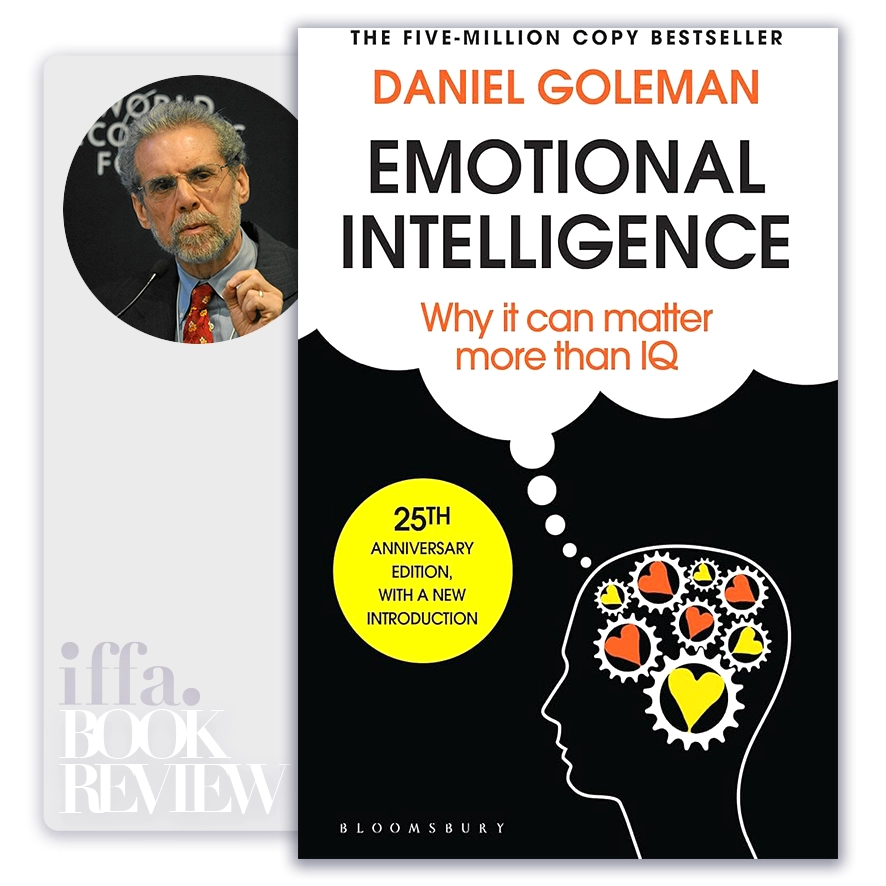
by Daniel Goleman
Summary Overview:
In performance-driven institutions, intelligence is often equated with analytical ability. Emotional Intelligence: Why It Can Matter More Than IQ challenges this narrow view by demonstrating that cognitive skill alone does not determine leadership effectiveness or long-term success. Daniel Goleman argues that the ability to recognize, regulate, and channel emotion shapes judgment, resilience, and influence.
For executives operating under sustained pressure, this book sharpens self-regulation, interpersonal awareness, and leadership composure. It reframes high performance as an integration of intellect and emotional discipline. In volatile environments where decisions affect diverse stakeholders, emotional stability becomes a strategic asset rather than a personal trait. Its relevance endures because organizations are human systems, and human systems are governed by emotion as much as logic.
About The Author
Daniel Goleman is a psychologist and science journalist whose work synthesizes research in neuroscience and behavioral psychology. His contributions focus on the role of emotional competencies in leadership, performance, and organizational effectiveness. By translating academic findings into practical frameworks, he expanded the understanding of intelligence beyond IQ. His distinctive perspective emphasizes that emotional capacity is measurable, developable, and consequential in professional contexts.
Core Idea:
The central thesis of Emotional Intelligence is that emotional competencies often determine success more reliably than raw intellectual ability. Goleman identifies key domains including self-awareness, self-regulation, motivation, empathy, and social skill.
At its foundation, the book asserts that the capacity to manage one’s own emotions and respond constructively to others’ emotions shapes long-term performance. Cognitive intelligence may open doors, but emotional intelligence determines how effectively one operates within them. Leadership, negotiation, and crisis management all require emotional discipline. When emotion governs unconsciously, decision quality declines. When emotion is observed and directed, clarity improves.
IQ sets the baseline; emotional intelligence determines trajectory.
Key Concepts:
- Self-Awareness as Foundation
Awareness of one’s emotional state enhances clarity. Goleman argues that recognizing internal signals reduces reactive behavior.
- Unrecognized emotion drives impulse
- Impulse reduces objectivity
- Objectivity strengthens judgment
Strategic composure begins with accurate self-perception. Clarity stabilizes decision-making.
- Self-Regulation
Emotional restraint prevents escalation. The ability to pause and redirect emotional energy supports consistent leadership.
- Reactivity erodes credibility
- Regulation builds trust
- Trust strengthens influence
Institutions benefit when leaders model steadiness. Controlled response sustains authority.
- Motivation Beyond Incentives
Intrinsic motivation outperforms external pressure. Goleman highlights persistence and commitment rooted in purpose.
- Purpose enhances resilience
- Resilience supports long-term focus
- Focus drives achievement
Organizations that cultivate intrinsic drivers outperform those reliant solely on reward systems. Purpose fuels sustained effort.
- Empathy as Strategic Skill
Empathy enhances relational intelligence. Understanding others’ perspectives improves negotiation and collaboration.
- Misinterpretation increases conflict
- Perspective-taking reduces friction
- Reduced friction accelerates execution
Leaders who sense emotional undercurrents anticipate challenges early. Perceptive leadership mitigates risk.
- Social Skill and Influence
Effective communication amplifies leadership impact. Goleman emphasizes managing relationships deliberately.
- Clear communication reduces ambiguity
- Relationship management fosters cohesion
- Cohesion enhances productivity
Influence depends on relational competence. Connection strengthens performance.
- Emotional Contagion
Emotions are transmissible within groups. Leaders’ moods shape organizational climate.
- Negative affect lowers morale
- Positive steadiness increases engagement
- Engagement strengthens output
Emotional discipline influences collective energy. Leadership temperament sets tone.
- Stress and Cognitive Impairment
Stress narrows cognitive capacity. Goleman explains how unmanaged stress disrupts rational processing.
- Elevated stress impairs reasoning
- Impaired reasoning increases error
- Error compounds risk
Managing emotional stress preserves strategic clarity. Calm thinking protects performance.
- Feedback and Growth
Emotionally intelligent individuals handle feedback constructively. Openness to critique fosters improvement.
- Defensiveness blocks development
- Openness invites learning
- Learning strengthens competence
Growth-oriented cultures require emotional maturity. Humility enhances adaptability.
- Organizational Culture and EQ
Culture reflects collective emotional norms. Goleman observes that emotional intelligence scales across systems.
- High-EQ cultures encourage transparency
- Transparency fosters trust
- Trust sustains collaboration
Institutional stability depends on emotional alignment. Cultural maturity strengthens resilience.
- Leadership Under Crisis
Crisis magnifies emotional influence. Goleman emphasizes that leaders’ composure during uncertainty shapes outcomes.
- Panic spreads rapidly
- Composure anchors teams
- Anchored teams execute effectively
Strategic endurance requires emotional steadiness. Stability under stress defines leadership credibility.
Leadership influence flows through emotional steadiness.
Executive Insights:
At the executive level, Emotional Intelligence reframes performance as multidimensional. Incentive systems that emphasize technical skill without emotional maturity create fragility. Sustainable success requires integrating cognitive expertise with emotional discipline.
Judgment improves when leaders recognize emotional bias before acting. Risk exposure decreases when teams operate within psychologically stable environments. Long-term value creation depends on embedding emotional intelligence into leadership development and governance processes. Institutions that cultivate emotional competence outperform those that neglect it.
Actionable Takeaways:
Emotional intelligence must be institutionalized as a leadership competency.
- Start integrating self-awareness training into executive development
- Stop rewarding technical brilliance without interpersonal accountability
- Reframe emotional regulation as strategic discipline
- Embed empathy into negotiation and conflict resolution frameworks
- Reduce tolerance for reactive leadership behaviors
- Encourage feedback mechanisms that promote emotional growth
- Align performance metrics with relational effectiveness
- Protect organizational climates that support psychological safety
Final Thoughts:
Emotional Intelligence: Why It Can Matter More Than IQ reshapes the definition of competence in leadership. Its strategic message is clear: intellect without emotional discipline limits influence.
Long-term value creation depends on leaders who can manage themselves before managing others. Organizations endure when clarity, empathy, and steadiness guide action. In the end, the strongest form of intelligence is the ability to remain composed, perceptive, and deliberate when it matters most.
The ideas in this book go beyond theory, offering practical insights that shape real careers, leadership paths, and professional decisions. At IFFA, these principles are translated into executive courses, professional certifications, and curated learning events aligned with today’s industries and tomorrow’s demands. Discover more in our Courses.
Applied Programs

- Course Code : SBM-409
- Delivery : In-class / Virtual / Workshop
- Duration : 2-4 Days
- Venue: DUBAI HUB

- Course Code : PMA-613
- Delivery : In-class / Virtual / Workshop
- Duration : 3-5 Days
- Venue: DUBAI HUB
- Course Code : CIF-505
- Delivery : In-class / Virtual / Workshop
- Duration : 3-5 Days
- Venue: DUBAI HUB

- Course Code : CIF-512
- Delivery : In-class / Virtual / Workshop
- Duration : 2-4 Days
- Venue: DUBAI HUB
Related Books