The Executive Summary of
Reinventing Organizations
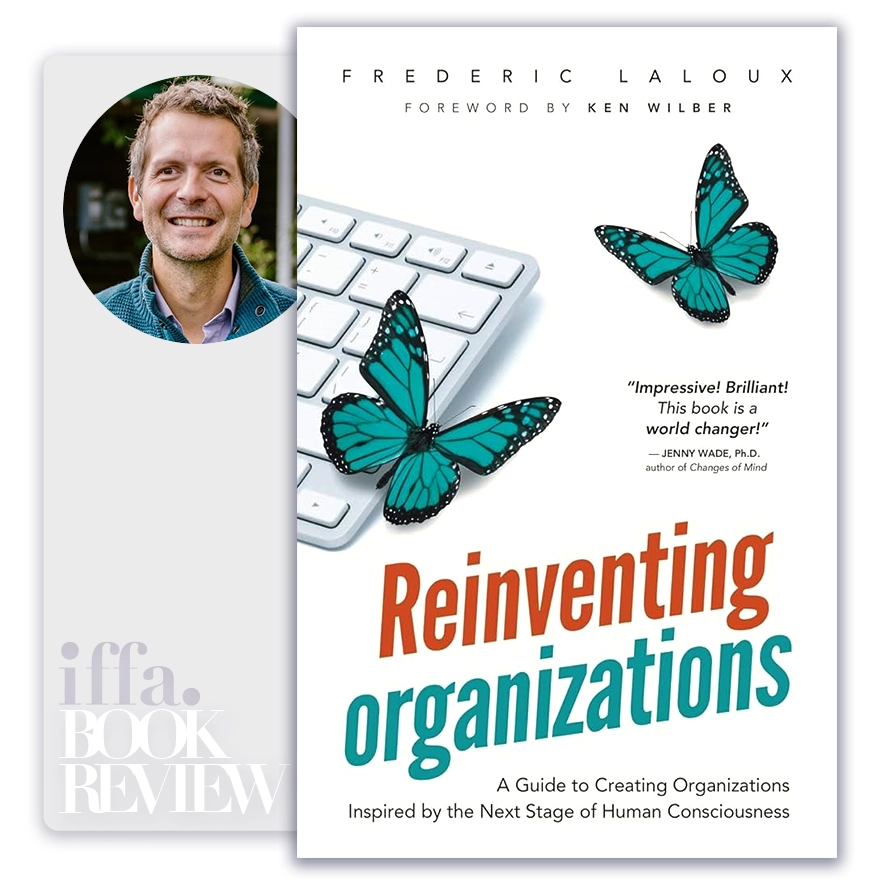
by Frédéric Laloux
Summary Overview:
As complexity increases and traditional hierarchies strain under volatility, Reinventing Organizations challenges the foundational assumptions of management. Frédéric Laloux argues that many current structures reflect outdated models of control and predictability. He proposes that organizational evolution mirrors stages of human consciousness, and that a new paradigm is emerging.
For executives navigating scale, talent expectations, and systemic disruption, this book sharpens governance design, distributed authority, and long-term adaptability. It reframes management not as control architecture, but as an evolving system aligned with maturity of awareness. In environments where speed and innovation outpace rigid hierarchy, organizational self-management becomes a strategic consideration rather than a philosophical experiment. The work remains relevant because it questions whether legacy operating models are structurally compatible with modern complexity.
About The Author
Frédéric Laloux is a former management consultant and organizational researcher whose work explores organizational development, leadership paradigms, and evolutionary systems. Drawing on case studies across industries and geographies, he examines how certain companies operate with radically different structures and achieve sustainable performance. His distinctive contribution lies in framing organizational design as a reflection of collective consciousness, integrating psychology, systems thinking, and management practice into a coherent evolutionary narrative.
Core Idea:
The central thesis of Reinventing Organizations is that organizational structures evolve in stages aligned with shifts in human consciousness. Laloux identifies a new stage, often referred to as “Teal,” characterized by self-management, wholeness, and evolutionary purpose. Traditional hierarchies rely on authority and prediction. The emerging model relies on distributed intelligence and adaptive flow.
At its foundation, the book asserts that organizations function most effectively when authority is decentralized, individuals operate with authenticity, and purpose evolves organically rather than through rigid planning. Decision-making moves closer to expertise. Governance shifts from command-and-control to peer-based accountability. Strategic adaptability increases when power is not concentrated at the top.
Hierarchy solves control but constrains adaptability.
Key Concepts:
- Evolutionary Stages of Organizations
Organizations reflect prevailing worldviews. Laloux categorizes historical stages of development, from authoritarian structures to pluralistic and now evolutionary forms.
- Earlier models emphasize stability
- Stability prioritizes predictability
- Predictability resists disruption
Evolutionary models prioritize adaptability. Structural design determines strategic flexibility.
- Self-Management
Authority can be distributed rather than centralized. Laloux presents case studies where teams operate without traditional hierarchies.
- Peer-based decision-making enhances ownership
- Local autonomy accelerates responsiveness
- Accountability shifts from boss to system
Self-management reduces bottlenecks. Decentralization increases agility.
- Wholeness in the Workplace
Individuals perform better when authenticity is permitted. Laloux argues that compartmentalized professional identities restrict engagement.
- Authentic expression builds trust
- Trust enhances collaboration
- Collaboration strengthens innovation
When individuals bring full identity to work, energy increases. Wholeness fosters resilience.
- Evolutionary Purpose
Organizations function as living systems rather than machines. Laloux suggests purpose should emerge and evolve rather than be dictated.
- Fixed plans constrain adaptation
- Adaptive sensing guides direction
- Direction informed by purpose sustains coherence
Strategic planning becomes iterative rather than rigid. Purpose-driven evolution replaces predictive control.
- Decision-Making Through Advice Process
Decisions can be made by individuals consulting relevant stakeholders. Laloux describes the “advice process” as an alternative to hierarchical approval.
- Consultation enhances perspective
- Responsibility remains with decision-maker
- Transparency builds trust
This model preserves speed while increasing inclusivity. Clear process mitigates chaos.
- Transparency as Infrastructure
Information transparency strengthens alignment. Open financials and performance data empower distributed authority.
- Openness builds accountability
- Accountability reduces politics
- Reduced politics enhances efficiency
Transparency stabilizes decentralized systems. Clarity reduces friction.
- Reduced Middle Management
Hierarchy layers can be minimized without sacrificing coordination. Laloux observes that certain organizations function effectively with fewer supervisory roles.
- Fewer layers accelerate communication
- Accelerated communication enhances responsiveness
- Responsiveness sustains competitiveness
Structural simplicity increases adaptability. Lean governance reduces inertia.
- Cultural Maturity
Self-management requires high levels of personal maturity. Laloux emphasizes emotional intelligence and accountability as prerequisites.
- Immaturity destabilizes autonomy
- Accountability sustains trust
- Trust enables decentralization
Structural freedom must align with cultural readiness. Capability determines viability.
- Conflict Resolution Mechanisms
Peer-based systems require clear conflict processes. Laloux highlights structured methods for addressing disagreement without hierarchy.
- Structured dialogue reduces escalation
- Clear protocols preserve cohesion
- Cohesion supports performance
Conflict clarity prevents fragmentation. Process discipline underpins freedom.
- Scaling Evolutionary Organizations
Growth challenges decentralized coherence. Laloux notes that expansion requires reinforcing shared purpose and cultural norms.
- Scale increases complexity
- Complexity tests alignment
- Alignment sustains identity
Institutionalizing principles ensures continuity. Scalability depends on shared consciousness.
Organizations evolve when purpose replaces rigid planning.
Executive Insights:
At the executive level, Reinventing Organizations reframes governance as adaptive architecture. Incentive systems built solely on hierarchy may limit innovation and responsiveness. Long-term value creation may require experimenting with distributed authority and evolutionary purpose.
Judgment improves when leaders evaluate whether control mechanisms enhance or inhibit adaptability. Risk exposure decreases when transparency and peer accountability reduce blind spots. Sustainable growth depends on aligning structure with complexity. Organizations that evolve governance models alongside environmental shifts sustain relevance.
At the executive level, Reinventing Organizations reframes governance as adaptive architecture. Incentive systems built solely on hierarchy may limit innovation and responsiveness. Long-term value creation may require experimenting with distributed authority and evolutionary purpose.
Judgment improves when leaders evaluate whether control mechanisms enhance or inhibit adaptability. Risk exposure decreases when transparency and peer accountability reduce blind spots. Sustainable growth depends on aligning structure with complexity. Organizations that evolve governance models alongside environmental shifts sustain relevance.
Actionable Takeaways:
Organizational design must evolve intentionally rather than by inertia.
- Start assessing whether hierarchical layers hinder agility
- Stop equating authority concentration with effectiveness
- Reframe purpose as evolving rather than static
- Embed transparent information systems
- Encourage distributed decision-making within clear boundaries
- Reduce unnecessary approval bottlenecks
- Align autonomy with accountability structures
- Protect cultural maturity through leadership development
Final Thoughts:
Reinventing Organizations challenges conventional management doctrine by proposing that structure reflects consciousness. Its strategic value lies in expanding the range of governance possibilities available to leaders.
Long-term value creation requires alignment between environmental complexity and organizational adaptability. Institutions endure when they balance autonomy with coherence and purpose with flexibility. In the end, the most resilient organizations are those that evolve their structures as deliberately as they pursue their strategies.
The ideas in this book go beyond theory, offering practical insights that shape real careers, leadership paths, and professional decisions. At IFFA, these principles are translated into executive courses, professional certifications, and curated learning events aligned with today’s industries and tomorrow’s demands. Discover more in our Courses.
Applied Programs

- Course Code : SBM-409
- Delivery : In-class / Virtual / Workshop
- Duration : 2-4 Days
- Venue: DUBAI HUB

- Course Code : PMA-613
- Delivery : In-class / Virtual / Workshop
- Duration : 3-5 Days
- Venue: DUBAI HUB
- Course Code : CIF-505
- Delivery : In-class / Virtual / Workshop
- Duration : 3-5 Days
- Venue: DUBAI HUB

- Course Code : CIF-512
- Delivery : In-class / Virtual / Workshop
- Duration : 2-4 Days
- Venue: DUBAI HUB
Related Books