The Executive Summary of
Mindset
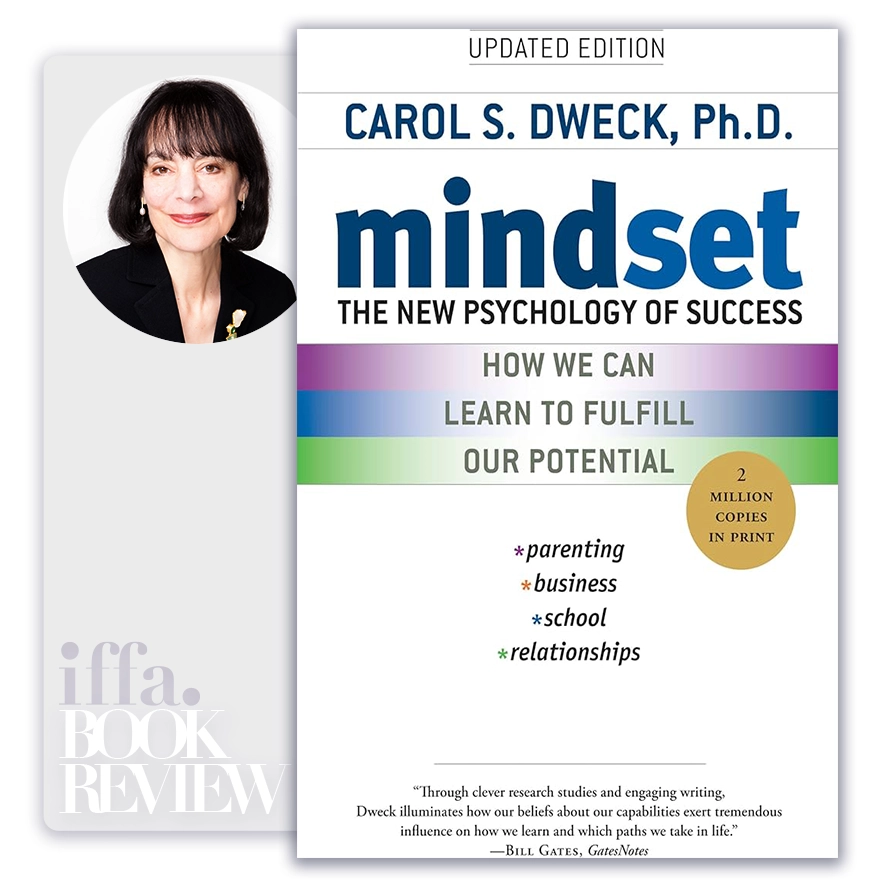
by Carol S. Dweck
Summary Overview:
In high-performance cultures, talent is often treated as destiny. Mindset: The New Psychology of Success challenges that assumption by reframing success as a function of belief systems rather than innate ability. Carol S. Dweck’s work reveals how underlying assumptions about intelligence and capability shape judgment, risk tolerance, and long-term growth.
For executives and institutional leaders, this book sharpens performance management, talent development, and resilience under failure. It exposes how fixed perceptions of ability create defensiveness and stagnation, while growth-oriented thinking fosters adaptability. In volatile environments where innovation requires experimentation, the belief that ability can expand becomes a strategic differentiator. Its relevance persists because it directly addresses how culture influences performance trajectory.
About The Author
Carol S. Dweck is a psychologist and professor at Stanford University whose research focuses on motivation, personality, and development. Her empirical work on belief systems and achievement has influenced education, corporate leadership, and athletic performance. Her distinctive contribution lies in identifying how implicit theories about intelligence shape behavior, particularly in response to challenge and failure. She approaches performance not as static measurement, but as dynamic development influenced by mindset.
Core Idea:
The central thesis of Mindset is that individuals operate from either a fixed mindset or a growth mindset, and this distinction shapes behavior, performance, and resilience. A fixed mindset assumes that intelligence and talent are static traits. A growth mindset assumes they can be developed through effort, learning, and adaptation.
At its foundation, the book argues that beliefs about ability influence response to challenge more than ability itself. When individuals believe talent is fixed, they avoid risk to protect identity. When they believe capability can expand, they pursue challenge as opportunity. Organizational culture amplifies either orientation. Long-term performance depends not on initial talent, but on the willingness to learn and persist.
Belief about ability shapes behavior more than ability alone.
Key Concepts:
- Fixed Versus Growth Orientation
A fixed mindset interprets ability as static. Individuals seek validation of intelligence rather than development.
- Challenges feel threatening
- Criticism feels personal
- Effort feels unnecessary or exposing
A growth mindset reframes these experiences. Adaptability replaces defensiveness.
- The Role of Challenge
Challenge reveals mindset orientation. Fixed thinkers avoid tasks that risk failure, while growth-oriented individuals engage difficulty deliberately.
- Avoidance preserves image
- Engagement builds capability
- Capability compounds performance
Organizations that normalize stretch assignments cultivate resilience. Difficulty accelerates development.
- Feedback and Learning
Feedback is interpreted differently depending on mindset. Fixed mindsets perceive criticism as attack; growth mindsets see information.
- Defensive response blocks learning
- Open response expands insight
- Expanded insight improves strategy
Leadership effectiveness depends on cultivating feedback acceptance. Learning cultures outperform defensive ones.
- Effort and Perception
Effort signals growth in a development orientation. Dweck challenges the assumption that effort implies lack of talent.
- Talent without effort plateaus
- Effort without direction exhausts
- Effort aligned with learning accelerates mastery
Reframing effort as investment encourages persistence. Sustained effort compounds advantage.
- Failure as Information
Failure is diagnostic, not definitional. In a growth mindset, setbacks reveal areas for improvement rather than permanent inadequacy.
- Fear of failure restricts experimentation
- Restricted experimentation limits innovation
- Limited innovation weakens competitiveness
Strategic cultures must decouple failure from identity. Resilience strengthens under constructive interpretation.
- Praise and Incentives
Praise shapes belief systems. Dweck emphasizes that praising innate talent reinforces fixed thinking, while praising process reinforces growth.
- Identity-based praise increases fragility
- Process-based praise encourages persistence
- Persistence builds expertise
Incentive systems influence cultural mindset. Rewarding learning behaviors strengthens adaptability.
- Leadership and Mindset Culture
Leaders institutionalize mindset through policy and tone. A fixed-mindset culture prioritizes image and short-term wins. A growth-mindset culture prioritizes development and long-term gains.
- Image-driven environments suppress risk
- Development-driven environments foster innovation
- Innovation sustains relevance
Strategic longevity depends on embedding development orientation. Cultural beliefs determine strategic elasticity.
- Competition and Comparison
Excessive comparison reinforces fixed identity. Dweck observes that environments centered on ranking intensify fear of inadequacy.
- Ranking magnifies insecurity
- Insecurity reduces collaboration
- Reduced collaboration limits synergy
Balancing competition with development preserves cohesion. Progress must outweigh prestige.
- Talent Management
Hiring for potential requires belief in development. Organizations focused solely on proven talent may overlook growth capacity.
- Static evaluation narrows pipeline
- Developmental evaluation expands opportunity
- Opportunity broadens institutional capability
Strategic advantage lies in cultivating internal growth. Development outperforms static selection.
- Long-Term Performance Trajectory
Mindset influences trajectory more than starting position. Over time, incremental learning compounds into significant advantage.
- Stagnation results from defensive avoidance
- Progress results from continuous adaptation
- Adaptation sustains competitive edge
Organizations that normalize growth sustain momentum. Trajectory defines success more reliably than initial condition.
Failure threatens identity in a fixed mindset and informs growth in a growth mindset.
Executive Insights:
At the executive level, Mindset: The New Psychology of Success reframes talent management and performance evaluation. Incentive systems that reward flawless execution without tolerance for learning cultivate fragility. Sustainable growth requires embedding a developmental orientation into culture and governance.
Judgment strengthens when leaders view setbacks as data rather than threats. Risk exposure decreases when experimentation is normalized and identity is not attached to outcome. Long-term value creation depends on cultivating belief in expandability across teams. Organizations that institutionalize growth mindset develop resilience against disruption.
Actionable Takeaways:
Mindset must be embedded as a cultural principle rather than treated as motivational rhetoric.
- Start reinforcing learning behaviors in performance reviews
- Stop equating talent with permanence
- Reframe failure as strategic feedback
- Embed developmental pathways into talent strategy
- Reduce excessive ranking systems that amplify fear
- Encourage leaders to model openness to critique
- Align incentives with progress and experimentation
- Protect environments where challenge is normalized
Final Thoughts:
Mindset: The New Psychology of Success offers a structural insight into how belief systems shape institutional destiny. Its enduring relevance lies in clarifying that potential is not fixed, but expandable.
Long-term value creation depends on leaders who foster resilience, adaptability, and disciplined learning. Institutions that cultivate growth orientation outpace those that defend static identity. In the end, the most powerful competitive advantage is the belief that capability can continuously expand.
The ideas in this book go beyond theory, offering practical insights that shape real careers, leadership paths, and professional decisions. At IFFA, these principles are translated into executive courses, professional certifications, and curated learning events aligned with today’s industries and tomorrow’s demands. Discover more in our Courses.
Applied Programs

- Course Code : SBM-409
- Delivery : In-class / Virtual / Workshop
- Duration : 2-4 Days
- Venue: DUBAI HUB

- Course Code : PMA-613
- Delivery : In-class / Virtual / Workshop
- Duration : 3-5 Days
- Venue: DUBAI HUB
- Course Code : CIF-505
- Delivery : In-class / Virtual / Workshop
- Duration : 3-5 Days
- Venue: DUBAI HUB

- Course Code : CIF-512
- Delivery : In-class / Virtual / Workshop
- Duration : 2-4 Days
- Venue: DUBAI HUB
Related Books