
The Executive Summary of
The Master’s Practical Guide to Maritime Law
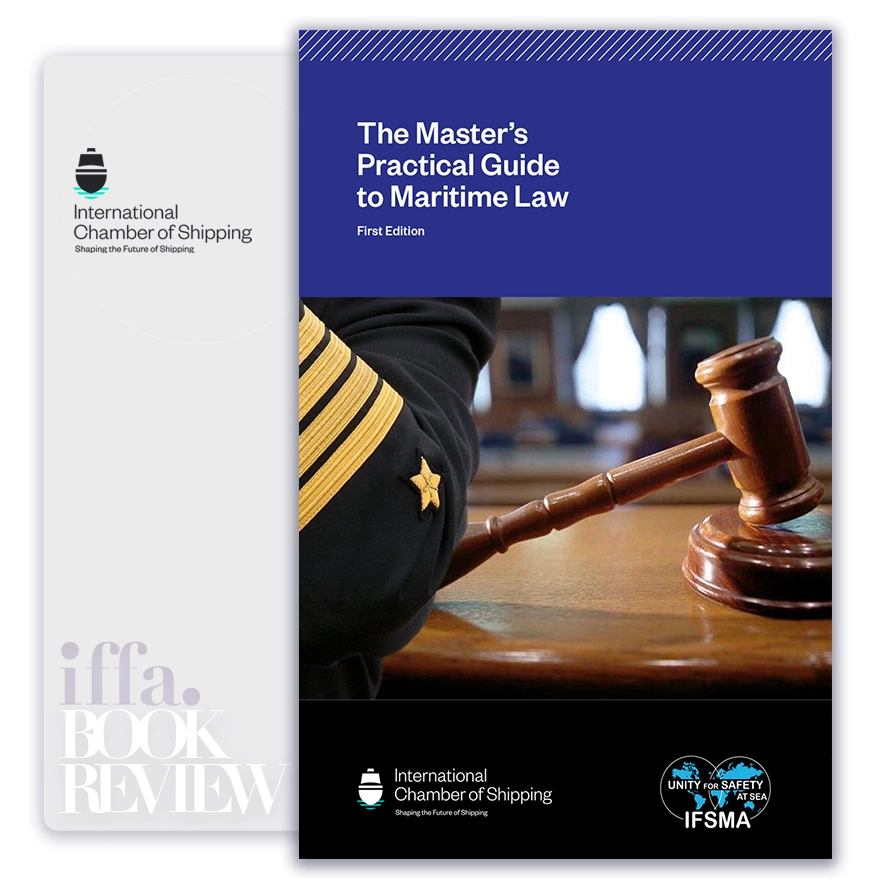
by International Chamber of Shipping
Summary Overview:
The Master’s Practical Guide to Maritime Law addresses a reality that every ship ultimately confronts: critical legal decisions are often made far from lawyers, courts, and head offices. In moments of urgency—collision, pollution, crew discipline, cargo disputes, port state control—the master’s judgment becomes the company’s legal position. This guide matters because it equips masters with the legal awareness needed to act decisively without creating unintended liability.
For shipowners, boards, senior executives, and fleet managers, the relevance is strategic. Many of the most costly maritime claims do not arise from the incident itself, but from what was done—or not done—immediately afterward. The guide reframes maritime law as an operational discipline, translating legal principles into practical judgment for those exercising command. In an era of heightened environmental enforcement, sanctions, and crew welfare scrutiny, legal literacy on the bridge is a risk-management imperative.
About The Author
The International Chamber of Shipping is the principal international trade association for the shipping industry, representing shipowners and operators worldwide.
Its authority derives from global reach, regulatory engagement, and operational credibility. ICS guidance reflects international conventions and best practice while remaining grounded in the realities of shipboard decision-making.
Core Idea:
The central thesis of The Master’s Practical Guide to Maritime Law is that maritime law is most effective when understood at the point of action. The guide emphasizes that masters do not need to be lawyers, but they must understand how legal consequences flow from operational choices—especially under pressure.
At a deeper level, the book advances a worldview in which law functions as part of seamanship and command. Properly applied, legal awareness protects life, the environment, the vessel, and the company. Authority at sea is strengthened, not constrained, by knowing where discretion ends and obligation begins.
The master’s first decisions often determine the company’s legal outcome.
Key Concepts:
- The Master as the Company’s Legal Agent
Actions at sea bind the enterprise.
- Command decisions carry corporate consequence.
- Awareness protects authority.
- Immediate Response Shapes Liability
Early conduct matters most.
- Preservation of evidence is critical.
- Delay compounds exposure.
- Collision and Casualty Management
Law anticipates failure.
- Fault allocation follows documented behavior.
- Calm procedure limits escalation.
- Pollution Prevention and Response
Environmental liability is severe.
- Strict regimes elevate personal and corporate risk.
- Prompt, compliant action mitigates outcome.
- Cargo Care and Documentation
Records determine responsibility.
- Logs and statements anchor claims.
- Accuracy protects defenses.
- Crew Discipline and Welfare
Human factors intersect with law.
- Due process sustains authority.
- Mishandling creates liability.
- Port State Control and Inspections
Compliance is operational.
- Preparation reduces detention risk.
- Transparency builds credibility.
- Salvage and Emergency Assistance
Incentives are legally structured.
- Cooperation preserves rights.
- Missteps forfeit protection.
- Evidence, Reporting, and Communication
What is said matters.
- Uncontrolled statements increase exposure.
- Structured reporting protects interests.
- Escalation and Shore Support
Knowing when to call matters.
- Early notification stabilizes response.
- Isolation magnifies risk.
Legal awareness at sea is a form of risk prevention, not hesitation.
Executive Insights:
The guide reframes maritime law as operational governance executed at sea. ICS makes clear that legal outcomes are often decided before lawyers arrive—through evidence preservation, procedural discipline, and lawful exercise of authority by the master.
For boards and senior leadership, the implication is clear: legal competence on the bridge is a governance investment. Training masters in practical maritime law reduces claims severity, protects insurance positions, and strengthens regulatory credibility. Organizations that neglect this capability often learn through loss.
- Early decisions dominate legal outcomes.
- Documentation discipline protects enterprise value.
- Environmental response is board-level risk.
- Crew management reflects corporate culture.
- Prepared masters reduce systemic exposure.
Actionable Takeaways:
Operational resilience requires legal readiness.
- Train masters in practical maritime law.
- Align onboard procedures with legal obligations.
- Emphasize evidence preservation and reporting discipline.
- Support early escalation to shore experts.
- Treat legal literacy as part of command competence.
Final Thoughts:
The Master’s Practical Guide to Maritime Law affirms a fundamental truth of shipping: law travels with the ship. The International Chamber of Shipping shows that when masters understand legal consequences, they command with confidence rather than caution—and protect the enterprise while protecting people.
For leaders responsible for assets and reputation across oceans, the enduring insight is unmistakable: the strongest legal defense is sound judgment exercised early, at sea, by those in command. Where legal awareness is embedded in seamanship, incidents remain incidents. Where it is absent, they become crises.
In the long run, the safest voyages are those commanded by masters who understand not only the sea—but the law that governs it.
The ideas in this book go beyond theory, offering practical insights that shape real careers, leadership paths, and professional decisions. At IFFA, these principles are translated into executive courses, professional certifications, and curated learning events aligned with today’s industries and tomorrow’s demands. Discover more in our Courses.
Applied Programs

- Course Code : SBM-409
- Delivery : In-class / Virtual / Workshop
- Duration : 2-4 Days
- Venue: DUBAI HUB

- Course Code : PMA-613
- Delivery : In-class / Virtual / Workshop
- Duration : 3-5 Days
- Venue: DUBAI HUB
- Course Code : CIF-505
- Delivery : In-class / Virtual / Workshop
- Duration : 3-5 Days
- Venue: DUBAI HUB

- Course Code : CIF-512
- Delivery : In-class / Virtual / Workshop
- Duration : 2-4 Days
- Venue: DUBAI HUB
Related Books