The Executive Summary of
Crude Britannia: How Oil Shaped a Nation
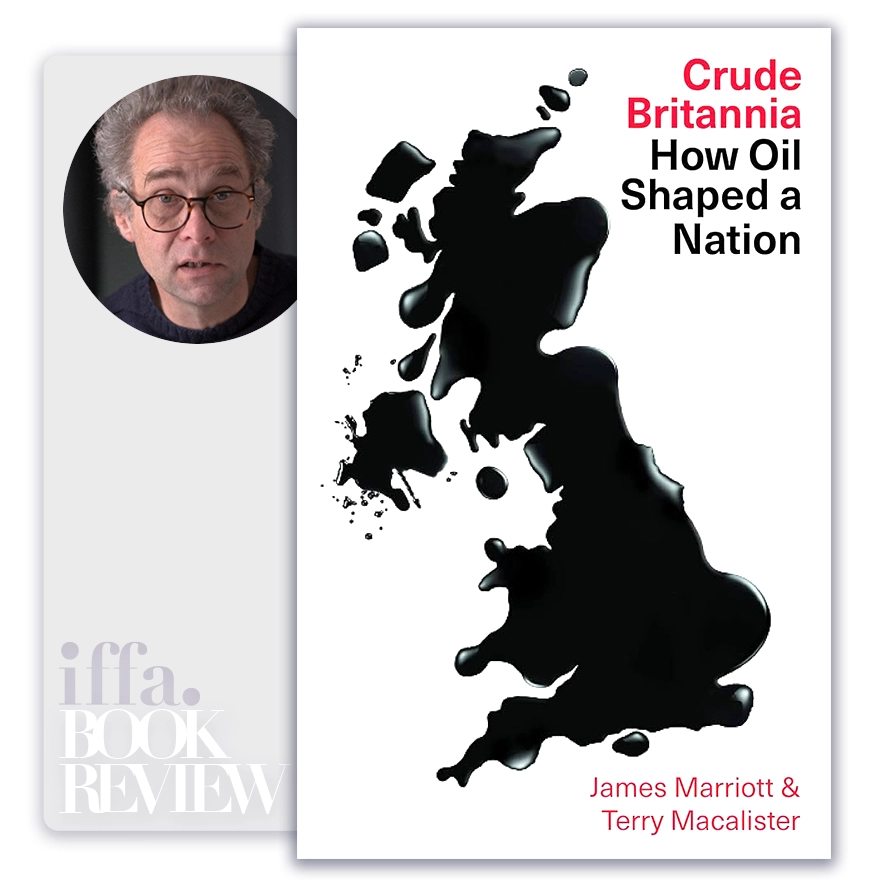
by James Marriott
Summary Overview:
Oil is often treated as a sectoral issue in Britain, discussed in terms of North Sea revenues, energy security, or climate policy. Crude Britannia remains relevant because it demonstrates that oil’s influence runs far deeper, reshaping economic structure, political ideology, social expectations, and national decision-making over decades. For senior executives, policymakers, and long-term investors, the book offers a lens into how resource wealth quietly alters institutional behavior, encouraging short-termism, deferring reform, and distorting accountability. Its enduring value lies in showing how energy abundance can redefine a nation’s choices without ever becoming a conscious strategy.
About The Author
James Marriott is a British journalist and author whose work focuses on political economy, energy, and the cultural consequences of capitalism. His reporting combines investigative research with historical analysis, drawing on policy decisions, public discourse, and economic outcomes.
What distinguishes Marriott’s perspective is his ability to connect energy flows with social and political attitudes. Rather than treating oil as a technical or geopolitical variable, he examines how it reshaped Britain’s expectations about growth, consumption, and state responsibility.
Core Idea:
The core idea of Crude Britannia is that oil revenues acted as an invisible subsidy to Britain’s political and economic system, enabling structural weaknesses to persist while masking long-term decline. Rather than being invested to transform the economy, oil income softened the consequences of deindustrialization, reduced pressure for reform, and financed political choices that favored consumption over renewal.
Marriott presents oil as a cultural and institutional force, not merely a fiscal one. Decisions made under the comfort of hydrocarbon wealth reshaped attitudes toward labor, public spending, and national ambition. Leaders who ignore this dynamic risk misunderstanding how temporary resource windfalls can permanently alter governance behavior.
Oil wealth does not only change balance sheets; it reshapes political imagination.
Key Concepts:
- Oil as a Political Cushion
North Sea revenues absorbed economic shocks during deindustrialization. This reduced urgency for structural reform, allowing policy drift masked by fiscal comfort. - The Illusion of Prosperity
Oil income created a sense of national resilience disconnected from underlying productivity. For leaders, this illustrates how temporary income streams distort strategic judgment. - State Behavior Under Resource Windfalls
Rather than strengthening institutions, oil revenues encouraged short-term fiscal decisions that postponed difficult political choices. - Consumption Over Investment
Marriott highlights how oil wealth supported consumption and tax relief rather than long-term industrial renewal, embedding path dependency. - Energy and Ideological Shifts
Oil coincided with political transformations that emphasized market solutions while quietly relying on resource income, revealing contradictions in economic philosophy. - Missed Sovereign Stewardship
Unlike some resource-rich states, Britain did not fully institutionalize oil wealth for future generations, underscoring how governance choices matter more than resource size. - Environmental Externalities Deferred
Oil’s centrality delayed climate accountability by framing hydrocarbons as economic necessity rather than strategic liability. - Regional Inequality Reinforced
Resource income failed to rebalance regional economies, allowing geographic disparities to deepen beneath a national revenue stream. - Cultural Normalization of Decline
Oil softened the social experience of decline, reducing collective pressure for renewal and enabling low expectations to become institutionalized. - The Long Shadow of Energy Choices
Decisions made under oil abundance constrained later policy options, demonstrating how energy shapes governance long after revenues fade.
Resource income delays reckoning by making decline feel manageable.
Executive Insights:
Crude Britannia reframes energy wealth as a behavioral force that alters incentives inside governments and institutions. For boards and policymakers, the book highlights how unearned income streams reduce strategic discipline, making systems more fragile when conditions change.
At leadership level, the lesson is that resource comfort can be more dangerous than scarcity.
- Windfalls weaken reform incentives
- Short-term relief replaces long-term strategy
- Institutional choices outlast revenue flows
- Energy wealth reshapes national culture
- Decline is managed rather than confronted
Actionable Takeaways:
Senior leaders should translate these lessons into strategic awareness:
- Reframe resource income as temporary leverage, not structural strength
- Stop allowing windfalls to substitute for reform
- Embed long-term stewardship mechanisms for resource-derived revenues
- Assess how energy income distorts incentives within institutions
- Align energy strategy with national renewal, not fiscal comfort
Final Thoughts:
Crude Britannia is ultimately a book about how nations drift when hard choices are postponed. It shows that oil did not simply fuel Britain’s economy; it altered its relationship with decline, making erosion tolerable rather than urgent.
The book’s enduring contribution is its warning that resources do not guarantee resilience. Without disciplined governance, they delay adaptation and narrow future options.
The final insight is both sober and universal: lasting national strength is built not on what a country extracts, but on how wisely it governs the temporary advantages extraction provides.
The ideas in this book go beyond theory, offering practical insights that shape real careers, leadership paths, and professional decisions. At IFFA, these principles are translated into executive courses, professional certifications, and curated learning events aligned with today’s industries and tomorrow’s demands. Discover more in our Courses.
Applied Programs

- Course Code : SBM-409
- Delivery : In-class / Virtual / Workshop
- Duration : 2-4 Days
- Venue: DUBAI HUB

- Course Code : PMA-613
- Delivery : In-class / Virtual / Workshop
- Duration : 3-5 Days
- Venue: DUBAI HUB
- Course Code : CIF-505
- Delivery : In-class / Virtual / Workshop
- Duration : 3-5 Days
- Venue: DUBAI HUB

- Course Code : CIF-512
- Delivery : In-class / Virtual / Workshop
- Duration : 2-4 Days
- Venue: DUBAI HUB
Related Books