The Executive Summary of
Supertanker: Living on a Monster VLCC
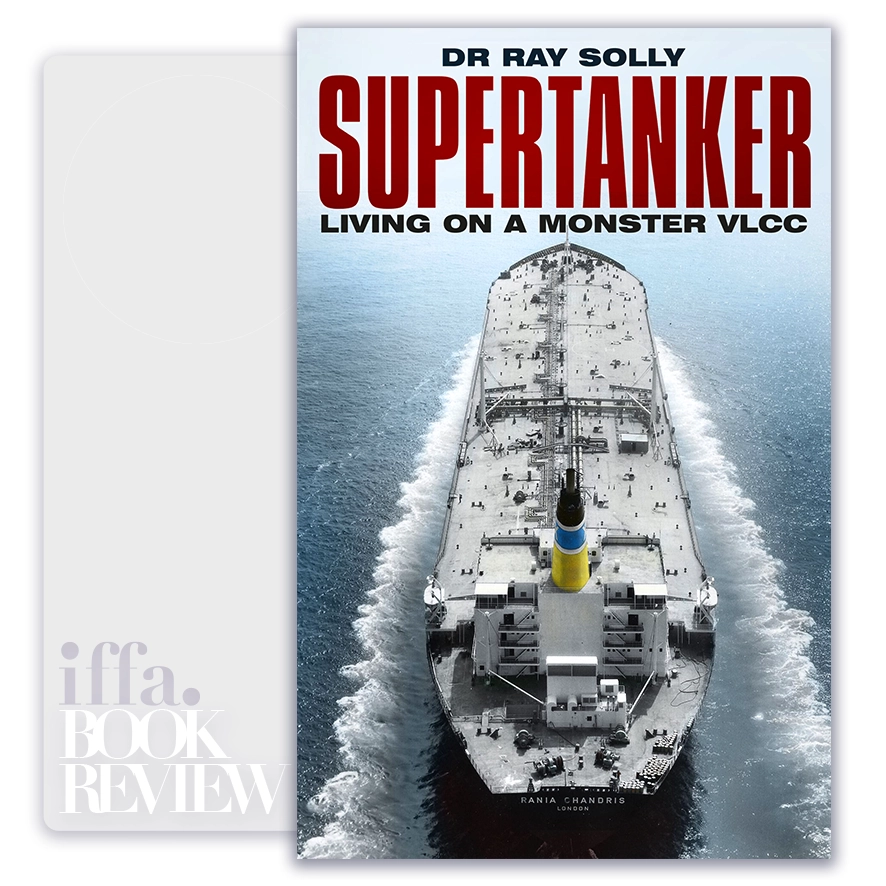
by Ray Solly
Summary Overview:
Supertankers are often discussed in abstract terms—deadweight tonnage, freight cycles, emissions, or geopolitical leverage—yet their true significance lies in how human beings, machines, and systems interact under extreme scale and isolation. Supertanker: Living on a Monster VLCC remains relevant because it exposes the operational reality behind one of the most critical assets in global energy logistics. For executives, regulators, and policymakers, the book matters not as a memoir, but as a ground-level lens into how risk, discipline, culture, and leadership manifest aboard ultra-large crude carriers. Its enduring value lies in reminding decision-makers that the reliability of global oil flows depends as much on human judgment and system design as on steel and horsepower.
About The Author
Ray Solly is a maritime writer with deep experience in tanker operations, shipping safety, and life at sea, particularly within the crude oil sector. His authority stems from direct exposure to shipboard realities rather than managerial distance or technical abstraction.
What distinguishes Solly’s perspective is his ability to translate operational complexity into lived experience. He writes from within the system, offering insight into how procedures, hierarchy, fatigue, and environment shape decision-making aboard vessels where errors scale into global consequences.
Core Idea:
The core idea of Supertanker is that operating a VLCC is less about size and more about discipline. Extreme scale magnifies everything: distance, inertia, consequence, and delay. Decisions made hours earlier—or miles away—determine outcomes long before they are visible. Solly presents the VLCC not as a technological marvel alone, but as a floating socio-technical system where human behavior, routines, and leadership determine whether complexity remains controlled.
The book frames supertankers as systems of patience and restraint. Unlike smaller vessels, VLCCs do not forgive haste or improvisation. Safe operation depends on anticipation, procedural rigor, and respect for limits—physical, environmental, and human. Leaders who underestimate these realities risk misunderstanding how fragility enters systems that appear overwhelmingly powerful.
On a VLCC, mistakes are rarely sudden; they are the result of long, quiet drift.
Key Concepts:
- Scale as a Behavioral Multiplier
VLCC size magnifies consequences without changing human limitation. Leaders must recognize that human judgment does not scale automatically with asset size. - Time, Distance, and Inertia
Stopping, turning, or correcting course occurs over miles and minutes. This reinforces the strategic importance of anticipation over reaction. - Routine as Risk Control
Daily routines are not monotony; they are stability mechanisms that prevent deviation in an environment where improvisation is dangerous. - Isolation and Decision-Making
Life aboard a supertanker involves extended isolation. Cognitive load, fatigue, and detachment influence judgment, highlighting the need for systemic safeguards, not heroics. - Hierarchy and Authority at Sea
Clear command structures are essential. Ambiguity undermines safety when delayed decisions compound into irreversible outcomes. - Technology as Aid, Not Substitute
Instrumentation supports awareness but does not eliminate uncertainty. Overreliance on systems without contextual judgment creates false confidence. - Environmental Exposure and Fragility
Weather, sea state, and traffic affect VLCCs differently. Environmental margins are narrow despite apparent robustness. - Cargo as Latent Risk
Millions of barrels of crude represent not just value but catastrophic liability. Cargo management is inseparable from safety culture. - Maintenance and Vigilance Under Scale
Minor defects escalate quickly on large vessels. Maintenance discipline reflects organizational seriousness, not technical detail. - The Human Cost of Global Energy
The book underscores that global oil supply chains rely on crews operating far from visibility. System reliability is inseparable from human endurance and professionalism.
Scale rewards discipline and punishes impatience.
Executive Insights:
Supertanker reframes VLCC operations as a leadership and governance challenge, not merely an engineering one. Organizations with similar vessels diverge sharply based on procedural discipline, cultural enforcement, and respect for human limits.
For boards and senior executives, the book offers a reminder that operational risk is shaped far from headquarters, yet is determined by decisions made there—crewing policies, maintenance budgets, and cultural expectations.
- Scale amplifies behavioral weakness
- Anticipation outperforms reaction
- Routine protects against drift
- Human limits define system limits
- Governance decisions surface at sea
Actionable Takeaways:
Senior leaders should translate the book’s lessons into system-level posture, not nostalgia:
- Reframe VLCC operations as high-discipline environments, not scale advantages
- Protect routine and procedural rigor against commercial pressure
- Design systems that account for human fatigue and isolation
- Avoid overconfidence driven by asset size or technology
- Treat crewing, training, and maintenance as strategic risk controls
Final Thoughts:
Supertanker: Living on a Monster VLCC is ultimately a book about humility in the face of scale. It strips away the illusion that bigger assets automatically confer control and shows instead that discipline, patience, and respect for limits are what keep vast systems stable.
Its enduring contribution lies in humanizing an asset class often discussed only in statistics. Behind every VLCC movement lies a chain of judgment, restraint, and quiet professionalism that rarely attracts attention—until it fails.
The final insight is calm and uncompromising: in systems of extreme scale, long-term reliability is secured not by power or speed, but by disciplined leadership that understands that the margin for error shrinks as size grows.
The ideas in this book go beyond theory, offering practical insights that shape real careers, leadership paths, and professional decisions. At IFFA, these principles are translated into executive courses, professional certifications, and curated learning events aligned with today’s industries and tomorrow’s demands. Discover more in our Courses.
Applied Programs

- Course Code : SBM-409
- Delivery : In-class / Virtual / Workshop
- Duration : 2-4 Days
- Venue: DUBAI HUB
- Course Code : PMA-613
- Delivery : In-class / Virtual / Workshop
- Duration : 3-5 Days
- Venue: DUBAI HUB
- Course Code : CIF-505
- Delivery : In-class / Virtual / Workshop
- Duration : 3-5 Days
- Venue: DUBAI HUB

- Course Code : CIF-512
- Delivery : In-class / Virtual / Workshop
- Duration : 2-4 Days
- Venue: DUBAI HUB
Related Books