
The Executive Summary of
Rest: Why You Get More Done When You Work Less
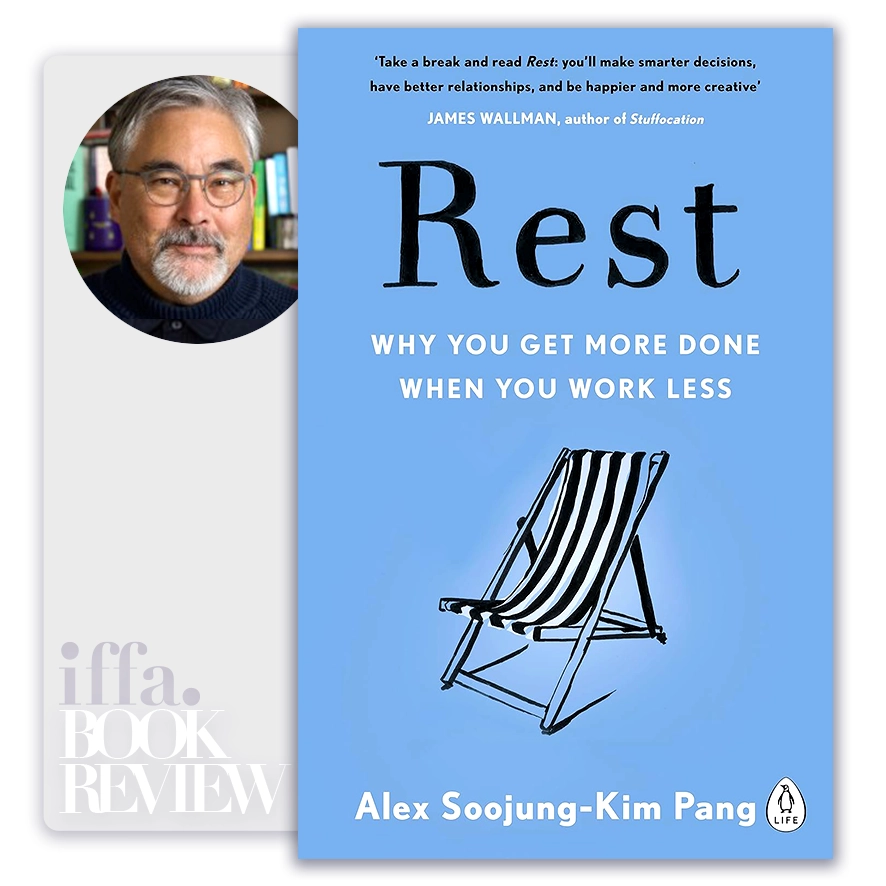
by Alex Soojung-Kim Pang
Summary Overview:
Rest challenges one of the most persistent assumptions in modern leadership culture: that long hours and constant availability are proxies for commitment and performance. Alex Soojung-Kim Pang argues that this belief is not only outdated, but actively counterproductive. The book matters because it reframes rest as a strategic input to high performance, not a reward for it—an insight increasingly critical as organizations confront burnout, cognitive overload, and diminishing returns on effort.
For CEOs, board members, senior executives, and long-term investors, the relevance is immediate and structural. Competitive advantage today depends on judgment quality, creativity, and resilience under uncertainty—capabilities that erode when recovery is neglected. Pang shows that many of history’s most effective thinkers and leaders produced extraordinary results not through relentless work, but through intentional cycles of focused effort and deliberate rest. In a world that prizes speed, this book argues persuasively for sustainable excellence.
About The Author
Alex Soojung-Kim Pang is a researcher and author who studies technology, work culture, and human performance.
His perspective is distinctive for combining historical analysis with contemporary cognitive science, translating evidence into insights relevant for modern organizations without resorting to motivational rhetoric.
Core Idea:
The central thesis of Rest is that rest is not the absence of work, but an essential component of it. Pang demonstrates that peak performance emerges from balanced rhythms—periods of intense, focused effort followed by genuine disengagement that allows the brain to recover, consolidate learning, and generate insight.
At a deeper level, the book advances a worldview in which human energy, not time, is the true limiting resource. Long hours degrade judgment and creativity, while well-structured rest restores them. Sustainable productivity, Pang argues, depends on designing work patterns that respect cognitive and physiological limits rather than attempting to override them.
Rest is not idleness; it is a form of active preparation.
Key Concepts:
- Long Hours Reduce Judgment Quality
More time does not equal better output.
- Cognitive fatigue impairs decision-making.
- Errors increase as recovery declines.
- Elite Performers Work in Rhythms
High achievers follow cycles.
- Focused work is limited in duration.
- Rest enables renewal.
- Deep Work Requires Deep Rest
Intensity demands recovery.
- Breaks restore attention and insight.
- Continuous strain dulls thinking.
- Creativity Emerges During Downtime
Insight often appears away from the desk.
- Walking, leisure, and sleep support problem-solving.
- Incubation matters.
- Sleep Is a Strategic Asset
Rested leaders think better.
- Memory consolidation and judgment depend on sleep.
- Chronic deprivation is a performance tax.
- Physical Activity Supports Cognitive Performance
Movement fuels thinking.
- Exercise enhances focus and resilience.
- Sedentary work undermines energy.
- Busyness Is Not a Measure of Value
Visibility distorts priorities.
- Output quality matters more than hours logged.
- Overwork often signals inefficiency.
- Sustainable Pace Preserves Excellence
Careers are long games.
- Burnout erodes institutional knowledge.
- Endurance protects leadership capacity.
- Culture Shapes Workload Norms
Systems reward behavior.
- Leadership signals determine pace.
- Rest must be legitimized.
- Rest Is a Governance Issue
Recovery affects enterprise risk.
- Fatigue increases strategic error.
- Well-rested organizations perform better.
The highest performers work intensely—but not continuously.
Executive Insights:
Pang reframes rest as a leadership and governance responsibility rather than a personal indulgence. Organizations that equate endurance with excellence often sacrifice long-term performance for short-term optics. By contrast, those that normalize recovery, focus, and rhythm protect decision quality and innovation capacity.
For boards and senior leadership, the implication is clear: productivity systems must be designed around human limits, not against them. Sustainable performance arises when work is intense, meaningful, and bounded—supported by recovery that preserves clarity and resilience.
- Rest improves judgment under uncertainty.
- Sustainable pace reduces burnout risk.
- Recovery enhances creativity and insight.
- Leadership behavior sets cultural norms.
- Long-term value depends on cognitive health.
Actionable Takeaways:
High performance requires deliberate recovery.
- Redesign work rhythms to include real rest.
- Measure outcomes, not hours.
- Legitimize recovery through leadership behavior.
- Protect sleep, focus, and physical well-being.
- Treat rest as an enabler of excellence, not a concession.
Final Thoughts:
Rest offers a calm but decisive correction to modern work mythology. Alex Soojung-Kim Pang shows that working less—when done intelligently—can produce more value, better judgment, and greater resilience over time.
For leaders operating in complex, high-stakes environments, the enduring insight is simple yet profound: clarity, creativity, and wisdom cannot be forced—they must be restored. Organizations that understand this will outlast those that glorify exhaustion.
In the long run, the most productive leaders are not the busiest, but the most well-rested—and therefore the most clear-minded.
The ideas in this book go beyond theory, offering practical insights that shape real careers, leadership paths, and professional decisions. At IFFA, these principles are translated into executive courses, professional certifications, and curated learning events aligned with today’s industries and tomorrow’s demands. Discover more in our Courses.
Applied Programs

- Course Code : SBM-409
- Delivery : In-class / Virtual / Workshop
- Duration : 2-4 Days
- Venue: DUBAI HUB
- Course Code : PMA-613
- Delivery : In-class / Virtual / Workshop
- Duration : 3-5 Days
- Venue: DUBAI HUB

- Course Code : CIF-505
- Delivery : In-class / Virtual / Workshop
- Duration : 3-5 Days
- Venue: DUBAI HUB

- Course Code : CIF-512
- Delivery : In-class / Virtual / Workshop
- Duration : 2-4 Days
- Venue: DUBAI HUB
Related Books