
The Executive Summary of
How to Let Things Go
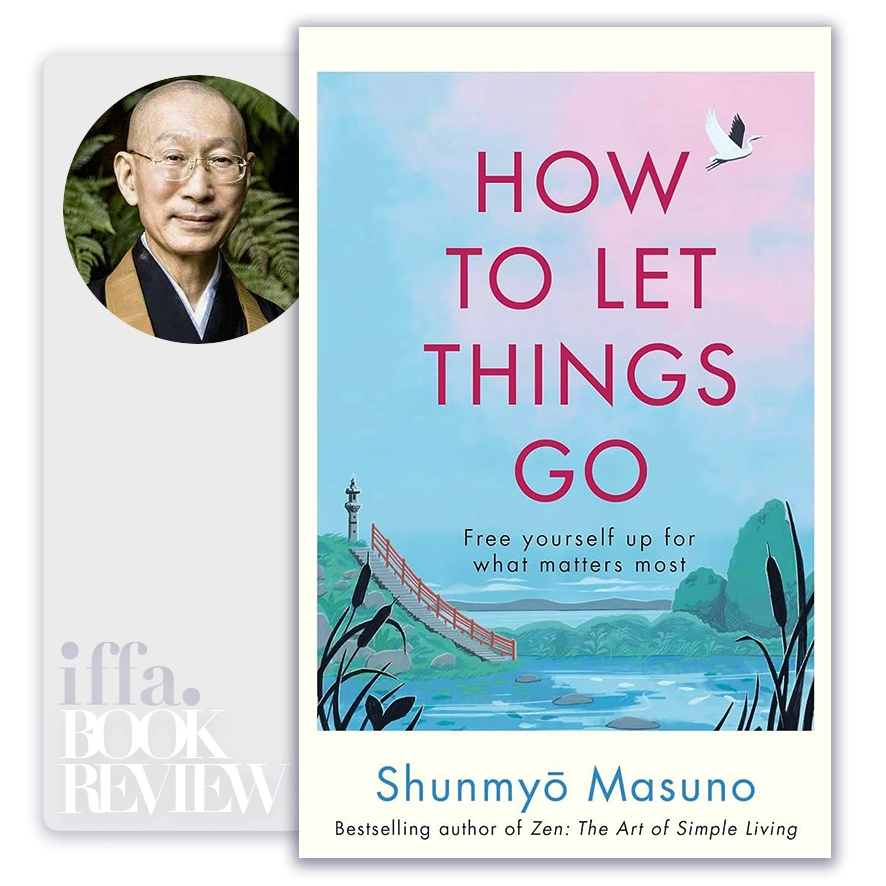
by Shunmyo Masuno
Summary Overview:
How to Let Things Go speaks to a modern leadership dilemma that rarely appears in strategy documents but quietly erodes decision quality: the inability to release mental clutter, emotional residue, and unnecessary attachment. In environments defined by constant information flow, reputational pressure, and perpetual urgency, leaders often carry far more than they should—past decisions, unresolved conflicts, imagined expectations, and self-imposed noise. Shunmyo Masuno addresses this condition not as a personal weakness, but as a structural imbalance of attention and attachment.
For CEOs, board members, and senior executives, the book matters because clarity of judgment depends on inner space. Leaders who cannot let go struggle to prioritize, overreact to short-term stimuli, and conflate identity with outcomes. Masuno’s work reframes letting go not as disengagement or passivity, but as a disciplined act of mental governance. In a volatile and demanding world, the ability to release what no longer serves the present moment becomes a decisive leadership advantage.
About The Author
Shunmyo Masuno is a Zen Buddhist monk and architect, known for integrating Zen philosophy with contemporary life and design. He has served as head priest of a centuries-old Zen temple in Japan while also working internationally as a designer and teacher.
Masuno’s perspective is distinctive because it combines spiritual discipline with practical structure. Rather than abstract philosophy, he translates Zen principles into everyday practices that influence behavior, perception, and decision-making—making his insights particularly relevant to leaders navigating complexity without spiritualizing their roles.
Core Idea:
The central thesis of How to Let Things Go is that suffering, distraction, and poor judgment arise from excessive attachment to thoughts, outcomes, and expectations. Masuno argues that clarity emerges not from adding more effort or control, but from consciously releasing what is unnecessary—whether mental narratives, emotional reactions, or rigid assumptions.
At a deeper level, the book presents a worldview in which letting go is an active discipline of awareness. It does not mean indifference or avoidance, but the ability to engage fully with the present moment without being governed by past baggage or future anxiety. For leaders, this translates into calmer decisions, steadier temperament, and greater resilience under pressure.
Letting go is not losing control; it is recovering clarity.
Key Concepts:
- Attachment Distorts Perception
Masuno emphasizes that clinging to opinions, emotions, or outcomes narrows perspective.
- Attachment amplifies stress.
- Detachment restores balance.
- The Mind Accumulates Noise by Default
Without conscious practice, thoughts pile up unchecked.
- Mental clutter weakens focus.
- Simplicity improves discernment.
- Letting Go Is a Daily Practice
Release is not a one-time act but a repeated discipline.
- Small releases prevent accumulation.
- Consistency preserves calm.
- Control Is Often an Illusion
Excessive control creates tension rather than certainty.
- Acceptance reduces friction.
- Flexibility improves response.
- Emotions Pass If Not Fed
Masuno highlights that emotions lose power when not reinforced.
- Reaction prolongs disturbance.
- Observation restores equilibrium.
- Comparison Breeds Discontent
Measuring oneself against others fuels dissatisfaction.
- Comparison distracts from purpose.
- Presence restores self-direction.
- Rituals Create Psychological Order
Simple routines anchor attention and reduce chaos.
- Structure supports calm.
- Rituals replace rumination.
- Stillness Sharpens Awareness
Moments of quiet enhance perception and judgment.
- Silence reveals signal.
- Noise obscures insight.
- Acceptance Enables Action
Letting go does not mean inaction; it enables appropriate action.
- Acceptance clarifies next steps.
- Resistance delays resolution.
- Inner Order Shapes Outer Effectiveness
Masuno frames inner calm as the foundation of external performance.
- Inner stability supports leadership steadiness.
- Turbulent minds create turbulent systems.
Calm judgment emerges when the mind is no longer crowded by what does not belong to the present.
Executive Insights:
How to Let Things Go positions inner discipline as a strategic leadership capacity, not a personal luxury. Leaders who carry unresolved emotional weight or excessive attachment often misjudge risk, overreact to short-term signals, and transmit anxiety into their organizations. By contrast, leaders who practice release create psychological safety, clarity, and steadiness at scale.
From a governance perspective, the book implies that organizational calm begins with leadership temperament. Boards and senior teams benefit when decision-makers are not entangled in ego, past narratives, or imagined futures, but grounded in present reality.
- Judgment improves with mental clarity.
- Leadership credibility grows with emotional restraint.
- Organizations stabilize when leaders remain calm.
- Decision quality increases with reduced reactivity.
- Long-term thinking requires inner space.
Actionable Takeaways:
Effective leadership begins with deliberate release.
- Let go of unproductive thoughts before making decisions.
- Reduce emotional reactivity to short-term events.
- Create daily rituals that restore mental order.
- Separate identity from outcomes and roles.
- Cultivate calm as a leadership standard.
Final Thoughts:
How to Let Things Go offers a quiet but powerful reminder: clarity is not achieved by accumulation, but by subtraction. In a culture that rewards constant engagement and control, Masuno’s work reintroduces restraint as a form of strength.
For executives entrusted with complex decisions and long horizons, the book provides a timeless insight: the leader who can release what is unnecessary gains the freedom to act wisely. Letting go is not withdrawal from responsibility—it is preparation for it.
In the long run, the calmest mind often makes the clearest decision.
The ideas in this book go beyond theory, offering practical insights that shape real careers, leadership paths, and professional decisions. At IFFA, these principles are translated into executive courses, professional certifications, and curated learning events aligned with today’s industries and tomorrow’s demands. Discover more in our Courses.
Applied Programs

- Course Code : SBM-409
- Delivery : In-class / Virtual / Workshop
- Duration : 2-4 Days
- Venue: DUBAI HUB

- Course Code : PMA-613
- Delivery : In-class / Virtual / Workshop
- Duration : 3-5 Days
- Venue: DUBAI HUB

- Course Code : CIF-505
- Delivery : In-class / Virtual / Workshop
- Duration : 3-5 Days
- Venue: DUBAI HUB

- Course Code : CIF-512
- Delivery : In-class / Virtual / Workshop
- Duration : 2-4 Days
- Venue: DUBAI HUB
Related Books