
The Executive Summary of
Radical Candor
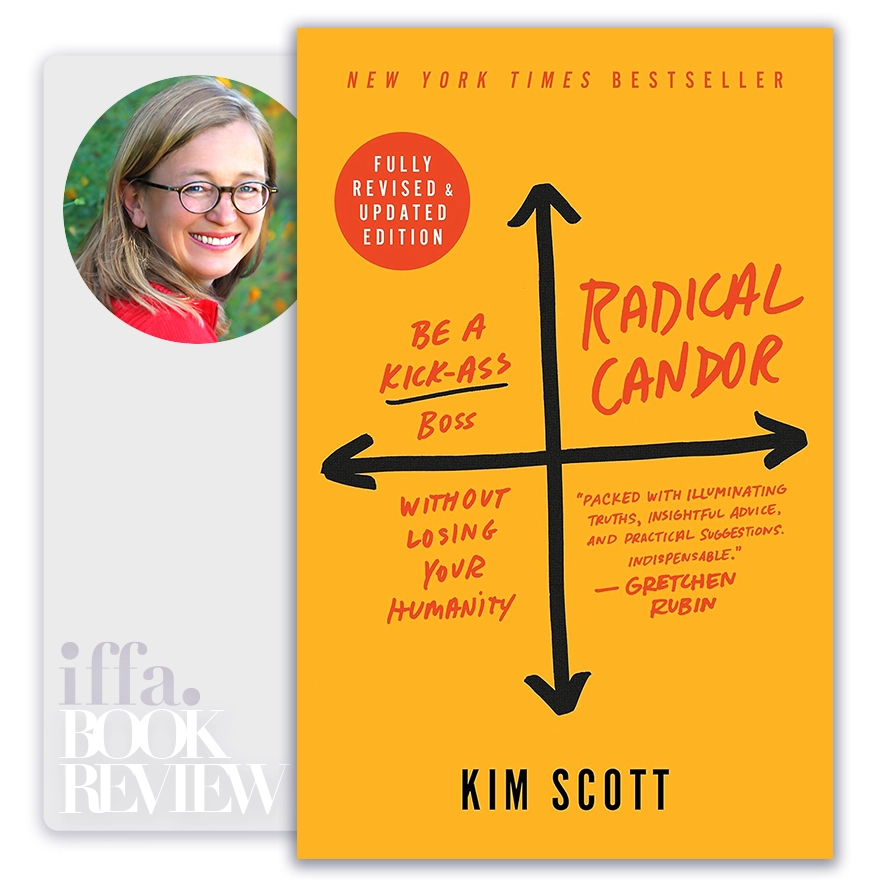
by Kim Scott
Summary Overview:
Leadership failure rarely comes from lack of intelligence or effort; it comes from avoided conversations, blurred expectations, and feedback delivered too late or too softly to matter. Radical Candor remains relevant because it addresses this failure at its source: how leaders communicate with the people they depend on to execute strategy. In organizations facing rapid change, hybrid work, and rising expectations of authenticity, the book reframes feedback not as a soft skill but as a core management system that determines trust, performance, and cultural integrity. For CEOs, senior executives, and board members, its value lies in showing how clear challenge combined with genuine care creates teams that are both humane and relentlessly effective.
About The Author
Kim Scott is a management advisor with direct leadership experience in high-growth technology organizations, where she coached executives and built teams operating under intense performance pressure. Her credibility comes from working inside environments where results, speed, and talent density leave little room for ambiguity or avoidance.
What distinguishes Scott’s perspective is her insistence on practical behavioral clarity. She focuses less on theory and more on how leaders actually speak, listen, and respond in moments that define performance, trust, and accountability.
Core Idea:
The core idea of Radical Candor is that effective leadership requires two behaviors practiced simultaneously: caring personally about people while challenging them directly. Scott argues that most leadership failures occur when one of these dimensions is missing. Leaders either prioritize harmony at the expense of truth or deliver blunt criticism devoid of empathy, eroding trust and results alike.
Radical Candor is presented as a behavioral operating system, not a personality trait. It requires deliberate practice, emotional discipline, and structural reinforcement. When leaders master this balance, feedback becomes timely, expectations become clear, and performance improves without sacrificing humanity. When they do not, organizations drift into confusion, resentment, or fear—often while believing they are being “nice” or “professional.”
Clear challenge without care breeds fear; care without challenge breeds mediocrity.
Key Concepts:
- Caring Personally as a Leadership Obligation
Care is not friendliness; it is serious attention to people as human beings. Leaders who invest time understanding motivations, constraints, and aspirations build the trust required for difficult conversations. - Challenging Directly Without Aggression
Direct challenge clarifies expectations and accelerates learning. Avoidance delays correction and compounds cost. Effective challenge is specific, timely, and grounded in shared standards. - The Cost of Ruinous Empathy
When leaders withhold honest feedback to avoid discomfort, they unintentionally harm performance and careers. Ruinous empathy is framed as a leadership failure disguised as kindness. - Obnoxious Aggression and Fear-Based Cultures
Challenge without care produces compliance, not commitment. Fear-driven environments may deliver short-term results but erode judgment, innovation, and retention. - Manipulative Insincerity as Cultural Poison
When leaders neither care nor challenge, feedback becomes political. This behavior destroys trust fastest, creating cynicism and disengagement. - Feedback as a Continuous System
Scott emphasizes that feedback should be frequent, informal, and expected, not reserved for annual reviews. This normalizes correction and reduces emotional load. - Soliciting Feedback From Below
Radical Candor is reciprocal. Leaders must actively invite critique of their own behavior to model humility and psychological safety. - Guidance Over Praise Inflation
Praise must be specific and sincere. Inflated praise confuses standards and dilutes credibility. Clear guidance respects people more than vague encouragement. - Growth Through Clear Expectations
People grow faster when they know precisely where they stand. Radical Candor creates development velocity by eliminating guesswork. - Culture Built Through Daily Conversations
Culture is not defined by values statements, but by how feedback is given, received, and acted upon. Daily interactions scale into organizational norms.
Great leadership demands honesty delivered with respect, not comfort.
Executive Insights:
Radical Candor reframes communication as strategic infrastructure. Organizations with identical strategies and talent diverge sharply based on whether leaders clarify expectations early or tolerate ambiguity out of discomfort. The book makes clear that feedback quality directly shapes execution speed, trust, and retention.
For boards and senior leadership, the implication is direct: communication norms are not cultural “nice-to-haves,” but determinants of performance reliability.
- Clear feedback reduces execution friction
- Avoidance compounds cost and resentment
- Trust enables speed and accountability
- Psychological safety improves decision quality
- Leadership tone cascades through the organization
Actionable Takeaways:
Senior leaders should translate Radical Candor into executive-level behavior and systems:
- Reframe feedback as a leadership responsibility, not a personality preference
- Stop delaying difficult conversations under the guise of empathy
- Normalize direct challenge as a sign of respect
- Invite critique upward to model accountability
- Build feedback into daily operations, not episodic reviews
Final Thoughts:
Radical Candor is ultimately a book about adult leadership. It rejects both harshness and avoidance, insisting instead on a disciplined balance that treats people with dignity while holding them to meaningful standards. Its enduring value lies in its realism: leadership is uncomfortable, and avoiding discomfort only multiplies it later.
The book’s deeper message is not about speaking bluntly, but about caring enough to be clear. When leaders practice Radical Candor consistently, trust deepens, performance sharpens, and organizations become places where people can do their best work without fear or confusion.
The closing insight is simple and demanding: leaders earn humanity not by sparing people the truth, but by delivering it with respect, clarity, and the genuine intent to help them succeed.
The ideas in this book go beyond theory, offering practical insights that shape real careers, leadership paths, and professional decisions. At IFFA, these principles are translated into executive courses, professional certifications, and curated learning events aligned with today’s industries and tomorrow’s demands. Discover more in our Courses.
Applied Programs

- Course Code : SBM-409
- Delivery : In-class / Virtual / Workshop
- Duration : 2-4 Days
- Venue: DUBAI HUB

- Course Code : PMA-613
- Delivery : In-class / Virtual / Workshop
- Duration : 3-5 Days
- Venue: DUBAI HUB

- Course Code : CIF-505
- Delivery : In-class / Virtual / Workshop
- Duration : 3-5 Days
- Venue: DUBAI HUB

- Course Code : CIF-512
- Delivery : In-class / Virtual / Workshop
- Duration : 2-4 Days
- Venue: DUBAI HUB
Related Books