

The Executive Summary of
Bills of Lading: A Guide to Good Practice
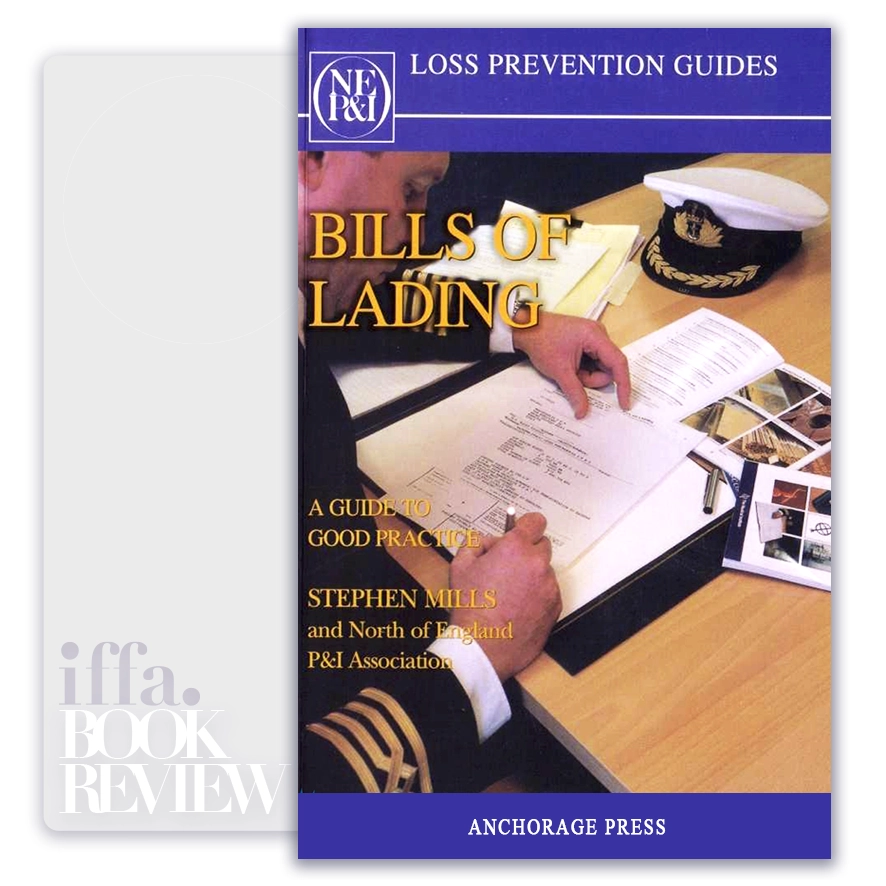
by Stephen Mills
Summary Overview:
Bills of Lading: A Guide to Good Practice addresses a persistent source of loss, dispute, and uninsured exposure in maritime trade: poor documentary practice. While bills of lading are legally powerful instruments, most problems arise not from complex law but from everyday operational shortcuts—backdating, inaccurate descriptions, release without presentation, or casual amendments under commercial pressure. Stephen Mills’ guide matters because it focuses on preventable risk at the coalface of shipping operations.
For CEOs, board members, shipowners, charterers, operators, and insurers, the book is essential because documentation failures routinely convert manageable incidents into major liabilities. Cargo claims, misdelivery, P&I cover disputes, sanctions breaches, and bank rejections often trace back to decisions made quickly and informally. This guide reframes bills of lading as front-line governance tools, where good practice protects capital, reputation, and insurability long before lawyers are involved.
About The Author
Stephen Mills is a maritime insurance specialist and long-standing advisor within the Protection & Indemnity community, with extensive experience addressing claims arising from documentary failures.
His authority stems from practical exposure to real losses, not theoretical risk. Mills writes from the perspective of incidents that have already gone wrong—and explains how disciplined practice would have prevented them.
Core Idea:
The central thesis of Bills of Lading: A Guide to Good Practice is that most bill of lading risks are operational, not legal. Mills argues that the greatest protection against cargo claims and uninsured exposure is not sophisticated contract drafting, but consistent, disciplined handling of documents at every stage of the voyage.
At a deeper level, the book presents a worldview in which documentation is a control system. Bills of lading translate physical reality into legal responsibility. When that translation is careless or distorted, liability expands rapidly. Good practice, by contrast, aligns operational truth with legal consequence—preserving trust across carriers, cargo interests, banks, and insurers.
Most bill of lading claims are created at the desk, not at sea.
Key Concepts:
- Accuracy Is the First Line of Defense
Cargo description matters.
- Inaccurate statements invite liability.
- Commercial pressure does not excuse misrepresentation.
- Bills of Lading Are Not Negotiable Promises
They reflect facts, not preferences.
- Signing without verification transfers risk.
- Reservations protect against unknowns.
- Backdating and Pre-Dating Are High-Risk Practices
Convenience creates exposure.
- Dating errors undermine credibility.
- Courts and insurers scrutinize intent.
- Clean Bills Carry Serious Consequences
“Clean” does not mean harmless.
- Silence implies acceptance of condition.
- Clean bills expand carrier responsibility.
- Delivery Without Presentation Is a Critical Failure
Misdelivery is among the costliest errors.
- Commercial relationships do not override documentary control.
- Convenience multiplies loss.
- Letters of Indemnity Are Not a Cure-All
LOIs shift risk, not eliminate it.
- Enforceability is uncertain.
- Reliance must be exceptional and controlled.
- Authority to Sign Must Be Controlled
Who signs matters.
- Unauthorized signatures create liability.
- Internal controls are essential.
- Banks and Sanctions Increase Documentary Risk
Compliance extends beyond cargo.
- Incorrect documents block payment.
- Sanctions breaches void cover.
- Electronic Bills Require the Same Discipline
Digital does not mean informal.
- Controls must match legal effect.
- Process matters more than format.
- P&I Cover Depends on Conduct
Insurance responds to good practice.
- Cover may fail where recklessness exists.
- Prevention protects mutuality.
Good practice is the cheapest form of insurance.
Executive Insights:
Mills’ guide reframes bills of lading as operational risk instruments with enterprise-wide consequences. Organizations that rely on informal practices often discover—too late—that P&I cover, contractual defenses, or banking relationships collapse when documentation fails. The cost of poor practice is rarely limited to one claim; it damages credibility across counterparties and insurers.
For boards and senior management, the implication is clear: documentary discipline is a governance responsibility. Strong controls around bills of lading reduce claims frequency, preserve insurance protection, and protect relationships with banks and regulators. In volatile markets, good practice is not bureaucracy—it is resilience.
- Operational shortcuts create legal exposure.
- Documentary accuracy protects insurability.
- Misdelivery is a board-level risk.
- Controls outperform after-the-fact remedies.
- Culture determines documentation quality.
Actionable Takeaways:
Preventable losses require disciplined practice.
- Treat bills of lading as legal commitments, not paperwork.
- Enforce verification before signing or issuing.
- Restrict delivery strictly to presentation of documents.
- Control use and approval of letters of indemnity.
- Embed documentary standards into operational culture.
Final Thoughts:
Bills of Lading: A Guide to Good Practice delivers a quiet but powerful message: most shipping losses are self-inflicted. Stephen Mills shows that attention, discipline, and integrity in documentation prevent more claims than any clause or policy endorsement ever will.
For leaders responsible for ships, people, and capital, the enduring lesson is unmistakable: good practice is not an administrative burden—it is a strategic safeguard. Where bills of lading are handled with care, trade flows with confidence. Where they are treated casually, risk compounds silently.
In the long run, the strongest protection in shipping is not insurance alone, but the habits that make insurance unnecessary.
The ideas in this book go beyond theory, offering practical insights that shape real careers, leadership paths, and professional decisions. At IFFA, these principles are translated into executive courses, professional certifications, and curated learning events aligned with today’s industries and tomorrow’s demands. Discover more in our Courses.
Applied Programs

- Course Code : SBM-409
- Delivery : In-class / Virtual / Workshop
- Duration : 2-4 Days
- Venue: DUBAI HUB

- Course Code : PMA-613
- Delivery : In-class / Virtual / Workshop
- Duration : 3-5 Days
- Venue: DUBAI HUB

- Course Code : CIF-505
- Delivery : In-class / Virtual / Workshop
- Duration : 3-5 Days
- Venue: DUBAI HUB

- Course Code : CIF-512
- Delivery : In-class / Virtual / Workshop
- Duration : 2-4 Days
- Venue: DUBAI HUB
Related Books