

The Executive Summary of
The Global Oil & Gas Industry: Management, Strategy and Finance
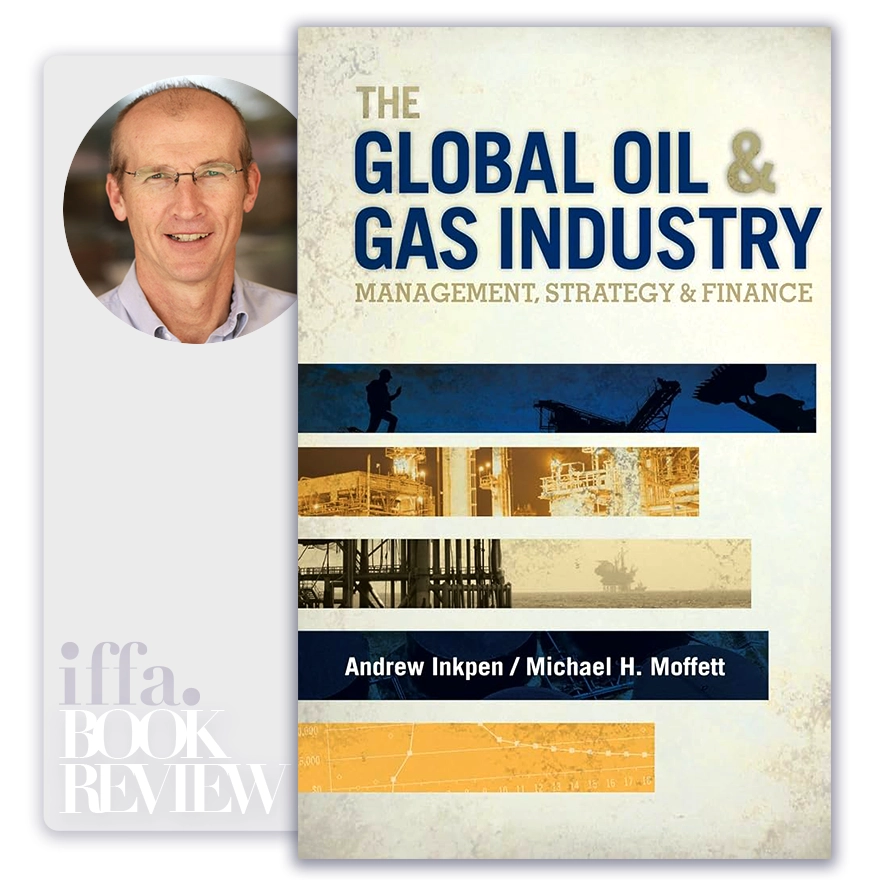
by Andrew Inkpen
Summary Overview:
The oil and gas industry is often discussed through prices, reserves, and geopolitics, yet its true complexity lies in how strategy, state power, capital intensity, and organizational governance intersect. The Global Oil & Gas Industry: Management, Strategy and Finance remains highly relevant because it explains the industry not as a monolith, but as a system of competing business models, incentives, and constraints operating across radically different political and economic environments. For CEOs, board members, policymakers, and long-term investors, the book matters because it clarifies why superior geology does not guarantee superior performance, why national oil companies and international majors behave differently by design, and why strategic judgment often outweighs technical excellence in determining outcomes.
About The Author
Andrew Inkpen is a leading academic and advisor specializing in global strategy, international business, and the oil and gas sector. His work is widely used by executives and policymakers to understand how firms compete in industries shaped by state interests, capital intensity, and long investment horizons.
What distinguishes Inkpen’s perspective is his structural clarity. Rather than treating oil and gas as a commodity business alone, he analyzes it as a governance-driven industry, where ownership models, institutional context, and strategic choices determine performance as much as resource endowment.
Core Idea:
The core idea of the book is that the global oil and gas industry is best understood as a set of strategic archetypes operating under asymmetric constraints. International oil companies, national oil companies, independents, and service firms each pursue different objectives, face different risks, and optimize for different outcomes. Comparing them without acknowledging these structural differences leads to flawed strategy and poor governance.
Inkpen frames oil and gas as a long-cycle, capital-intensive industry where uncertainty is permanent and reversibility is rare. Success depends on how firms allocate capital, manage political relationships, govern partnerships, and balance short-term performance with long-term optionality. Leaders who focus narrowly on prices or reserves miss the deeper reality: industry outcomes are shaped by institutional design and strategic discipline over decades.
In oil and gas, structure shapes strategy long before markets do.
Key Concepts:
- Industry Structure and Business Models
Inkpen distinguishes clearly between IOCs, NOCs, independents, and service companies. Each model reflects different objectives, constraints, and governance logics, making direct performance comparison misleading. - National Oil Companies and State Objectives
NOCs optimize for national priorities such as revenue stability, employment, and energy security. Their strategies reflect political mandates as much as commercial logic, reshaping competitive dynamics. - International Oil Companies and Portfolio Strategy
IOCs operate under shareholder pressure and global competition. Their success depends on portfolio balance, capital discipline, and risk diversification, not reserve size alone. - Access Versus Ownership
Control over resources is less important than access under workable fiscal and contractual terms. Strategy hinges on negotiating stability, not formal ownership. - Capital Allocation Under Extreme Uncertainty
Oil and gas investments involve multi-decade horizons with volatile prices. Leaders must design capital governance systems that resist cyclical overinvestment and political pressure. - Partnerships and Alliances as Strategic Necessity
No firm operates alone. Joint ventures manage risk, access, and capability—but require robust governance to prevent value erosion. - Technology as Enabler, Not Equalizer
Technology improves recovery and efficiency but does not eliminate strategic asymmetry. Advantage comes from how technology is deployed within strategy, not from technology alone. - Political Risk and Institutional Context
Oil and gas firms operate across diverse regimes. Political stability, contract sanctity, and regulatory predictability are core strategic variables, not external noise. - Financial Performance and Value Creation
Returns vary widely across firms with similar assets. Inkpen shows that management quality, governance discipline, and timing explain more than geology. - Energy Transition as Strategic Constraint
Decarbonization pressure reshapes capital access and asset value. Firms must manage decline, transition, and optionality simultaneously, without assuming linear change.
Capital discipline matters more than resource abundance.
Executive Insights:
The book reframes oil and gas leadership as strategic stewardship under constraint. Organizations with similar resource bases diverge sharply in outcomes based on capital discipline, governance quality, and alignment between strategy and institutional context.
For boards and senior executives, the central implication is that oil and gas is not a single game with one winning strategy. Clarity about what kind of company you are—and can realistically be—is a prerequisite for sound decision-making.
- Structure defines strategic freedom
- Capital discipline determines survival
- Political context shapes competitive advantage
- Partnerships amplify both strength and weakness
- Long-term thinking outperforms cyclical reaction
Actionable Takeaways:
Senior leaders should translate Inkpen’s insights into board-level judgment and systems:
- Reframe strategy around institutional realities, not peer imitation
- Align capital allocation with true risk tolerance, not market sentiment
- Design partnerships with explicit governance safeguards
- Stop benchmarking against incompatible business models
- Preserve long-term optionality amid transition uncertainty
Final Thoughts:
The Global Oil & Gas Industry: Management, Strategy and Finance is ultimately a book about clarity in a structurally misunderstood industry. It strips away simplistic narratives and replaces them with a disciplined understanding of how power, capital, and institutions interact over long horizons.
Its enduring value lies in its insistence that good strategy begins with honest self-definition. Firms that misunderstand their constraints overreach and destroy value; those that align ambition with structure endure.
The closing insight is calm and authoritative: long-term success in the oil and gas industry belongs not to the biggest producers or the boldest investors, but to leaders who govern capital, partnerships, and political exposure with discipline, realism, and strategic patience.
The ideas in this book go beyond theory, offering practical insights that shape real careers, leadership paths, and professional decisions. At IFFA, these principles are translated into executive courses, professional certifications, and curated learning events aligned with today’s industries and tomorrow’s demands. Discover more in our Courses.
Applied Programs

- Course Code : SBM-409
- Delivery : In-class / Virtual / Workshop
- Duration : 2-4 Days
- Venue: DUBAI HUB

- Course Code : PMA-613
- Delivery : In-class / Virtual / Workshop
- Duration : 3-5 Days
- Venue: DUBAI HUB

- Course Code : CIF-505
- Delivery : In-class / Virtual / Workshop
- Duration : 3-5 Days
- Venue: DUBAI HUB

- Course Code : CIF-512
- Delivery : In-class / Virtual / Workshop
- Duration : 2-4 Days
- Venue: DUBAI HUB
Related Books