
The Executive Summary of
Oil: Money, Politics, and Power in the 21st Century
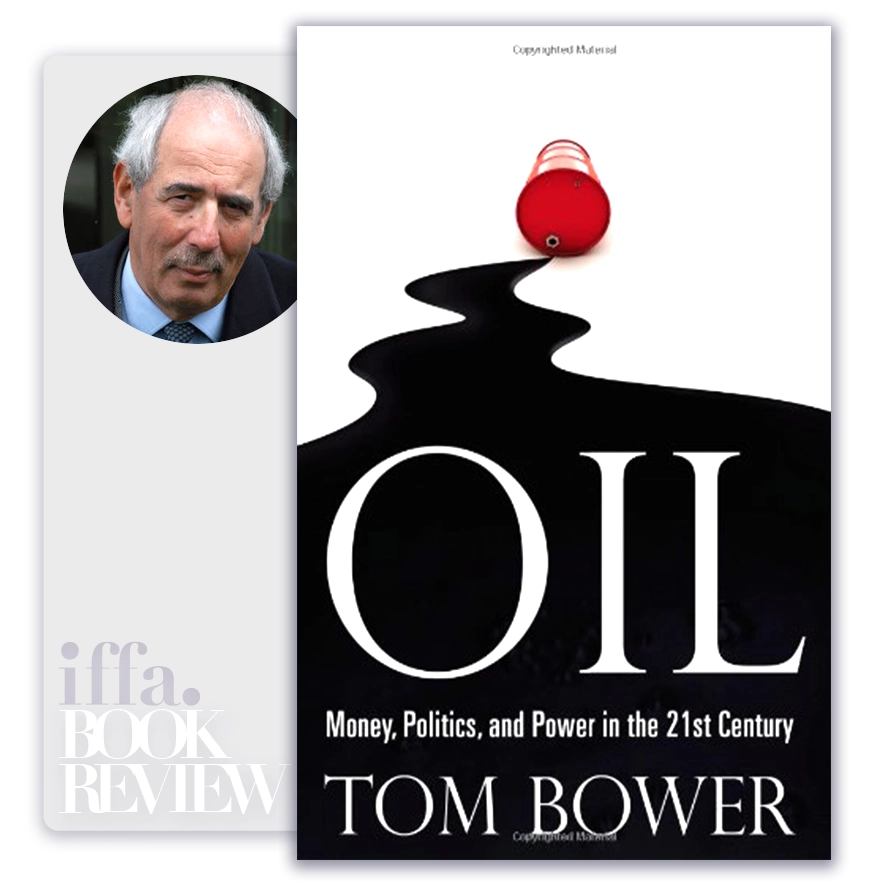
by Tom Bower
Summary Overview:
Oil is often framed as a commodity subject to markets and technology, but Oil: Money, Politics, and Power in the 21st Century remains relevant because it exposes oil as a political instrument and a concentration of power rather than a neutral economic good. For senior executives, policymakers, regulators, and long-term investors, the book matters because it reveals how decisions in the oil industry are frequently shaped less by efficiency or strategy and more by influence, lobbying, secrecy, and state–corporate entanglement. In an era of ESG scrutiny, geopolitical volatility, and energy transition, Bower’s work offers a sobering reminder that oil’s greatest risks often lie outside balance sheets and engineering models.
About The Author
Tom Bower is an investigative journalist known for deep, long-form inquiries into corporate power, political influence, and elite networks. His authority comes from extensive document analysis, interviews, and willingness to scrutinize institutions typically shielded from public view.
What distinguishes Bower’s perspective is his focus on power relationships rather than market abstractions. He approaches oil not as an industry to be optimized, but as a system where money, politics, and personal ambition intersect—often at the expense of transparency and public accountability.
Core Idea:
The core idea of Oil: Money, Politics, and Power in the 21st Century is that the modern oil industry operates as a political economy, not a free market. Control over oil revenues enables governments, corporations, and individuals to consolidate influence, shape policy, and resist reform. Markets may set prices, but power determines access, protection, and survival.
Bower presents oil as a force multiplier for political authority. When vast cash flows combine with strategic importance, accountability weakens and opacity thrives. Leaders who fail to understand this dynamic misjudge risk, believing technical excellence or compliance alone can shield organizations from political and reputational fallout.
Oil wealth concentrates power faster than it creates accountability.
Key Concepts:
- Oil as Political Capital
Oil revenues fund regimes, secure alliances, and buy influence. This transforms oil companies into political actors, whether intentionally or not. - Corporate–State Symbiosis
Governments and oil firms often depend on each other for legitimacy, revenue, and protection. This relationship blurs lines between commercial strategy and political loyalty. - Lobbying and Regulatory Capture
Bower details how lobbying shapes energy policy, delaying reform and diluting oversight. Regulatory environments often reflect power balance more than public interest. - Secrecy as a Strategic Asset
Opaque contracts, offshore structures, and limited disclosure protect influence. Secrecy reduces scrutiny but amplifies long-term reputational and legal risk. - Oil Money and Institutional Decay
Large, unaccountable revenues weaken institutions by reducing dependence on taxation and public consent, reinforcing authoritarian tendencies. - Western Complicity and Moral Hazard
Bower highlights how Western governments and firms often tolerate corruption and abuse when energy security or profits are at stake, creating systemic moral hazard. - Crisis Management Through Influence
When scandals emerge, political connections often determine outcomes more than facts. Access to power becomes the ultimate risk hedge. - Energy Transition Resistance
Incumbent power structures resist transition not only for economic reasons, but because decarbonization threatens established influence networks. - Reputational Risk as Strategic Risk
Public trust erodes when power is exposed. In the digital era, reputational damage travels faster than legal consequence, reshaping license to operate. - The Illusion of Control
Executives may believe they manage risk through compliance and governance, but Bower shows how external political dynamics routinely overwhelm internal controls.
Where money and energy converge, transparency is rarely voluntary.
Executive Insights:
Oil: Money, Politics, and Power in the 21st Century reframes oil risk as political and ethical exposure, not just operational or financial volatility. Organizations with identical assets diverge sharply based on political alignment, transparency choices, and ethical posture.
For boards and senior leadership, the book underscores that political entanglement is unavoidable—but unmanaged entanglement is fatal.
- Power dynamics override market logic
- Transparency deficits compound long-term risk
- Political protection is temporary
- Reputation now travels faster than regulation
- Ethical shortcuts narrow future options
Actionable Takeaways:
Senior leaders should translate Bower’s insights into governance-level awareness and restraint:
- Reframe political exposure as core enterprise risk, not external noise
- Stop assuming compliance alone provides protection
- Increase transparency proactively, before scrutiny forces it
- Evaluate partnerships through power and reputation lenses, not returns alone
- Align energy strategy with long-term legitimacy, not short-term influence
Final Thoughts:
Oil: Money, Politics, and Power in the 21st Century is ultimately a book about how industries behave when accountability lags behind influence. It challenges comforting narratives about rational markets and replaces them with a harder truth: power shapes outcomes long before prices do.
Its enduring value lies in warning leaders that the oil industry’s greatest threats often emerge from its success, not its failures. Wealth attracts scrutiny, distorts incentives, and invites political compromise that weakens institutions over time.
The closing insight is stark and enduring: in the 21st century, the true cost of oil is measured not only in dollars or carbon, but in how power is exercised, hidden, and ultimately judged by history.
The ideas in this book go beyond theory, offering practical insights that shape real careers, leadership paths, and professional decisions. At IFFA, these principles are translated into executive courses, professional certifications, and curated learning events aligned with today’s industries and tomorrow’s demands. Discover more in our Courses.
Applied Programs

- Course Code : SBM-409
- Delivery : In-class / Virtual / Workshop
- Duration : 2-4 Days
- Venue: DUBAI HUB

- Course Code : PMA-613
- Delivery : In-class / Virtual / Workshop
- Duration : 3-5 Days
- Venue: DUBAI HUB

- Course Code : CIF-505
- Delivery : In-class / Virtual / Workshop
- Duration : 3-5 Days
- Venue: DUBAI HUB

- Course Code : CIF-512
- Delivery : In-class / Virtual / Workshop
- Duration : 2-4 Days
- Venue: DUBAI HUB
Related Books