
The Executive Summary of
Cash Is King
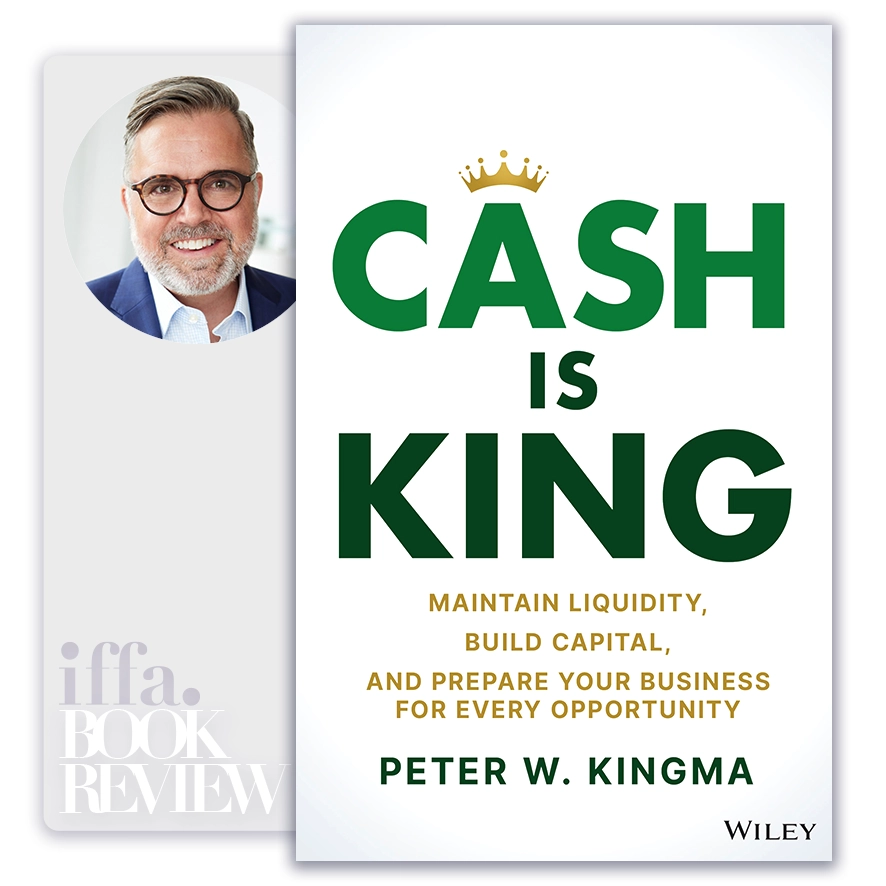
by Peter W. Kingma
Summary Overview:
In periods of growth, cash discipline is often overlooked; in periods of stress, it becomes existential. Cash Is King remains relevant because it reframes liquidity not as an accounting outcome, but as a strategic capability that determines resilience, negotiating power, and freedom of action. For CEOs, boards, and long-term investors, the book matters because it explains why profitable businesses still fail—and why cash-rich businesses can exploit opportunities precisely when others cannot. In an environment of volatile capital markets, supply-chain shocks, and tightening credit, Kingma’s message is clear: liquidity is the ultimate optionality, and managing it well is a leadership responsibility, not a treasury afterthought.
About The Author
Peter W. Kingma is a corporate finance advisor with deep experience helping organizations improve cash flow, strengthen balance sheets, and navigate periods of uncertainty. His work focuses on practical financial stewardship rather than financial engineering.
What distinguishes Kingma’s perspective is his emphasis on operational reality. He treats cash management as an enterprise-wide discipline shaped by decisions in sales, procurement, inventory, and governance—not as a narrow finance function isolated from strategy.
Core Idea:
The core idea of Cash Is King is that liquidity determines survival, flexibility, and strategic leverage. Revenue and profit are important, but cash is decisive. Businesses fail when they confuse accounting performance with financial strength and allow growth, complexity, or optimism to consume liquidity faster than it is generated.
Kingma frames cash as the oxygen of enterprise strategy. It sustains operations, absorbs shocks, and enables decisive action when opportunity appears. Leaders who govern cash deliberately design organizations that can endure downturns, negotiate from strength, and invest countercyclically. Those who do not become hostages to lenders, customers, or markets—often without realizing it until options have narrowed.
Profit measures success; cash determines survival.
Key Concepts:
- Liquidity as Strategic Optionality
Cash provides the ability to act—acquire, invest, renegotiate, or wait. Organizations with liquidity choose their timing; those without are forced into it. - Growth as a Cash Consumer
Rapid growth often destroys cash through receivables, inventory, and fixed costs. Kingma emphasizes that growth without cash discipline increases fragility, not strength. - Working Capital as a Leadership Lever
Receivables, payables, and inventory are strategic levers. Small improvements compound into material liquidity gains when governed consistently. - Cash Flow Versus Profit Illusions
Accrual accounting can mask liquidity risk. Leaders must distinguish between reported earnings and actual cash generation, especially in capital-intensive or project-based businesses. - Liquidity Buffers and Risk Absorption
Reserves are not idle assets; they are risk absorbers. Adequate buffers prevent temporary shocks from becoming permanent damage. - Negotiating Power and Cash Strength
Cash-rich firms negotiate better terms with suppliers, customers, and lenders. Liquidity shifts power dynamics quietly but decisively. - Capital Structure Discipline
Debt can amplify returns, but it also compresses flexibility. Kingma argues for aligning leverage with cash volatility, not with optimism. - Forecasting and Visibility
Reliable cash forecasting enables early intervention. Visibility matters more than precision; surprises are costlier than variance. - Incentives and Cash Behavior
Sales targets, procurement metrics, and bonus structures often encourage cash-destructive behavior. Aligning incentives with cash outcomes stabilizes performance. - Governance and Cultural Signaling
How leaders talk about cash signals priorities. Treating liquidity as strategic elevates discipline across the organization; treating it as tactical invites drift.
Liquidity creates freedom long before it creates returns.
Executive Insights:
Cash Is King reframes financial management as enterprise risk governance, not back-office efficiency. Companies with similar revenues and margins diverge sharply based on whether leaders institutionalize cash discipline or allow complexity and growth to erode liquidity silently.
For boards and senior executives, the implication is direct: cash governance is a core fiduciary duty. It underpins solvency, strategic credibility, and long-term value creation.
- Liquidity determines freedom of action
- Growth must be financed consciously
- Working capital is strategic capital
- Buffers prevent forced decisions
- Cash strength reshapes negotiation dynamics
Actionable Takeaways:
Senior leaders should translate Kingma’s principles into executive-level behaviors and systems:
- Reframe cash as a strategic asset, not an operational metric
- Demand clear visibility into cash drivers, not just financial statements
- Align incentives with cash outcomes, not revenue alone
- Build and protect liquidity buffers proportionate to volatility
- Treat leverage as a constraint on flexibility, not a badge of confidence
Final Thoughts:
Cash Is King is ultimately a book about discipline under uncertainty. It strips away financial complexity to reveal a simple truth: organizations fail not because they lack ideas, customers, or ambition, but because they run out of options. Cash preserves those options.
Its enduring value lies in restoring respect for fundamentals in an era of financial sophistication. Liquidity is not glamorous, but it is decisive. It allows leaders to think long-term while acting decisively in the short term.
The closing insight is calm and authoritative: in every business cycle and strategic environment, cash is not merely king—it is sovereignty, resilience, and the quiet enabler of every opportunity worth pursuing.
The ideas in this book go beyond theory, offering practical insights that shape real careers, leadership paths, and professional decisions. At IFFA, these principles are translated into executive courses, professional certifications, and curated learning events aligned with today’s industries and tomorrow’s demands. Discover more in our Courses.
Applied Programs

- Course Code : SBM-409
- Delivery : In-class / Virtual / Workshop
- Duration : 2-4 Days
- Venue: DUBAI HUB

- Course Code : PMA-613
- Delivery : In-class / Virtual / Workshop
- Duration : 3-5 Days
- Venue: DUBAI HUB

- Course Code : CIF-505
- Delivery : In-class / Virtual / Workshop
- Duration : 3-5 Days
- Venue: DUBAI HUB

- Course Code : CIF-512
- Delivery : In-class / Virtual / Workshop
- Duration : 2-4 Days
- Venue: DUBAI HUB
Related Books