The Executive Summary of
Flow: The Psychology of Optimal Experience
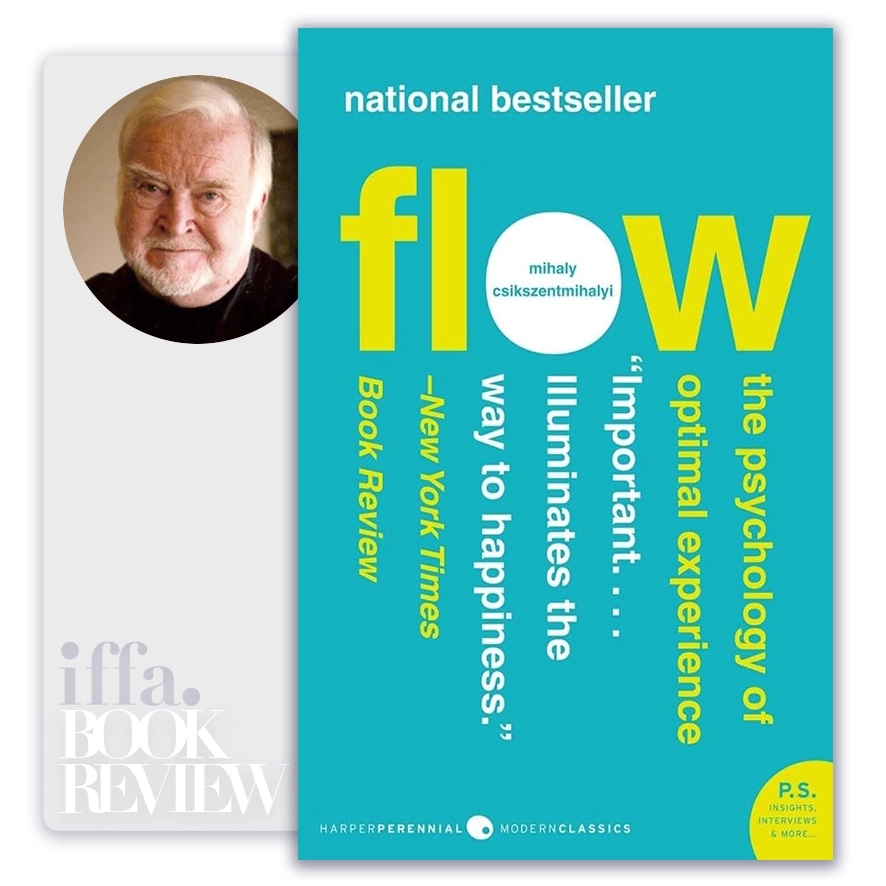
by Mihaly Csikszentmihalyi
Summary Overview:
Flow addresses a question at the heart of leadership and performance: why do some individuals and organizations consistently operate at a higher level of clarity, creativity, and satisfaction—without burning out? Mihaly Csikszentmihalyi’s answer reframes performance away from external rewards and toward the quality of experience during work itself. The book matters because it explains how deep engagement, not pressure or incentives, produces durable excellence.
For CEOs, board members, senior executives, and long-term investors, the relevance is strategic. In complex environments, advantage increasingly depends on judgment, learning speed, and intrinsic motivation—capabilities that cannot be coerced. Csikszentmihalyi shows that optimal experience arises when challenge and skill are aligned, attention is fully engaged, and purpose is clear. Organizations that enable these conditions outperform those that rely on intensity alone.
About The Author
Mihaly Csikszentmihalyi was a pioneering psychologist and leading figure in positive psychology, best known for his lifelong research into happiness, creativity, and human potential.
His perspective is distinctive for combining rigorous empirical research with philosophical depth, offering a framework that explains not only how people perform at their best, but why such states feel meaningful and self-sustaining.
Core Idea:
The central thesis of Flow is that optimal performance and deep satisfaction occur when individuals are fully absorbed in challenging, purposeful activity. Csikszentmihalyi identifies “flow” as a psychological state characterized by intense focus, loss of self-consciousness, and a sense of control—where action and awareness merge.
At a deeper level, the book advances a worldview in which quality of experience is the foundation of a good life and effective work. External conditions matter less than how attention is structured. When people learn to direct attention toward meaningful challenges, they gain autonomy over experience—creating motivation, resilience, and mastery from within.
The best moments in life occur when attention is fully invested in a meaningful challenge.
Key Concepts:
- Attention Is the Core Resource
Experience follows focus.
- What we attend to becomes our reality.
- Fragmented attention degrades performance.
- Flow Emerges at the Edge of Capability
Challenge must stretch skill.
- Too little challenge breeds boredom.
- Too much creates anxiety.
- Clear Goals Enable Deep Engagement
Ambiguity blocks immersion.
- Well-defined objectives focus effort.
- Clarity sustains momentum.
- Immediate Feedback Sustains Performance
Learning accelerates with signal.
- Feedback loops refine action.
- Delay weakens engagement.
- Intrinsic Motivation Outperforms External Pressure
Enjoyment fuels endurance.
- Flow is self-reinforcing.
- Extrinsic rewards have limits.
- Control Is Experienced, Not Imposed
Autonomy matters.
- Perceived control enhances confidence.
- Micromanagement disrupts flow.
- Self-Consciousness Disappears in Deep Work
Ego recedes during mastery.
- Focus replaces self-monitoring.
- Performance becomes fluid.
- Complexity Enhances Meaning
Growth requires increasing challenge.
- Rising skill expands capacity.
- Stagnation erodes satisfaction.
- Work Can Be a Source of Fulfillment
Meaning is not confined to leisure.
- Craftsmanship invites flow.
- Purpose transforms effort.
- Culture Shapes Access to Flow
Systems enable or inhibit engagement.
- Structures that support mastery thrive.
- Distraction blocks depth.
Excellence emerges when skill and challenge rise together.
Executive Insights:
Csikszentmihalyi reframes performance as a psychological systems problem, not a motivational one. Organizations that design work around clarity, autonomy, and meaningful challenge unlock sustained engagement and learning. Those that rely on pressure and incentives exhaust attention and degrade judgment.
For boards and senior leadership, the implication is clear: flow is a strategic capability. Cultures that enable focused engagement outperform in innovation, resilience, and long-term value creation—especially in knowledge-intensive environments.
- Focused engagement improves judgment.
- Intrinsic motivation sustains performance.
- Clear goals enhance execution quality.
- Autonomy strengthens accountability.
- Mastery-driven cultures endure longer.
Actionable Takeaways:
Sustained excellence requires attention design.
- Align roles with meaningful challenge.
- Increase clarity around goals and feedback.
- Protect focus from unnecessary distraction.
- Enable autonomy and skill development.
- Treat engagement quality as a leadership responsibility.
Final Thoughts:
Flow offers a timeless insight with profound implications: the quality of life and work is shaped by how attention is structured. Mihaly Csikszentmihalyi shows that fulfillment and performance are not opposites, but outcomes of the same conditions—clarity, challenge, and commitment.
For leaders navigating complexity and uncertainty, the enduring lesson is decisive: organizations that cultivate flow cultivate mastery. When people are fully engaged in meaningful challenges, excellence becomes not a demand—but a natural consequence.
In the long run, the most successful individuals and institutions are those that know how to create the conditions where attention, purpose, and skill converge.
The ideas in this book go beyond theory, offering practical insights that shape real careers, leadership paths, and professional decisions. At IFFA, these principles are translated into executive courses, professional certifications, and curated learning events aligned with today’s industries and tomorrow’s demands. Discover more in our Courses.
Applied Programs

- Course Code : SBM-409
- Delivery : In-class / Virtual / Workshop
- Duration : 2-4 Days
- Venue: DUBAI HUB
- Course Code : PMA-613
- Delivery : In-class / Virtual / Workshop
- Duration : 3-5 Days
- Venue: DUBAI HUB
- Course Code : CIF-505
- Delivery : In-class / Virtual / Workshop
- Duration : 3-5 Days
- Venue: DUBAI HUB

- Course Code : CIF-512
- Delivery : In-class / Virtual / Workshop
- Duration : 2-4 Days
- Venue: DUBAI HUB
Related Books