
The Executive Summary of
Bills of Lading: Law and Contracts
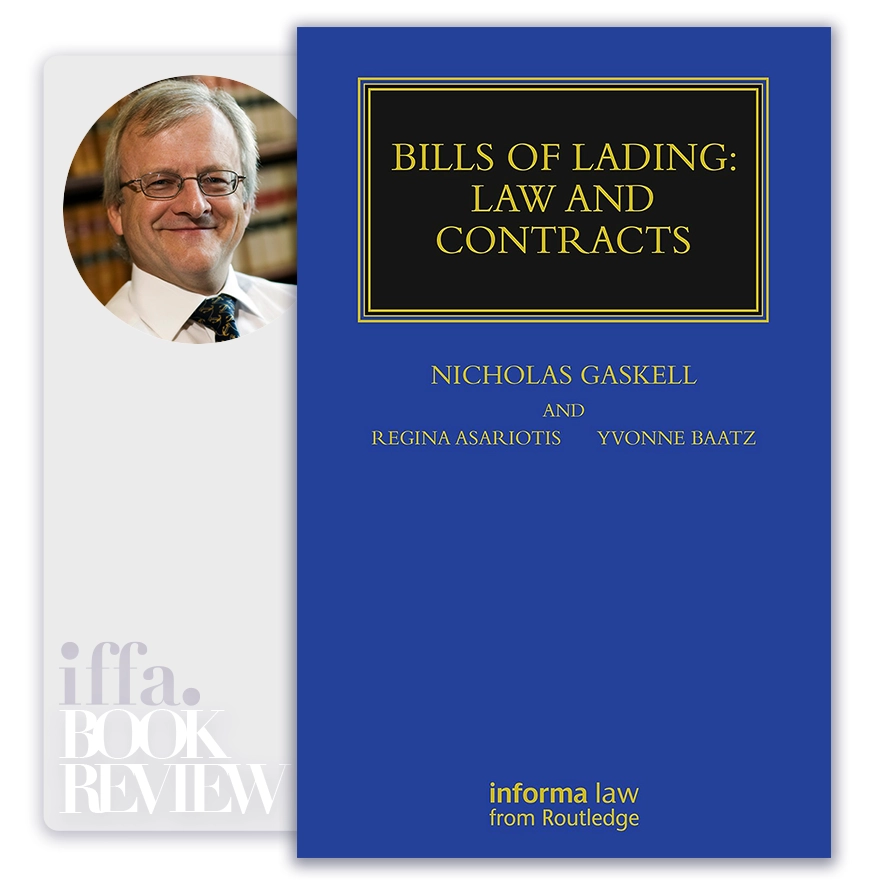
by Nicholas Gaskell
Summary Overview:
Bills of Lading: Law and Contracts examines one of the most powerful yet routinely underestimated instruments in international commerce: the bill of lading. Though often treated as administrative paperwork, the bill of lading silently determines who bears risk, who can claim goods, who gets paid, and which law applies when disputes arise. Nicholas Gaskell’s work remains indispensable because global trade has become faster, more digitized, and more fragmented—while the legal consequences embedded in transport documents have only grown more complex.
For CEOs, board members, traders, shipowners, charterers, banks, insurers, and logistics leaders, the book matters because many of the most expensive trade disputes originate in misunderstanding what a bill of lading actually does. Loss of cargo, payment failures, sanctions exposure, and title disputes often trace back to documentation choices made early and casually. Gaskell shows that the bill of lading is not merely evidence of shipment, but a legal engine that converts physical movement into enforceable rights and obligations.
About The Author
Nicholas Gaskell is a leading authority on maritime and commercial law, widely respected for his scholarship on carriage of goods, contracts of carriage, and bills of lading.
His contribution is distinctive for combining doctrinal rigor with commercial realism. Gaskell explains how courts, traders, banks, and carriers actually rely on bills of lading in practice—making his work foundational for anyone operating in international trade.
Core Idea:
The central thesis of Bills of Lading: Law and Contracts is that the bill of lading is a multifunctional legal instrument that binds together carriage, payment, and property rights. Gaskell demonstrates that it simultaneously operates as a receipt, evidence of the contract of carriage, and—most critically—a document of title capable of transferring rights to goods while they are still at sea.
At a deeper level, the book presents a worldview in which global trade depends on documentary trust rather than physical possession. Because goods and money move asynchronously across borders, commerce relies on documents that courts will enforce predictably. The bill of lading is therefore not a clerical artifact, but a cornerstone of commercial confidence and legal certainty.
The bill of lading turns movement of goods into movement of rights.
Key Concepts:
- The Bill of Lading Is a Legal Hybrid
It performs multiple legal functions at once.
- Receipt, contract evidence, and title instrument.
- Misunderstanding any function creates exposure.
- Document of Title Is the Commercial Core
Transferability underpins trade finance.
- Rights travel with the document.
- Possession equals control.
- Contractual Relationships Are Complex
Different parties rely on the same document.
- Shippers, carriers, consignees, and banks intersect.
- Rights and obligations shift with endorsement.
- Carriage Terms Are Embedded
The bill incorporates carriage conditions.
- Liability limits and defenses apply through it.
- Ignorance weakens claims.
- Third-Party Rights Are Central
Holders acquire rights without negotiating the contract.
- Law bridges distance and time.
- Predictability enables trade velocity.
- Straight, Order, and Bearer Bills Differ Materially
Form determines legal effect.
- Wrong form disrupts payment and delivery.
- Precision is commercial protection.
- Misdelivery Creates Severe Liability
Release without the bill is high-risk.
- Physical delivery without documents invites claims.
- Convenience multiplies exposure.
- Electronic Bills Challenge Traditional Assumptions
Digitalization tests legal continuity.
- Trust must be preserved technologically.
- Law adapts slower than trade.
- Bills of Lading Anchor Trade Finance
Banks rely on documentary compliance.
- Letters of credit depend on precision.
- Minor discrepancies block payment.
- Disputes Reflect Documentation Discipline
Most conflicts are preventable.
- Clarity beats litigation.
- Process is strategy.
In international trade, documents often matter more than ships.
Executive Insights:
Gaskell’s analysis reframes the bill of lading as a governance instrument for global commerce, not merely a shipping document. Organizations that treat documentation casually often suffer cascading consequences—cargo claims, unpaid invoices, insurance gaps, and reputational damage—long after the vessel has completed its voyage.
For boards and senior leadership, the implication is clear: documentary risk is enterprise risk. Effective oversight of bills of lading practices strengthens cash flow, protects title, stabilizes insurance outcomes, and reduces dispute escalation. In complex supply chains, documentation discipline is as important as operational excellence.
- Documentation governs rights before disputes arise.
- Title control protects payment and delivery.
- Precision reduces litigation and delay.
- Misdelivery risk is a board-level exposure.
- Legal literacy stabilizes trade relationships.
Actionable Takeaways:
Resilient trade requires documentary discipline.
- Treat bills of lading as legal assets, not paperwork.
- Align document form with commercial intent.
- Enforce strict controls on release of cargo.
- Integrate legal review into documentation processes.
- Prepare governance for electronic documentation transition.
Final Thoughts:
Bills of Lading: Law and Contracts reveals that the true infrastructure of global trade is legal, not physical. Nicholas Gaskell shows that ships may carry goods, but documents carry rights—and rights determine who gets paid, who bears loss, and who prevails in dispute.
For leaders responsible for trade, capital, and reputation, the enduring lesson is unmistakable: where bills of lading are understood and respected, commerce flows with confidence; where they are neglected, risk multiplies silently.
In the long run, successful global trade belongs to those who govern documents with the same seriousness they govern ships.
The ideas in this book go beyond theory, offering practical insights that shape real careers, leadership paths, and professional decisions. At IFFA, these principles are translated into executive courses, professional certifications, and curated learning events aligned with today’s industries and tomorrow’s demands. Discover more in our Courses.
Applied Programs

- Course Code : SBM-409
- Delivery : In-class / Virtual / Workshop
- Duration : 2-4 Days
- Venue: DUBAI HUB

- Course Code : PMA-613
- Delivery : In-class / Virtual / Workshop
- Duration : 3-5 Days
- Venue: DUBAI HUB
- Course Code : CIF-505
- Delivery : In-class / Virtual / Workshop
- Duration : 3-5 Days
- Venue: DUBAI HUB

- Course Code : CIF-512
- Delivery : In-class / Virtual / Workshop
- Duration : 2-4 Days
- Venue: DUBAI HUB
Related Books