The Executive Summary of
P&I Clubs: Law and Practice
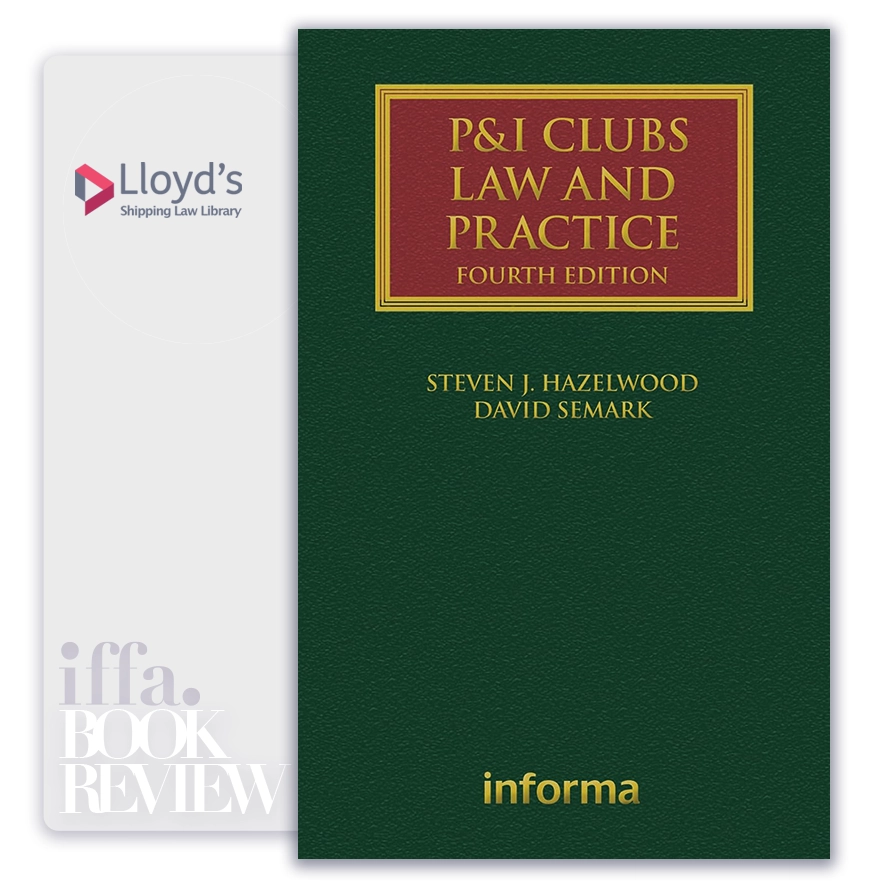
by David Semark
Summary Overview:
P&I Clubs: Law and Practice explains one of the most critical yet least understood pillars of global shipping: mutual insurance as a governance system for maritime liability. While hull insurance protects assets, Protection & Indemnity (P&I) clubs protect enterprises—from crew injury and pollution to cargo claims and collisions. David Semark’s work matters because maritime risk has expanded in scope and severity, driven by environmental regulation, sanctions, crew welfare standards, and escalating claims complexity.
For shipowners, board members, insurers, financiers, and senior executives, the book is essential because P&I exposure is enterprise exposure. Major incidents rarely test balance sheets through physical damage alone; they test liability management, claims handling, and regulatory compliance—areas where P&I clubs operate as both insurer and strategic partner. Semark shows that understanding P&I law and practice is not optional technical knowledge, but a prerequisite for resilient maritime governance.
About The Author
David Semark is a leading authority on maritime insurance and P&I club law, with extensive experience advising clubs, shipowners, and insurers.
His perspective is distinctive for its practical clarity grounded in legal precision. Semark explains how P&I clubs function in real disputes—where rules, discretion, and mutuality intersect—rather than presenting insurance as a purely contractual abstraction.
Core Idea:
The central thesis of P&I Clubs: Law and Practice is that P&I clubs are not conventional insurers; they are mutual risk-governance institutions. Semark demonstrates that clubs exist to pool unpredictable, high-severity maritime liabilities across members, enabling risks that would otherwise be uninsurable to be managed collectively.
At a deeper level, the book presents a worldview in which mutuality disciplines behavior. P&I clubs combine insurance cover, claims expertise, loss prevention, and regulatory navigation into a single system. Coverage is not automatic entitlement; it is contingent on compliance, disclosure, and good standing—making P&I a tool of collective responsibility rather than passive indemnity.
P&I insurance is not merely risk transfer; it is risk governance through mutuality.
Key Concepts:
- Mutuality Defines the P&I Model
Members insure one another.
- Shared risk promotes collective discipline.
- Behavior affects the pool.
- Scope of Cover Reflects Modern Maritime Risk
P&I responds where hull insurance does not.
- Crew, pollution, cargo, and third-party claims dominate exposure.
- Liability, not damage, drives loss.
- Rules Govern Coverage
P&I operates through club rules, not standard policies.
- Compliance determines entitlement.
- Discretion is structured, not arbitrary.
- Claims Handling Is Strategic
Response quality affects outcome magnitude.
- Early intervention reduces escalation.
- Expertise protects value.
- Limitation of Liability Interacts with P&I
Legal caps shape exposure.
- Limitation regimes stabilize mutual risk.
- Strategy matters before incidents occur.
- Reinsurance and the International Group Matter
Collective reinsurance underpins capacity.
- Pooling enables scale and stability.
- Systemic cooperation protects members.
- Pollution Risk Is Central
Environmental liability dominates modern claims.
- Strict regimes elevate board-level risk.
- Prevention is economically rational.
- Sanctions and Compliance Shape Cover
Geopolitics affects insurability.
- Non-compliance can void protection.
- Governance must be proactive.
- Loss Prevention Is Part of Insurance
Clubs influence behavior upstream.
- Guidance reduces claims frequency.
- Education lowers long-term cost.
- P&I Is a Relationship, Not a Transaction
Trust underpins effectiveness.
- Transparency strengthens protection.
- Adversarial behavior weakens mutuality.
Liability becomes manageable when it is shared, supervised, and disciplined.
Executive Insights:
Semark’s analysis reframes P&I clubs as strategic partners in enterprise risk management, not back-office insurers. Organizations that treat P&I as a commodity often discover—during crises—that coverage depends on conduct, disclosure, and governance quality established long before the incident.
For boards and senior leaders, the implication is decisive: P&I engagement is a governance responsibility. Effective oversight of compliance, safety culture, and claims readiness directly affects insurability, cost of risk, and reputational resilience. In a world of expanding liability, mutual insurance works best for members who respect its disciplines.
- Mutuality aligns incentives across members.
- Governance quality affects insurance outcomes.
- Compliance failures become uninsured risks.
- Claims expertise preserves enterprise value.
- Prevention outperforms indemnification.
Actionable Takeaways:
Resilient maritime insurance requires disciplined engagement.
- Treat P&I clubs as strategic risk partners.
- Ensure compliance with club rules and disclosures.
- Integrate P&I considerations into board oversight.
- Invest in loss prevention and incident preparedness.
- Align operational behavior with mutual responsibility.
Final Thoughts:
P&I Clubs: Law and Practice reveals that the most effective maritime insurance system in the world is also one of the most demanding. David Semark shows that mutual insurance succeeds not by avoiding risk, but by governing it collectively and intelligently. The strength of P&I lies in shared responsibility, expert judgment, and disciplined behavior.
For leaders responsible for ships, people, capital, and reputation, the enduring lesson is clear: insurance does not replace governance—it rewards it. Where mutuality is respected, protection is strong. Where it is treated casually, exposure multiplies.
In the long run, the safest ships are not those with the most cover, but those whose owners understand how cover truly works.
The ideas in this book go beyond theory, offering practical insights that shape real careers, leadership paths, and professional decisions. At IFFA, these principles are translated into executive courses, professional certifications, and curated learning events aligned with today’s industries and tomorrow’s demands. Discover more in our Courses.
Applied Programs

- Course Code : SBM-409
- Delivery : In-class / Virtual / Workshop
- Duration : 2-4 Days
- Venue: DUBAI HUB
- Course Code : PMA-613
- Delivery : In-class / Virtual / Workshop
- Duration : 3-5 Days
- Venue: DUBAI HUB
- Course Code : CIF-505
- Delivery : In-class / Virtual / Workshop
- Duration : 3-5 Days
- Venue: DUBAI HUB

- Course Code : CIF-512
- Delivery : In-class / Virtual / Workshop
- Duration : 2-4 Days
- Venue: DUBAI HUB
Related Books