
The Executive Summary of
Laytime and Demurrage
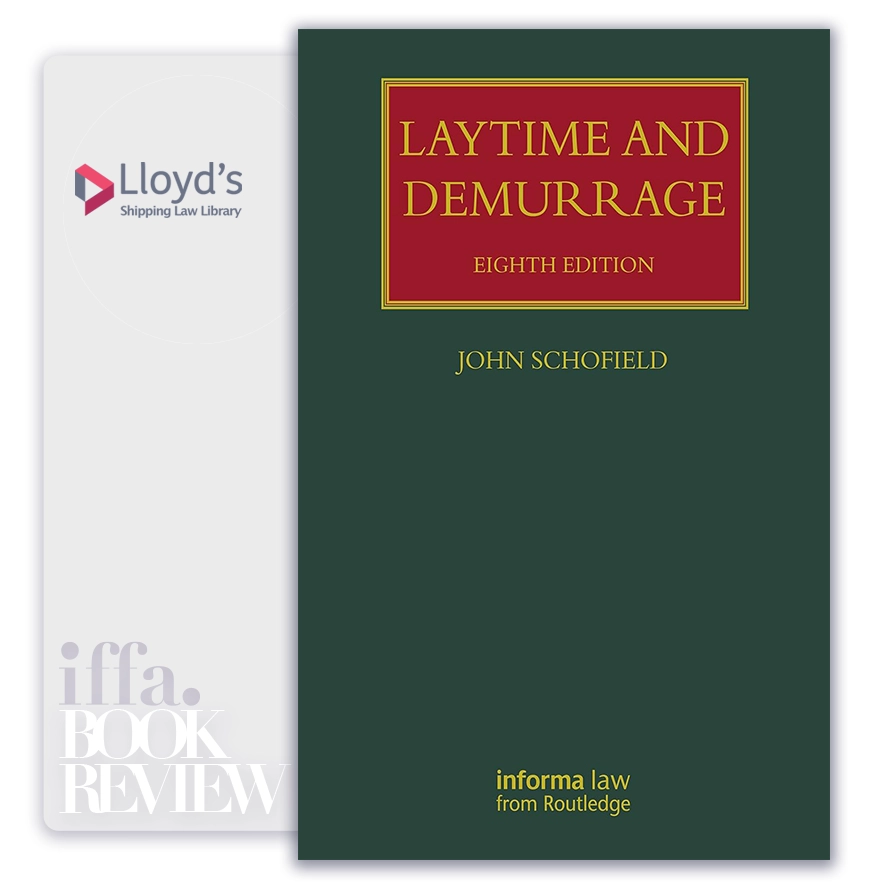
by John Schofield
Summary Overview:
Laytime and Demurrage addresses one of the most commercially sensitive—and frequently disputed—areas of maritime trade: how time is allocated, measured, and priced in voyage charters. John Schofield’s work matters because delays in loading and discharging are not operational inconveniences; they are financial and legal events that directly affect voyage profitability, counterparty relationships, and risk exposure. In a world of port congestion, terminal inefficiency, sanctions, weather disruption, and regulatory friction, time has become one of shipping’s most volatile variables.
For shipowners, charterers, traders, boards, and senior executives, the book is essential because many major maritime disputes arise not from accidents, but from ambiguity around time. Laytime clauses, notices of readiness, exceptions, and demurrage calculations often determine whether a voyage is profitable or loss-making. Schofield shows that laytime and demurrage are not technical footnotes, but core commercial governance mechanisms that translate delay into accountability.
About The Author
John Schofield is a leading maritime lawyer and author, widely recognized for his expertise in charterparties, laytime, and demurrage disputes.
His authority lies in deep engagement with case law and practice. Schofield writes with precision grounded in real disputes, making complex doctrine directly relevant to commercial decision-making.
Core Idea:
The central thesis of Laytime and Demurrage is that time in shipping is a legally constructed commodity, not a neutral operational fact. Schofield demonstrates that laytime rules exist to allocate the economic risk of delay between shipowner and charterer in a predictable, enforceable way.
At a deeper level, the book presents a worldview in which clarity of contractual drafting and discipline of process determine outcomes more than intent or fairness. Demurrage is not a penalty; it is liquidated damages agreed in advance. Where contracts are precise and procedures followed, disputes are minimized. Where ambiguity prevails, delay turns into litigation.
Laytime converts operational delay into commercial responsibility.
Key Concepts:
- Laytime Is a Contractual Allocation of Risk
Laytime defines which party bears delay.
- Time risk is negotiated, not accidental.
- Misunderstanding shifts value unintentionally.
- Notice of Readiness Is a Legal Trigger
Everything begins with a valid NOR.
- An invalid NOR collapses the laytime regime.
- Formal compliance is decisive.
- Commencement Rules Are Strict
Laytime does not start informally.
- Legal precision outweighs operational reality.
- Timing errors are costly.
- Exceptions Shape Economic Exposure
Weather, strikes, and port conditions matter.
- Exceptions redistribute delay risk.
- Interpretation drives outcome.
- Demurrage Is Liquidated, Not Punitive
Its function is certainty, not blame.
- Agreed rates replace damage assessment.
- Certainty supports trade velocity.
- Despatch Rewards Efficiency
Time saved also has value.
- Balanced clauses incentivize performance.
- Efficiency aligns interests.
- Port and Terminal Practices Matter
Local realities interact with legal rules.
- Custom cannot override contract.
- Assumptions create exposure.
- Documentation Determines Recovery
Records are decisive in disputes.
- Poor logs destroy strong cases.
- Evidence outweighs argument.
- Charterparty Wording Is Everything
Minor wording changes shift millions.
- Standard forms still require scrutiny.
- Precedent is powerful but not universal.
- Laytime Disputes Reflect Governance Quality
Most disputes are preventable.
- Discipline beats litigation.
- Process is strategy.
Demurrage is not punishment—it is the price of time used beyond agreement.
Executive Insights:
Commercial resilience requires time discipline.
- Treat laytime clauses as financial instruments.
- Enforce strict compliance with notice procedures.
- Align operational teams with legal requirements.
- Invest in documentation and voyage records.
- Review charterparty wording with strategic intent.
Actionable Takeaways:
The book offers principle-driven guidance for leaders and organizations.
- Treat improvement as a daily responsibility, not a project
- Encourage small, continuous changes
- Create psychological safety around problems
- Empower teams closest to the work
- Establish standards to support learning
- Prioritize discipline over motivation
- Commit to long-term improvement horizons
Final Thoughts:
Laytime and Demurrage demonstrates that some of shipping’s most expensive mistakes occur quietly, hour by hour, alongside the berth. John Schofield shows that mastery of time clauses is not about legal pedantry, but about commercial seriousness. Where time is governed, value is protected; where it is assumed, value leaks.
For leaders responsible for shipping performance, the enduring lesson is simple but unforgiving: voyages are won or lost not only at sea, but on the clock. Those who respect the law of time trade with clarity and confidence. Those who do not, pay for delay long after the ship has sailed.
In the long run, the most profitable shipping companies are those that understand that time—legally defined—is money.
The ideas in this book go beyond theory, offering practical insights that shape real careers, leadership paths, and professional decisions. At IFFA, these principles are translated into executive courses, professional certifications, and curated learning events aligned with today’s industries and tomorrow’s demands. Discover more in our Courses.
Applied Programs

- Course Code : SBM-409
- Delivery : In-class / Virtual / Workshop
- Duration : 2-4 Days
- Venue: DUBAI HUB

- Course Code : PMA-613
- Delivery : In-class / Virtual / Workshop
- Duration : 3-5 Days
- Venue: DUBAI HUB
- Course Code : CIF-505
- Delivery : In-class / Virtual / Workshop
- Duration : 3-5 Days
- Venue: DUBAI HUB

- Course Code : CIF-512
- Delivery : In-class / Virtual / Workshop
- Duration : 2-4 Days
- Venue: DUBAI HUB
Related Books