The Executive Summary of
The Honest Truth About Dishonesty
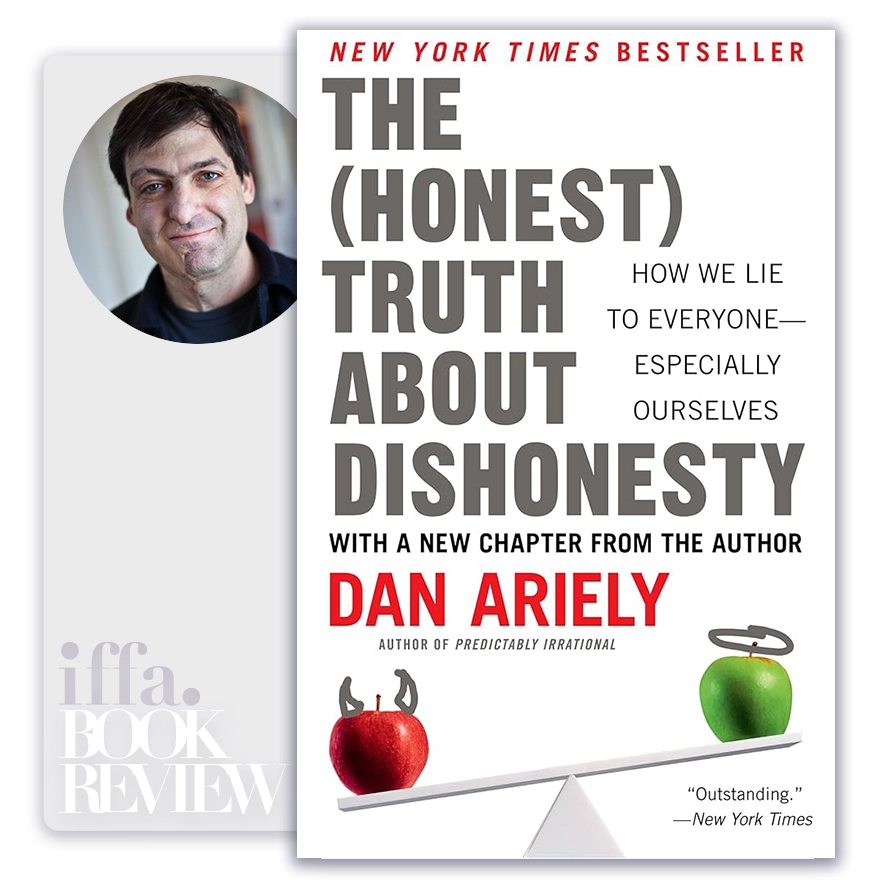
by Dan Ariely
Summary Overview:
Most organizations approach ethics as a compliance problem: rules, audits, penalties, and controls. Yet scandals, data manipulation, minor fraud, and ethical drift persist—even in highly regulated, values-driven companies. The Honest Truth About Dishonesty matters because it reveals a deeply uncomfortable truth: dishonesty is not primarily driven by bad people or weak enforcement, but by normal human psychology operating inside poorly designed systems.
For executives, boards, regulators, and risk leaders, this book reframes ethics as a behavioral design challenge. Ariely shows that people are surprisingly good at cheating “a little”—as long as they can still feel honest. These small, rationalized acts accumulate into systemic risk, reputational damage, and cultural decay. Leaders who understand this dynamic can prevent ethical erosion before it becomes scandal, by redesigning environments—not by preaching values.
About The Author
Dan Ariely is a leading behavioral economist whose research focuses on irrational behavior, ethics, motivation, and decision-making. Known for rigorous experiments and practical insight, Ariely has reshaped how leaders understand honesty, incentives, and human judgment.
In this book, Ariely combines behavioral experiments with real-world cases to expose why traditional deterrence models fail and how ethical behavior can be strengthened through smarter system design.
Core Idea:
At the heart of The Honest Truth About Dishonesty lies a counterintuitive insight:
Most people cheat a little—but only up to the point where they can still see themselves as honest.
Dishonesty is constrained not by fear of punishment alone, but by:
- Self-image maintenance
- Moral rationalization
- Context and framing
- Social norms
Ethical behavior is less about character and more about context. This explains why ethical lapses occur among good people in reputable organizations.
People cheat enough to benefit, but not enough to feel like cheaters.
Key Concepts:
- The “Fudge Factor”: Why Small Lies Feel Acceptable
Ariely shows that people rarely commit large acts of fraud—but many commit small dishonest acts they can justify.
People cheat enough to benefit—but not enough to feel like cheaters. This is how expense padding, data massaging, and minor policy breaches become normalized.
- Dishonesty Is Not Highly Sensitive to Punishment
Contrary to classical economics, increasing penalties does not proportionally reduce cheating.
Fear of punishment matters less than moral reminders and social context. This explains why zero-tolerance policies often fail to change behavior.
- Distance from Money Increases Cheating
People cheat more when:
- Money is abstract (points, credits, digital values)
- Responsibility is diffused
- Ownership is unclear
The less tangible the value, the easier it is to rationalize dishonesty. This has implications for digital transactions, financial reporting, and incentive systems.
- Conflicts of Interest Blind Us—Even When Disclosed
Ariely demonstrates that disclosure alone does not solve conflicts of interest.
We are biased even when we know we are biased. Transparency without structural safeguards can create false confidence rather than ethical protection.
- Moral Reminders Reduce Cheating More Than Surveillance
Simple moral cues—when timely—dramatically reduce dishonesty.
Examples include:
- Signing an honesty declaration before an action
- Recalling ethical standards
- Making values salient at decision points
Ethics work best when activated at the moment of temptation—not afterward.
- Social Norms Shape Ethical Boundaries
People calibrate honesty by observing others.
If people see others bending rules, dishonesty spreads rapidly. Leadership behavior and peer examples matter more than formal codes.
- Creativity Can Increase Dishonesty
Ariely shows that more creative individuals are often better at rationalizing unethical behavior.
Creativity enables justification—not just innovation. This is especially relevant in high-performance, problem-solving cultures.
- Stress and Pressure Expand Ethical Blind Spots
Time pressure, targets, and stress reduce ethical awareness.
Ethical lapses rise when people feel cornered by goals and incentives. Aggressive KPIs can unintentionally invite misconduct.
- Self-Deception Is the Real Risk
People often believe their own justifications.
The most dangerous lies are the ones we tell ourselves. This makes ethical drift hard to detect internally.
- Ethics Is a System Design Problem
Ariely’s central conclusion is clear:
If good people behave badly, redesign the system—not the slogans. Ethical behavior must be engineered into processes, incentives, and decision points.
The most dangerous lies are the ones we tell ourselves.
Executive Insights:
The Honest Truth About Dishonesty reframes ethics as preventive behavioral governance.
Strategic Implications for Executives and Boards:
- Small dishonesty creates large systemic risk
- Compliance alone is insufficient
- Context shapes ethical behavior
- Leadership behavior sets moral boundaries
- Incentives can unintentionally promote misconduct
- Ethical culture requires active design
Organizations that rely on trust without structure invite rationalized misconduct.
Actionable Takeaways:
For Executives
- Reduce abstraction around money and accountability
- Insert moral reminders at decision points
- Audit incentive systems for ethical side effects
- Model ethical behavior consistently
- Reduce pressure that encourages rationalization
For Compliance & Risk Leaders
- Shift from punishment to prevention
- Design ethics into workflows
- Use behavioral insights, not just controls
- Monitor small deviations—not just major breaches
Final Thoughts:
The Honest Truth About Dishonesty delivers a powerful and unsettling message: most ethical failures are not caused by villains, but by normal people navigating flawed systems. Dan Ariely shows that honesty is fragile—not because people are immoral, but because self-justification is easy and temptation is contextual.
For leaders, the lesson is clear:
Don’t ask, “How do we punish dishonesty?”
Ask, “How do we design environments where honesty is the easiest choice?”
Organizations that understand this do more than avoid scandal.
They build trustworthy cultures, resilient governance, and sustainable performance.
The ideas in this book go beyond theory, offering practical insights that shape real careers, leadership paths, and professional decisions. At IFFA, these principles are translated into executive courses, professional certifications, and curated learning events aligned with today’s industries and tomorrow’s demands. Discover more in our Courses.
Applied Programs

- Course Code : SBM-409
- Delivery : In-class / Virtual / Workshop
- Duration : 2-4 Days
- Venue: DUBAI HUB

- Course Code : PMA-613
- Delivery : In-class / Virtual / Workshop
- Duration : 3-5 Days
- Venue: DUBAI HUB
- Course Code : CIF-505
- Delivery : In-class / Virtual / Workshop
- Duration : 3-5 Days
- Venue: DUBAI HUB

- Course Code : CIF-512
- Delivery : In-class / Virtual / Workshop
- Duration : 2-4 Days
- Venue: DUBAI HUB
Related Books