The Executive Summary of
Principles of Supply Chain Management
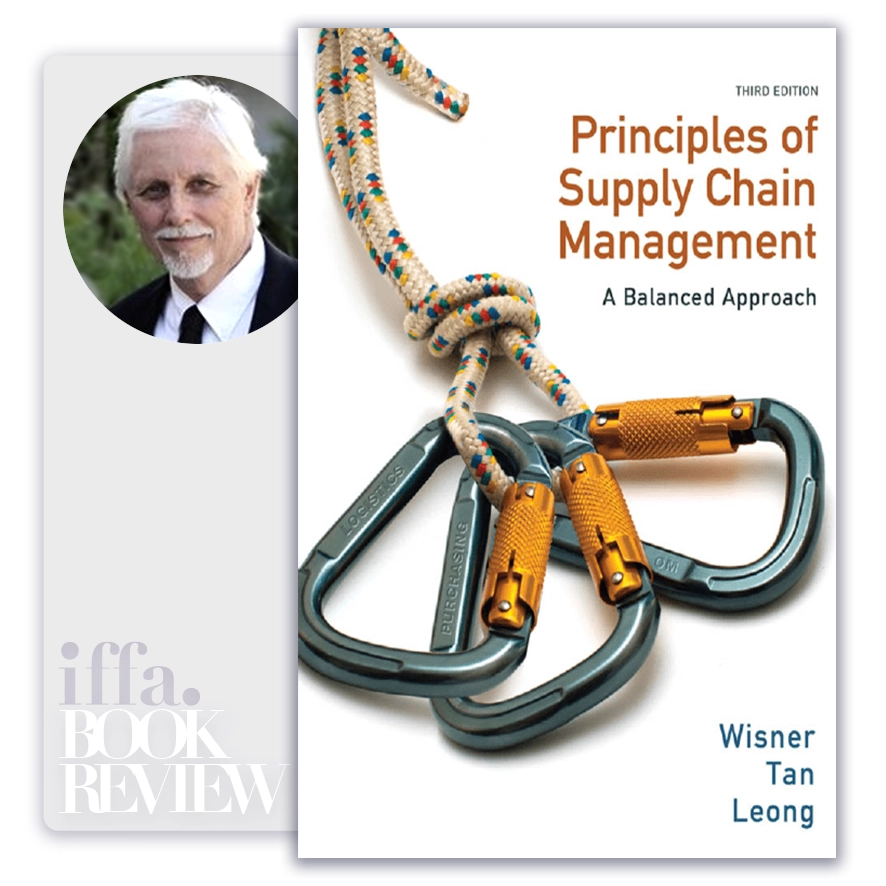
by Joel D. Wisner, Keah-Choon Tan, and G. Keong Leong
Summary Overview:
Supply chains are no longer operational backbones—they are strategic systems that determine competitiveness, resilience, cost structure, and customer experience. Principles of Supply Chain Management matters because it provides leaders with a clear, integrated foundation for understanding how supply chains actually work across organizations, markets, and borders—without being trapped in narrow functional thinking.
In an environment shaped by globalization, digitalization, geopolitical risk, sustainability pressure, and demand volatility, executives must make supply chain decisions that carry long-term structural consequences. Wisner, Tan, and Leong offer a disciplined, principle-based approach that connects strategy, sourcing, logistics, information flows, and relationships into a single managerial logic.
For CEOs, COOs, CSCOs, procurement leaders, logistics executives, and board members, this book answers a central question:
How do we design and manage supply chains that consistently deliver value while balancing cost, service, and risk?
About The Authors
Joel D. Wisner, Keah-Choon Tan, and G. Keong Leong are internationally recognized scholars in supply chain and operations management, with extensive research and advisory experience across manufacturing, retail, logistics, and global trade.
Their strength lies in integration. Rather than promoting isolated tools or trends, they articulate the core principles that govern effective supply chain design and execution—making the book especially valuable for executive education and strategic decision-making.
Core Idea:
At the heart of Principles of Supply Chain Management lies a foundational insight:
Supply chain performance depends on coordination across firms, functions, and flows—not on isolated optimization.
The authors emphasize that supply chains are:
- Cross-functional
- Inter-organizational
- Information-driven
- Trade-off intensive
Superior performance emerges when leaders:
- Align supply chain strategy with business strategy
- Integrate physical, information, and financial flows
- Manage relationships as strategic assets
- Make trade-offs explicit rather than accidental
A weak link anywhere in the supply chain becomes a competitive disadvantage everywhere.
Key Concepts:
- Supply Chains Compete, Not Companies
The book reframes competition at the system level.
Customers experience:
- Availability
- Speed
- Reliability
- Cost
Across the entire supply chain, not one firm. A weak link anywhere in the supply chain becomes a competitive disadvantage everywhere. This requires leadership beyond organizational boundaries.
- Strategic Fit Between Supply Chain and Market Demand
Not all supply chains should be designed the same way.
The authors emphasize alignment between:
- Demand uncertainty
- Product characteristics
- Customer service requirements
- Supply chain responsiveness
Efficiency without responsiveness fails in volatile markets; responsiveness without discipline fails on cost. Strategic fit is a board-level design decision.
- Integration Across Functions and Partners
Effective supply chain management requires integration across:
- Procurement
- Operations
- Logistics
- Marketing
- Finance
- External partners
Functional silos create:
- Delays
- Excess inventory
- Conflicting incentives
Local optimization is the enemy of system performance. Leadership must align incentives and decision rights.
- Demand Management and Forecasting Discipline
Demand information drives all downstream decisions.
The book highlights:
- Forecast accuracy limitations
- Collaborative planning
- Information sharing
- Managing demand variability
Forecasts should inform decisions—not create false certainty. Better demand management reduces system-wide waste.
- Sourcing and Supplier Relationship Strategy
Sourcing is framed as a strategic activity, not just purchasing.
Key considerations include:
- Make-or-buy decisions
- Supplier selection
- Global vs. local sourcing
- Cost, risk, and capability trade-offs
Lowest price sourcing often creates the highest total cost. Long-term supplier relationships outperform transactional buying.
- Logistics and Distribution as Value Drivers
Logistics decisions directly affect:
- Customer service
- Inventory levels
- Lead times
- Working capital
The authors emphasize network design, transportation strategy, and distribution structure.
Logistics is not a cost to minimize—it is a service capability to design.
- Inventory Management as a Strategic Lever
Inventory is treated as:
- A buffer against uncertainty
- A cost driver
- A service enabler
Inventory reflects the quality of supply chain design decisions. Excess inventory often signals poor coordination, not poor execution.
- Information Technology and Visibility
Information flow is the nervous system of the supply chain.
The book highlights:
- ERP and planning systems
- Data accuracy and timeliness
- Information sharing across partners
Material flows fail when information flows are delayed or distorted. Technology enables integration—but leadership enables adoption.
- Performance Measurement and Trade-Off Management
The authors caution against narrow KPIs.
Effective metrics balance:
- Cost
- Service
- Speed
- Reliability
- Flexibility
What you measure defines behavior across the supply chain. Balanced metrics reduce unintended consequences.
- Risk, Resilience, and Sustainability
Although written before recent global shocks, the book clearly addresses:
- Supply disruption risk
- Global sourcing vulnerability
- Ethical and environmental considerations
Efficiency without resilience is fragile. Sustainability and risk management are treated as strategic responsibilities, not compliance tasks.
You cannot manage what you do not integrate, and you cannot integrate what you do not understand.
Executive Insights:
Principles of Supply Chain Management positions supply chain leadership as enterprise-level systems governance.
Strategic Implications for Executives and Boards:
- Supply chain design is strategy
- Integration outperforms optimization
- Trade-offs must be explicit
- Relationships create durable advantage
- Visibility reduces risk
- Supply chains are value creators—not just cost structures
Organizations that treat supply chains as operational afterthoughts forfeit strategic control.
Actionable Takeaways:
For CEOs & COOs
- Align supply chain and business strategy
- Break functional silos
- Demand end-to-end visibility
- Balance efficiency with resilience
For Supply Chain & Procurement Leaders
- Design networks, not just processes
- Build strategic supplier partnerships
- Improve information sharing
- Use inventory as a diagnostic signal
Final Thoughts:
Principles of Supply Chain Management endures because it focuses not on trends, but on fundamentals. Wisner, Tan, and Leong remind leaders that supply chains succeed when they are intentionally designed, coherently governed, and strategically aligned.
In a world of volatility, fragmentation, and rising expectations, the lesson is clear:
Strategy flows through supply chains.
Integration creates advantage.
And disciplined principles outperform reactive fixes.
For executives seeking clarity amid complexity, this book provides a reliable compass for navigating the global supply chain landscape.
The ideas in this book go beyond theory, offering practical insights that shape real careers, leadership paths, and professional decisions. At IFFA, these principles are translated into executive courses, professional certifications, and curated learning events aligned with today’s industries and tomorrow’s demands. Discover more in our Courses.
Applied Programs

- Course Code : SBM-409
- Delivery : In-class / Virtual / Workshop
- Duration : 2-4 Days
- Venue: DUBAI HUB

- Course Code : PMA-613
- Delivery : In-class / Virtual / Workshop
- Duration : 3-5 Days
- Venue: DUBAI HUB
- Course Code : CIF-505
- Delivery : In-class / Virtual / Workshop
- Duration : 3-5 Days
- Venue: DUBAI HUB

- Course Code : CIF-512
- Delivery : In-class / Virtual / Workshop
- Duration : 2-4 Days
- Venue: DUBAI HUB
Related Books