The Executive Summary of
The Power of Habit
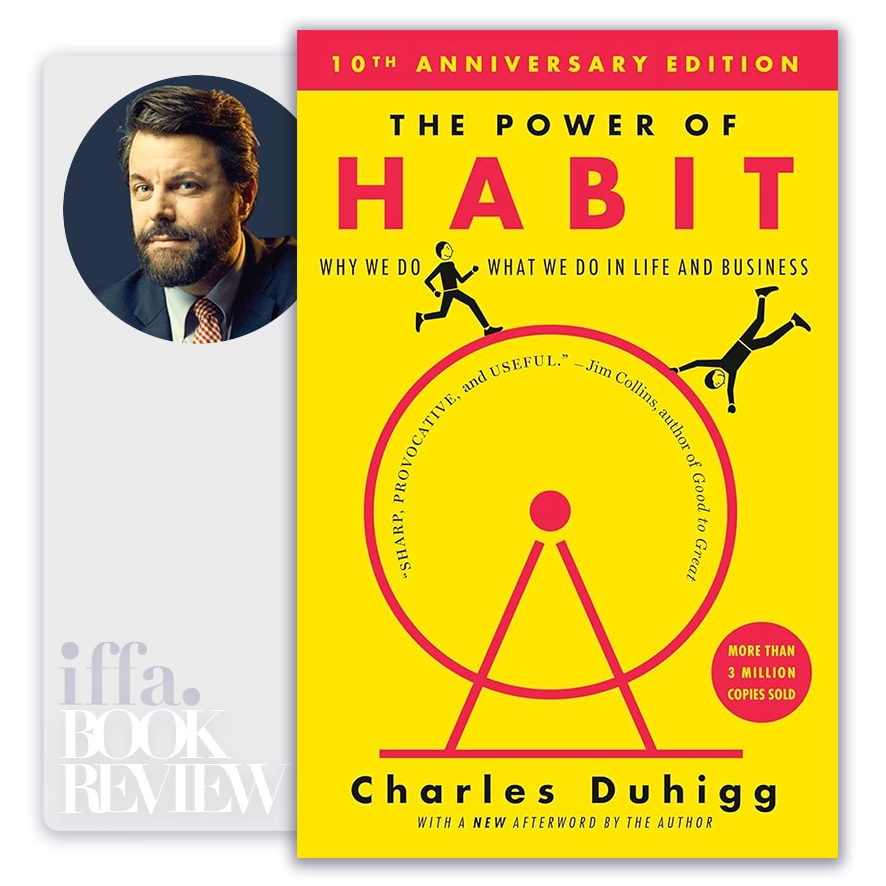
by Charles Duhigg
Summary Overview:
In organizations striving to improve performance, culture, and execution, The Power of Habit reveals a critical but often invisible driver of results: habits. Charles Duhigg demonstrates that much of individual and organizational behavior operates on automatic loops, not conscious decisions. For executives and leaders, this book provides a practical framework for changing behavior at scale—without relying on motivation alone.
The Power of Habit matters because most transformation initiatives fail when they attempt to change outcomes without changing daily routines. Duhigg shows that by understanding how habits work—and how they can be reshaped—leaders can unlock sustained improvement, from personal productivity to corporate culture. In complex systems, habit design becomes a strategic lever.
About The Author
Charles Duhigg is an award-winning journalist and former New York Times reporter specializing in behavior, productivity, and organizational science. His work translates academic research into compelling, real-world narratives.
Duhigg’s credibility comes from synthesizing neuroscience, psychology, and case studies across business, sports, healthcare, and social movements—making complex science actionable for leaders.
Core Idea:
The core idea of The Power of Habit is that habits follow a predictable loop—cue, routine, reward—and this loop governs a large portion of daily behavior. Once formed, habits persist because they conserve mental energy, allowing the brain to operate efficiently. However, the same efficiency that enables productivity also locks in suboptimal patterns.
Duhigg argues that lasting change does not require eliminating habits, which is rarely possible, but reengineering the habit loop—keeping the cue and reward while changing the routine. At organizational scale, habits aggregate into culture. Thus, culture change is fundamentally about identifying and reshaping keystone habits that trigger cascades of behavior across teams and systems.
Habits are not destiny, but they are powerful forces shaping what we do without thinking.
Key Concepts:
- The Habit Loop: Cue, Routine, Reward
Every habit operates through a loop. A cue triggers a routine, which delivers a reward. Over time, the brain anticipates the reward, reinforcing the loop. Every habit follows a three-part loop:
- Cue – a trigger that initiates behavior
- Routine – the behavior itself
- Reward – the benefit that reinforces the loop
- Cravings Drive Habit Strength
Habits persist because of cravings—the anticipation of the reward. Understanding what people truly crave (relief, recognition, control, comfort) is essential to changing routines.
- Cravings reinforce loops
- Surface rewards mask deeper needs
- Insight enables redesign
- Keystone Habits Create Cascades
Certain habits have disproportionate impact. Changing a keystone habit can unintentionally improve multiple behaviors by altering self-perception and priorities.
- Small shifts trigger wide effects
- Keystone habits reshape identity
- Focus beats breadth
- Willpower as a Trainable Habit
Willpower is not a fixed trait; it behaves like a muscle that strengthens with practice and weakens under stress. Organizations can design environments that preserve or deplete it.
- Structure supports discipline
- Stress erodes self-control
- Systems outperform exhortation
- Habit Formation in Organizations
Companies develop routines—how meetings start, how issues escalate, how decisions are made. These habits persist even when leadership changes.
- Processes encode habits
- Culture is habitual behavior
- Change requires behavioral clarity
- Crisis as a Window for Change
Moments of disruption weaken old habits and create openness to new routines. Leaders who recognize this window can reset norms deliberately.
- Disruption lowers resistance
- Direction matters in transition
- Missed windows entrench dysfunction
- The Role of Belief
Belief sustains change, especially under pressure. Individuals and groups are more likely to maintain new habits when they believe change is possible and shared.
- Belief reinforces persistence
- Social proof stabilizes change
- Identity supports behavior
- Social Habits and Peer Influence
Habits spread socially. Norms, peer behavior, and informal leaders often matter more than formal rules in shaping action.
- Behavior is contagious
- Informal leaders accelerate change
- Norms outweigh policies
- Ethical Dimensions of Habit Design
Because habits can be engineered, they can be abused. Duhigg highlights the responsibility that comes with designing behavioral systems that influence choice.
- Influence must be transparent
- Manipulation erodes trust
- Ethics protect long-term value
- From Individual to Institutional Change
The same principles govern personal habits and organizational routines. Scaling change requires aligning cues, routines, and rewards across roles and systems.
- Alignment enables scale
- Fragmentation sustains old habits
- Consistency builds durability
Change becomes durable when behavior is redesigned at the level of cues and rewards.
Executive Insights:
The Power of Habit reframes leadership as behavioral system design. Strategy fails when it conflicts with entrenched habits; it succeeds when it reshapes them. Leaders often overestimate the power of communication and underestimate the power of routine.
The book also clarifies why many change programs decay: they target outcomes rather than cues and rewards. Without redesigning the loop, pressure produces compliance at best—and relapse under stress. Sustainable performance improvement depends on making the desired behavior the path of least resistance.
Key strategic implications include:
- Culture is a collection of habits
- Small behavioral changes can scale
- Systems shape behavior more than intent
- Belief and identity stabilize change
- Ethical design protects trust and longevity
Actionable Takeaways:
The book offers clear, general principles for leaders and organizations.
- Identify the cue–routine–reward behind key behaviors
- Change routines while preserving rewards
- Target keystone habits for outsized impact
- Design environments that support willpower
- Use disruption deliberately to reset norms
- Reinforce belief through shared success
- Align incentives and processes with desired habits
Final Thoughts:
The Power of Habit is ultimately a book about agency within structure. Charles Duhigg shows that while much behavior is automatic, it is not immutable. By understanding how habits work, individuals and organizations gain leverage over patterns that once seemed fixed.
The enduring insight of the book is both practical and empowering: change becomes possible when behavior is redesigned, not merely demanded. Leaders who internalize this lesson move beyond slogans and incentives to build cultures where the right actions happen consistently—because the system makes them natural.
The ideas in this book go beyond theory, offering practical insights that shape real careers, leadership paths, and professional decisions. At IFFA, these principles are translated into executive courses, professional certifications, and curated learning events aligned with today’s industries and tomorrow’s demands. Discover more in our Courses.
Applied Programs

- Course Code : SBM-409
- Delivery : In-class / Virtual / Workshop
- Duration : 2-4 Days
- Venue: DUBAI HUB

- Course Code : PMA-613
- Delivery : In-class / Virtual / Workshop
- Duration : 3-5 Days
- Venue: DUBAI HUB
- Course Code : CIF-505
- Delivery : In-class / Virtual / Workshop
- Duration : 3-5 Days
- Venue: DUBAI HUB

- Course Code : CIF-512
- Delivery : In-class / Virtual / Workshop
- Duration : 2-4 Days
- Venue: DUBAI HUB
Related Books