The Executive Summary of
The Art of War
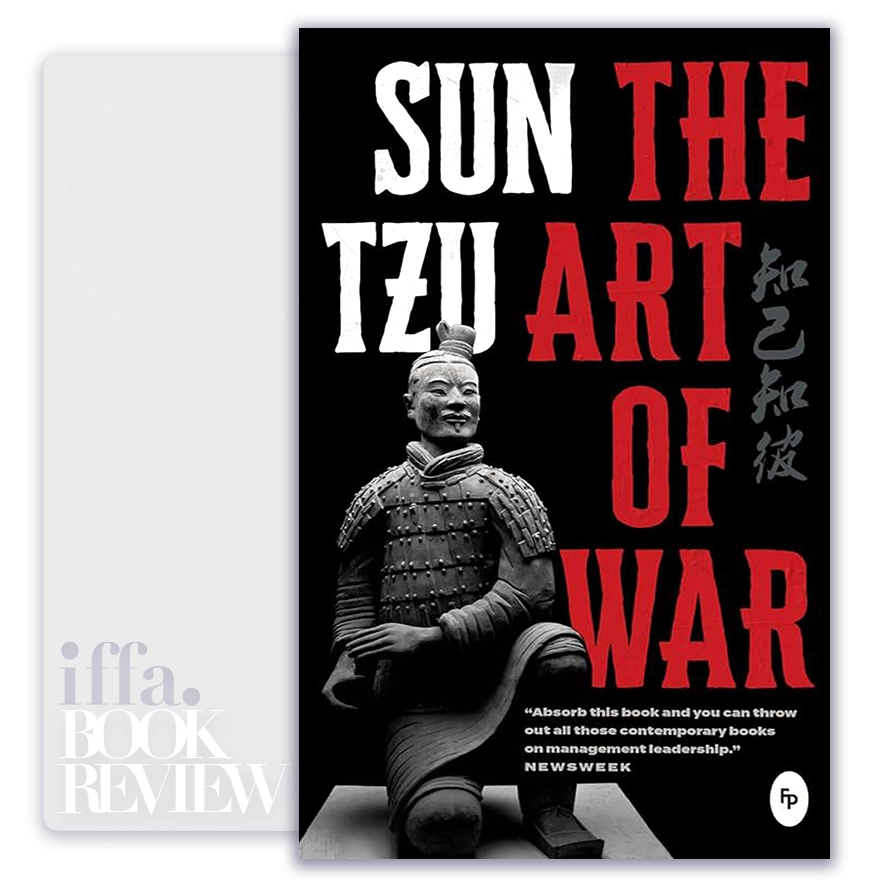
by Sun Tzu
Summary Overview:
The Art of War endures not because it teaches combat tactics, but because it reveals how intelligent leaders think when the cost of error is existential. Written in an era where failure meant collapse, the book offers a framework for strategy under uncertainty, asymmetric competition, limited information, and irreversible consequences. In modern contexts—corporate rivalry, geopolitical maneuvering, board-level decision-making, crisis leadership, and capital allocation—its relevance lies in its insistence that victory is achieved through judgment, preparation, and positioning rather than force or bravado. For senior executives and policymakers, the book remains a guide to winning without exhaustion, governing risk without illusion, and preserving long-term advantage through restraint.
About The Author
Sun Tzu was a military general and strategist operating in a period of persistent conflict, where states rose or fell based on leadership judgment rather than resources alone. His authority derives not from theory, but from operational command in high-stakes environments, where strategic error carried immediate and irreversible consequences.
What distinguishes Sun Tzu’s perspective is his systems-level view of conflict. He integrates psychology, intelligence, logistics, leadership, and timing into a coherent philosophy, making his work less a manual of war and more a treatise on strategic governance applicable far beyond the battlefield.
Core Idea:
The core idea of The Art of War is that the highest form of strategy is to prevail without destruction, preserving resources, legitimacy, and future optionality. Sun Tzu views conflict as a failure of alignment—between objectives and means, leaders and reality, ambition and preparation. Victory comes not from confrontation alone, but from superior understanding of conditions, incentives, and human behavior.
Strategy, in Sun Tzu’s worldview, is an exercise in shaping conditions before engagement occurs. Leaders who rush into action reveal weakness; those who prepare quietly dictate outcomes. Decisions should be guided by clarity, deception when necessary, adaptability, and disciplined restraint, ensuring that power is applied only when advantage is assured.
The greatest victories are decided before confrontation begins.
Key Concepts:
- Strategy Before Action
Sun Tzu insists that outcomes are determined before execution through analysis, preparation, and positioning. Leaders who act without strategic clarity substitute motion for judgment, increasing risk without improving outcomes. - Knowing Self and Adversary
Accurate self-assessment and competitor intelligence are foundational. Overestimating strength or underestimating others leads to avoidable failure. Strategic advantage arises from honest appraisal, not confidence theater. - Winning Without Battle
Direct confrontation is costly and unpredictable. The superior strategist reshapes incentives, alliances, and perceptions so that opponents concede or collapse without force, preserving resources and legitimacy. - Economy of Force and Resource Preservation
Sun Tzu treats resources—people, capital, morale—as finite. Prolonged conflict erodes advantage. Leaders must seek decisive outcomes with minimal expenditure, recognizing exhaustion as a strategic liability. - Deception as Strategic Signal Management
Deception is not dishonesty; it is information asymmetry management. Revealing too much invites exploitation. Strategic ambiguity protects optionality and disrupts adversary planning. - Speed Through Preparedness, Not Haste
Speed matters, but only when built on readiness. Hasty action without preparation creates fragility. True agility comes from systems that enable rapid, confident execution when conditions align. - Adaptability Over Doctrine
Rigid plans fail under changing conditions. Sun Tzu emphasizes adaptive leadership, where strategy evolves continuously in response to terrain, morale, intelligence, and timing. - Leadership as Moral Authority
Authority rests not on fear alone, but on trust, discipline, and legitimacy. Leaders who command respect align followers toward purpose, reducing friction and internal conflict. - Terrain and Context Awareness
Every decision is context-bound. Leaders must understand environmental constraints—political, economic, cultural—before acting. Strategy divorced from context is theoretical and dangerous. - Avoiding Prolonged Engagement
Time favors the prepared, not the stubborn. Extended struggle increases uncertainty and drains advantage. Strategic leaders seek resolution before fatigue undermines control.
Strength is proven by control, not by exertion.
Executive Insights:
The Art of War reframes strategy as risk governance, not aggression. It teaches leaders to prioritize positioning over confrontation, intelligence over instinct, and discipline over ego. Organizations and states with superior resources routinely fail because they mistake power for advantage.
For boards and senior executives, the book’s central implication is clear: strategy is the art of reducing exposure while increasing leverage. The best leaders shape the field so that success becomes inevitable and failure unlikely.
- Preparation outweighs reaction
- Intelligence precedes advantage
- Restraint preserves long-term power
- Adaptability defeats rigidity
- Legitimacy amplifies authority
Actionable Takeaways:
Senior leaders should translate Sun Tzu’s principles into executive-level judgment and system design:
- Reframe strategy as condition-setting, not action-taking
- Stop equating decisiveness with speed; prioritize readiness
- Invest in intelligence and self-awareness as strategic assets
- Design options that avoid direct confrontation when possible
- Preserve resources and legitimacy as sources of future advantage
Final Thoughts:
The Art of War is ultimately a book about temperament in leadership. It warns against impulsiveness, ego, and overconfidence, advocating instead for patience, clarity, and disciplined restraint. Its wisdom is enduring because human nature and competitive dynamics change far less than technology.
The book’s lasting contribution lies in its insistence that power is best exercised indirectly, through foresight and alignment rather than force. Leaders who internalize this philosophy avoid unnecessary battles and preserve the capacity to act decisively when it truly matters.
The final insight is both timeless and demanding: lasting victory belongs not to those who fight hardest, but to those who think most clearly, prepare most quietly, and act only when advantage is already secured.
The ideas in this book go beyond theory, offering practical insights that shape real careers, leadership paths, and professional decisions. At IFFA, these principles are translated into executive courses, professional certifications, and curated learning events aligned with today’s industries and tomorrow’s demands. Discover more in our Courses.
Applied Programs

- Course Code : SBM-409
- Delivery : In-class / Virtual / Workshop
- Duration : 2-4 Days
- Venue: DUBAI HUB

- Course Code : PMA-613
- Delivery : In-class / Virtual / Workshop
- Duration : 3-5 Days
- Venue: DUBAI HUB
- Course Code : CIF-505
- Delivery : In-class / Virtual / Workshop
- Duration : 3-5 Days
- Venue: DUBAI HUB

- Course Code : CIF-512
- Delivery : In-class / Virtual / Workshop
- Duration : 2-4 Days
- Venue: DUBAI HUB
Related Books