
The Executive Summary of
The Development of Crude Oil Tankers
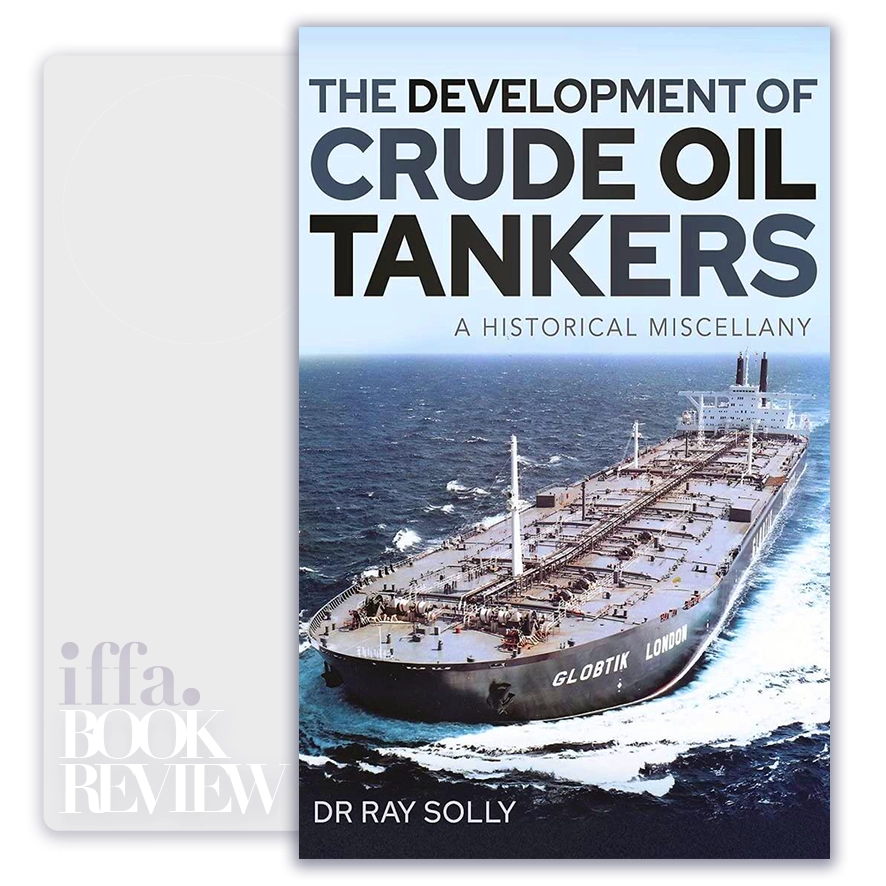
by Ray Solly
Summary Overview:
The movement of oil at global scale is often discussed in terms of markets and geopolitics, yet it is the ship itself that made modern energy systems possible. The Development of Crude Oil Tankers remains highly relevant because it reveals how engineering choices, regulatory responses, and commercial pressures quietly structured global trade long before strategy entered boardrooms. For senior executives and policymakers, the book clarifies why logistics capacity, safety design, and fleet economics are not secondary considerations but foundational drivers of cost, risk, and resilience. In an era of energy transition, environmental scrutiny, and supply-chain fragility, understanding how tanker systems evolved sharpens judgment about what can change quickly and what cannot.
About The Author
Ray Solly is a maritime historian with deep expertise in tanker development, naval architecture history, and shipping regulation. His work draws on technical records, industry evolution, and long-term shipping data to explain how design decisions emerged from commercial necessity, technological possibility, and regulatory constraint, rather than abstract planning.
Core Idea:
The core idea of The Development of Crude Oil Tankers is that the physical design of tanker fleets shaped the economics, risks, and geopolitics of oil more profoundly than market theory. Tanker evolution reflects a continuous negotiation between scale efficiency, safety, environmental exposure, and regulatory tolerance. Each generation of vessels locked in assumptions about trade routes, capital intensity, and acceptable risk.
Solly presents tanker development as a path-dependent system. Once size, hull design, and operational norms are established, they constrain future options for decades. Executives who overlook this reality misjudge how quickly shipping systems can adapt to new environmental, political, or market demands.
Energy markets expand only as fast as their transport systems allow.
Key Concepts:
- Scale as an Economic Imperative
The drive toward larger tankers was not aesthetic but economic. Scale reduced unit transport costs and enabled global sourcing. At executive level, this highlights how capital intensity and concentration increase systemic exposure. - Design as Risk Allocation
Hull configuration, segregation, and cargo systems determine how risk is distributed between owners, insurers, states, and the environment. Design decisions are therefore governance decisions, not technical footnotes. - Accidents as Regulatory Turning Points
Major tanker incidents reshaped standards, liability regimes, and public tolerance. The book shows how regulation follows failure, embedding new costs and constraints into fleet economics. - Environmental Externalities Become Strategic Costs
What began as ignored externalities evolved into central strategic risks. Pollution control and double-hull requirements transformed cost structures and redefined acceptable operating behavior. - Capital Cycles and Fleet Inertia
Tankers are long-lived assets. Investment decisions create decades-long exposure to regulatory and market change. Leaders must align capital horizons with policy uncertainty. - Ports, Routes, and Geopolitical Dependency
Tanker size dictated port development and chokepoint reliance. This produced geographic concentration of risk, amplifying the strategic importance of straits and terminals. - Safety Culture as System Outcome
Safety performance reflects incentives embedded in design, operations, and regulation. Individual competence matters, but system architecture dominates outcomes. - Standardization and Global Trade
Tanker standardization enabled global oil markets to function smoothly. However, standardization also reduced flexibility, making adaptation slower under new constraints. - Insurance and Liability Feedback Loops
As vessels grew, so did potential losses. Insurance markets influenced design standards, embedding financial discipline into engineering choices. - Technological Progress Without Strategic Intent
Many pivotal developments were reactive rather than visionary. This reinforces a core leadership lesson: systems often evolve without foresight, but leaders bear responsibility for their consequences.
Every efficiency gained at sea embeds a future governance obligation on land.
Executive Insights:
This book reframes shipping not as a support function, but as strategic infrastructure that determines how energy systems scale, where risk accumulates, and how crises unfold. For boards, tanker fleets represent embedded exposure to regulation, public perception, and geopolitical disruption.
At executive level, the lesson is that physical systems outlast strategies and quietly dictate strategic ceilings.
- Transport capacity shapes market reach
- Design choices hard-code future risk
- Regulation follows visible failure
- Capital intensity amplifies systemic fragility
- Infrastructure inertia limits rapid transition
Actionable Takeaways:
Senior leaders should absorb these insights as structural awareness, not tactics:
- Reframe shipping assets as long-term governance commitments, not logistics tools
- Stop assuming rapid adaptability in capital-heavy transport systems
- Embed lifecycle risk thinking into fleet and infrastructure strategy
- Align environmental ambition with physical system constraints
- Treat design decisions as board-level risk decisions
Final Thoughts:
Final Thoughts
The Development of Crude Oil Tankers is a book about how the invisible becomes decisive. Tankers rarely feature in strategic narratives, yet they have quietly determined the scale, speed, and vulnerability of the global oil economy.
Its enduring value lies in reminding leaders that infrastructure precedes strategy. Markets can change overnight; ships cannot. The discipline of leadership lies in respecting that asymmetry.
The final takeaway is both simple and demanding: long-term value is shaped less by what leaders intend than by the systems they build and the constraints those systems impose long after intentions fade.
The ideas in this book go beyond theory, offering practical insights that shape real careers, leadership paths, and professional decisions. At IFFA, these principles are translated into executive courses, professional certifications, and curated learning events aligned with today’s industries and tomorrow’s demands. Discover more in our Courses.
Applied Programs

- Course Code : SBM-409
- Delivery : In-class / Virtual / Workshop
- Duration : 2-4 Days
- Venue: DUBAI HUB
- Course Code : PMA-613
- Delivery : In-class / Virtual / Workshop
- Duration : 3-5 Days
- Venue: DUBAI HUB
- Course Code : CIF-505
- Delivery : In-class / Virtual / Workshop
- Duration : 3-5 Days
- Venue: DUBAI HUB

- Course Code : CIF-512
- Delivery : In-class / Virtual / Workshop
- Duration : 2-4 Days
- Venue: DUBAI HUB
Related Books