

The Executive Summary of
The Last Drop
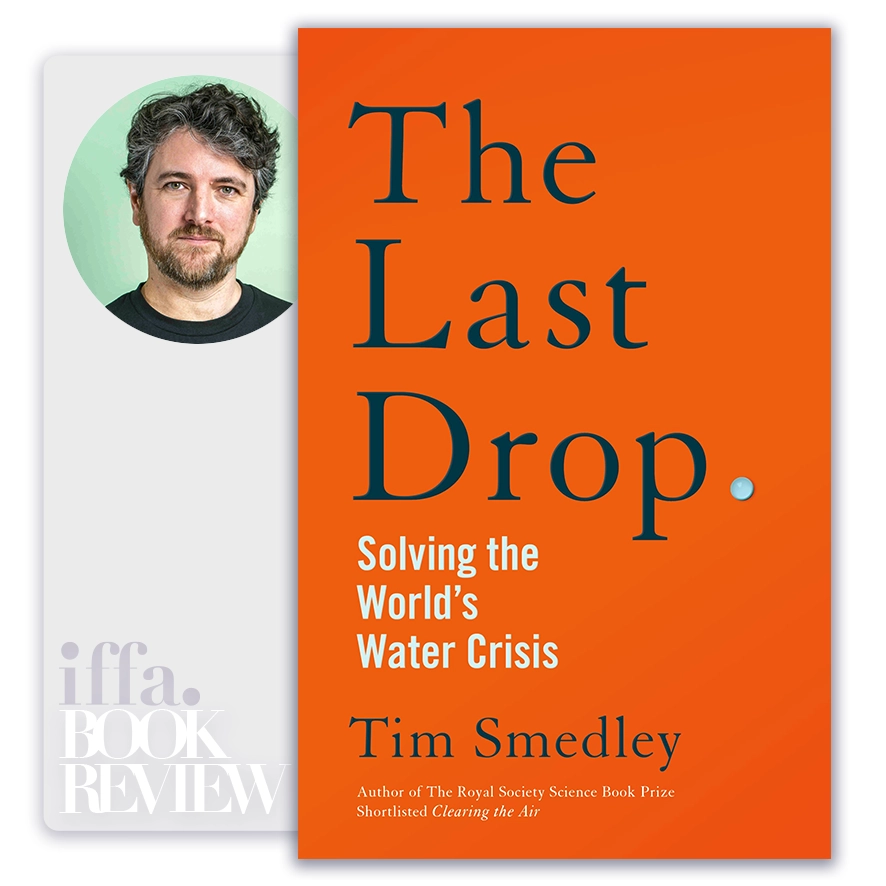
by Tim Smedley
Summary Overview:
The Last Drop matters because it exposes water scarcity not as a distant environmental issue, but as a present and escalating systemic risk affecting economies, food systems, cities, geopolitics, and social stability. Water shortages are no longer confined to arid regions or developing countries; they are emerging in major cities, agricultural hubs, and industrial centers worldwide.
The book is particularly relevant at a time when climate change, population growth, and consumption patterns are converging to stretch water systems beyond their limits. Droughts, aquifer depletion, polluted rivers, and failing infrastructure are becoming structural conditions rather than temporary crises. Smedley demonstrates that water scarcity is not simply about physical lack—it is about how water is managed, priced, governed, and consumed.
Rather than presenting water as a technical challenge alone, The Last Drop frames it as a leadership and governance problem. The book challenges policymakers, business leaders, and institutions to recognize water as a strategic resource whose mismanagement carries long-term economic and social consequences. It serves as both a warning and a guide for those responsible for planning under uncertainty.
About The Author
Tim Smedley is an environmental journalist specializing in sustainability, resource security, and climate-related risk. His perspective is distinctive for combining on-the-ground reporting, scientific research, and policy analysis, making complex global water challenges accessible without oversimplification.
Core Idea:
The core idea of The Last Drop is that global water scarcity is largely a human-made crisis, driven by poor governance, inefficient use, pollution, and short-term decision-making rather than absolute physical limits. While climate change intensifies stress on water systems, the book shows that scarcity often results from choices about land use, agriculture, urban planning, and consumption.
Smedley presents water as a finite, shared system under pressure, where local decisions have cascading regional and global effects. The book argues that avoiding severe water crises requires rethinking how societies value water, how institutions coordinate across sectors, and how leaders plan for long-term resilience rather than short-term convenience.
Water scarcity is less about running out of water and more about how poorly we manage what we have.
Key Concepts:
- Water Scarcity as a Systemic Risk
Smedley frames water scarcity as a risk multiplier. Shortages disrupt agriculture, energy production, manufacturing, and urban life simultaneously. When water systems fail, economic and social systems fail with them, making water security a foundational issue for stability. - Agriculture as the Dominant Water User
The book highlights that agriculture accounts for the majority of global freshwater use. Inefficient irrigation, water-intensive crops, and subsidies that encourage overuse are major contributors to scarcity. Addressing water stress requires reforming food and farming systems, not just urban consumption. - Groundwater Depletion and Invisible Loss
Aquifers are being depleted faster than they can recharge in many regions. Because groundwater is largely invisible, its overuse often goes unnoticed until wells run dry or land subsides. This creates delayed crises that are difficult and costly to reverse. - Pollution as Functional Scarcity
Contaminated water is effectively removed from the usable supply. Industrial discharge, agricultural runoff, and untreated wastewater reduce availability while increasing treatment costs. Pollution therefore intensifies scarcity even in water-rich regions. - Climate Change as an Amplifier, Not the Sole Cause
While climate change worsens droughts and floods, Smedley emphasizes that governance failures amplify climate impacts. Regions with robust water management cope better with variability than those relying on outdated infrastructure and policies. - Urbanization and Infrastructure Stress
Rapid urban growth places intense pressure on water supply and sanitation systems. Aging infrastructure, leakage, and underinvestment exacerbate shortages. Cities that fail to plan for water resilience face rising costs and social unrest. - Economic Mispricing of Water
Water is frequently underpriced or treated as a free resource, encouraging waste. At the same time, abrupt price increases can harm vulnerable communities. The book argues for balanced pricing mechanisms that reflect scarcity while protecting basic needs. - Virtual Water and Global Trade
Smedley introduces the concept of “virtual water”—the water embedded in food and goods traded internationally. Water-scarce regions often export water-intensive products, effectively shipping their water abroad and deepening local shortages. - Governance Fragmentation and Policy Failure
Water management is often divided across multiple agencies with conflicting mandates. This fragmentation leads to inefficient decisions and weak accountability. Integrated governance is presented as a prerequisite for effective action. - Solutions Exist, but Require Coordination
The book is cautiously optimistic. Technologies, practices, and policies capable of reducing water stress already exist. What is missing is coordinated leadership, long-term planning, and public engagement.
The future of water security depends on governance, efficiency, and foresight—not technology alone.
Executive Insights:
The Last Drop makes clear that water scarcity is not an environmental side issue—it is a core strategic challenge that intersects with food security, energy transition, urban development, and geopolitical stability. Organizations and governments that ignore water risk expose themselves to supply chain disruption, rising costs, and reputational damage.
The book also underscores that water crises unfold slowly until they accelerate suddenly. This delayed feedback makes proactive leadership difficult but essential. Those who invest early in efficiency, governance reform, and resilience gain long-term advantages.
Key strategic implications include:
- Water security underpins economic and social resilience
- Agriculture and land use reform are central to solving scarcity
- Pollution control is a supply strategy, not just an environmental one
- Climate adaptation depends on governance quality
- Long-term planning outperforms crisis response
Actionable Takeaways:
The book offers clear, general principles applicable across sectors.
- Treat water scarcity as a systemic risk, not a local issue
- Prioritize efficiency and demand management alongside new supply
- Reform agricultural water use and crop choices
- Protect groundwater through monitoring and regulation
- Invest in resilient, well-maintained infrastructure
- Align water pricing with scarcity while safeguarding equity
- Improve coordination across institutions and sectors
- Incorporate water risk into long-term economic and urban planning
Final Thoughts:
The Last Drop is a timely and sobering examination of how close many regions are to severe water stress—and how avoidable much of that stress remains. Its strength lies in showing that water crises are rarely sudden disasters; they are the cumulative result of neglect, fragmentation, and short-term thinking.
The enduring message of the book is clear: water scarcity is a choice, not a fate. Leaders who recognize water as a strategic asset—and govern it with foresight, efficiency, and responsibility—can still shape a more resilient and equitable future before the last drop truly arrives.
The ideas in this book go beyond theory, offering practical insights that shape real careers, leadership paths, and professional decisions. At IFFA, these principles are translated into executive courses, professional certifications, and curated learning events aligned with today’s industries and tomorrow’s demands. Discover more in our Courses.
Applied Programs

- Course Code : SBM-409
- Delivery : In-class / Virtual / Workshop
- Duration : 2-4 Days
- Venue: DUBAI HUB

- Course Code : PMA-613
- Delivery : In-class / Virtual / Workshop
- Duration : 3-5 Days
- Venue: DUBAI HUB

- Course Code : CIF-505
- Delivery : In-class / Virtual / Workshop
- Duration : 3-5 Days
- Venue: DUBAI HUB

- Course Code : CIF-512
- Delivery : In-class / Virtual / Workshop
- Duration : 2-4 Days
- Venue: DUBAI HUB
Related Books