
The Executive Summary of
Sustainable Investing
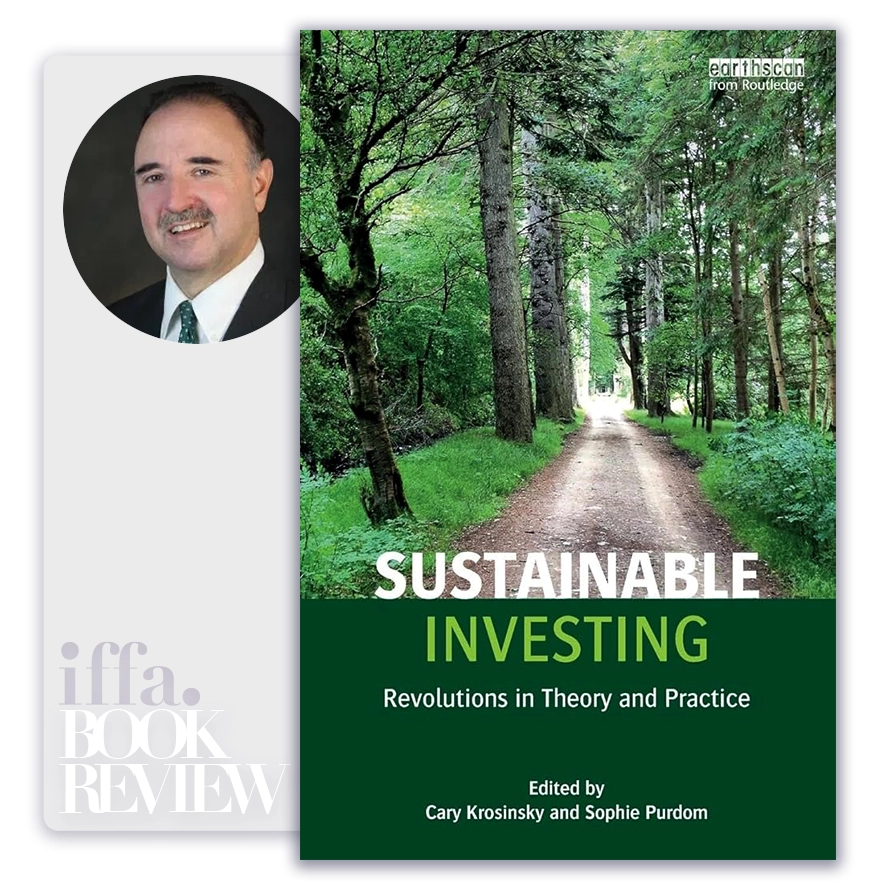
by Cary Krosinsky
Summary Overview:
Capital markets shape the future faster than almost any other human system. Every investment decision sends a signal about what activities are rewarded, scaled, or abandoned. Sustainable Investing argues that traditional finance—focused narrowly on short-term risk and return—fails to capture the full spectrum of risks and opportunities that determine long-term value. Environmental limits, social stability, governance quality, and systemic resilience now directly affect portfolio performance.
This book matters because sustainable investing is no longer a niche strategy or ethical overlay. It is becoming a core evolution of investment theory and practice, driven by climate risk, regulatory change, data availability, and shifting fiduciary expectations. Cary Krosinsky demonstrates that integrating sustainability into investment decisions is not about sacrificing returns—it is about modernizing finance to reflect how the world actually works. For asset owners and investment professionals, the book provides a conceptual and practical framework for aligning capital with long-term economic reality.
About The Author
Cary Krosinsky is a leading authority on sustainable finance, ESG integration, and long-term investment strategy. He has worked with institutional investors, academics, regulators, and asset managers globally and has contributed to the development of modern ESG and sustainability frameworks.
Krosinsky’s credibility lies in his ability to bridge academic theory, market practice, and real-world constraints. He approaches sustainable investing not as ideology, but as an evidence-based evolution of fiduciary responsibility.
Core Idea:
The central thesis of Sustainable Investing is both analytical and transformative:
Sustainability factors are financially material, and ignoring them leads to systematic mispricing of risk and long-term value.
Krosinsky argues that:
- Traditional finance underestimates long-term, systemic risks
- ESG factors influence cash flows, cost of capital, and asset durability
- Sustainability integration improves risk-adjusted performance over time
- Capital markets must evolve to remain credible and effective
Sustainable investing is therefore not a deviation from finance—but a necessary correction.
Sustainability risks are financial risks, just with longer time horizons.
Key Concepts:
- The Limits of Traditional Investment Theory
Modern Portfolio Theory and related frameworks assume:
- Stable markets
- Rational actors
- Externalities that do not affect returns
Krosinsky shows that these assumptions break down in a world of:
- Climate instability
- Resource constraints
- Social inequality
- Governance failures
What finance treats as “externalities” increasingly determine financial outcomes.
Ignoring sustainability leads to systematic blind spots in valuation and risk models.
- Sustainability as Financial Materiality
A core contribution of the book is reframing sustainability as material to financial performance, not an ethical overlay.
Examples include:
- Climate risk affecting asset values and insurance costs
- Labor practices influencing productivity and brand equity
- Governance failures leading to scandals and capital loss
Sustainability risks are financial risks—just with longer time horizons. This reframing is critical for fiduciaries and regulators.
- ESG Integration vs. Exclusion
Krosinsky differentiates between:
- Negative screening (excluding “bad” sectors)
- ESG integration (incorporating sustainability into valuation and risk analysis)
He argues that integration is more powerful because it:
- Preserves diversification
- Improves risk assessment
- Influences corporate behavior
Exclusion expresses values; integration changes outcomes. Sustainable investing is about better decisions, not moral purity.
- Active Ownership and Stewardship
Capital allocation alone is insufficient. The book emphasizes:
- Shareholder engagement
- Proxy voting
- Board accountability
Ownership without stewardship is passive exposure—not investment.
Active ownership enables investors to:
- Reduce risk
- Improve governance
- Encourage long-term strategy
This shifts investors from spectators to system participants.
- Long-Termism vs. Short-Termism
A major barrier to sustainable investing is short-term performance pressure.
Krosinsky highlights:
- Quarterly reporting bias
- Incentive misalignment
- Performance benchmarking traps
Short-termism is a structural market failure—not a personal flaw.
Sustainable investing requires:
- Longer horizons
- Patient capital
- Incentives aligned with durability
- Data, Metrics, and Measurement Challenges
The book addresses ESG data challenges head-on:
- Inconsistent ratings
- Incomplete disclosure
- Lack of standardization
Rather than dismiss ESG, Krosinsky argues for better interpretation.
Imperfect data does not justify ignoring material risk. Financial data itself is imperfect—judgment has always been required.
- Climate Change as Systemic Financial Risk
Climate risk is presented not as a single issue, but as a systemic threat:
- Physical risks (storms, heat, flooding)
- Transition risks (policy, technology, stranded assets)
- Liability risks
Climate change challenges the assumption that markets self-correct smoothly.
This elevates climate risk to the level of financial stability concern.
- Fiduciary Duty Reinterpreted
Krosinsky challenges the outdated view that fiduciary duty means ignoring ESG.
He argues that:
- Fiduciaries must consider all material risks
- Sustainability factors increasingly meet this test
- Ignoring them may constitute negligence
The definition of fiduciary duty evolves as markets evolve. This has profound implications for pension funds, insurers, and endowments.
- Market Transformation Through Capital Allocation
The book highlights how capital markets can:
- Accelerate clean technologies
- Improve corporate behavior
- Reduce systemic risk
Markets change faster than regulation—when capital is aligned. Sustainable investing is thus a lever for systemic change, not just portfolio optimization.
- From Niche to Norm
Krosinsky situates sustainable investing within a broader transition:
- From voluntary to mandatory disclosure
- From ethical niche to mainstream strategy
- From static portfolios to adaptive systems
Sustainable investing is not a trend—it is a market evolution. Resistance often reflects inertia, not evidence.
Ownership without stewardship is passive exposure, not investment.
Executive Insights:
Sustainable Investing reframes investment leadership as long-term risk intelligence.
Strategic Implications for Investors and Boards:
- Sustainability affects valuation
- Ignoring ESG creates hidden risk
- Long-term horizons outperform short-termism
- Stewardship is part of fiduciary duty
- Climate risk is financial system risk
- Capital allocation shapes real outcomes
- Data informs judgment, not replaces it
- Market rules are evolving
Actionable Takeaways:
Krosinsky’s framework translates directly into practice.
Practical Actions for Asset Owners and Managers:
- Integrate ESG into core valuation models
- Focus on material sustainability risks
- Strengthen stewardship and engagement
- Align incentives with long-term outcomes
- Improve ESG data literacy
- Stress-test portfolios for climate risk
- Adopt longer performance horizons
- Educate boards on evolving fiduciary duty
- Move from exclusion to integration
Final Thoughts:
Sustainable Investing is ultimately a book about updating finance for reality. Cary Krosinsky shows that sustainability is not a constraint on markets—it is a missing variable that, once included, improves decision-making and resilience.
The book’s central message is clear and pragmatic:
Markets work best when they reflect the full cost of risk and the full drivers of value.
For investors navigating climate risk, regulatory change, and long-term uncertainty, Sustainable Investing offers a foundational truth:
Capital that understands sustainability is capital that endures.
The ideas in this book go beyond theory, offering practical insights that shape real careers, leadership paths, and professional decisions. At IFFA, these principles are translated into executive courses, professional certifications, and curated learning events aligned with today’s industries and tomorrow’s demands. Discover more in our Courses.
Applied Programs

- Course Code : SBM-409
- Delivery : In-class / Virtual / Workshop
- Duration : 2-4 Days
- Venue: DUBAI HUB

- Course Code : PMA-613
- Delivery : In-class / Virtual / Workshop
- Duration : 3-5 Days
- Venue: DUBAI HUB

- Course Code : CIF-505
- Delivery : In-class / Virtual / Workshop
- Duration : 3-5 Days
- Venue: DUBAI HUB

- Course Code : CIF-512
- Delivery : In-class / Virtual / Workshop
- Duration : 2-4 Days
- Venue: DUBAI HUB
Related Books