

The Executive Summary of
Sustainability Principles and Practice
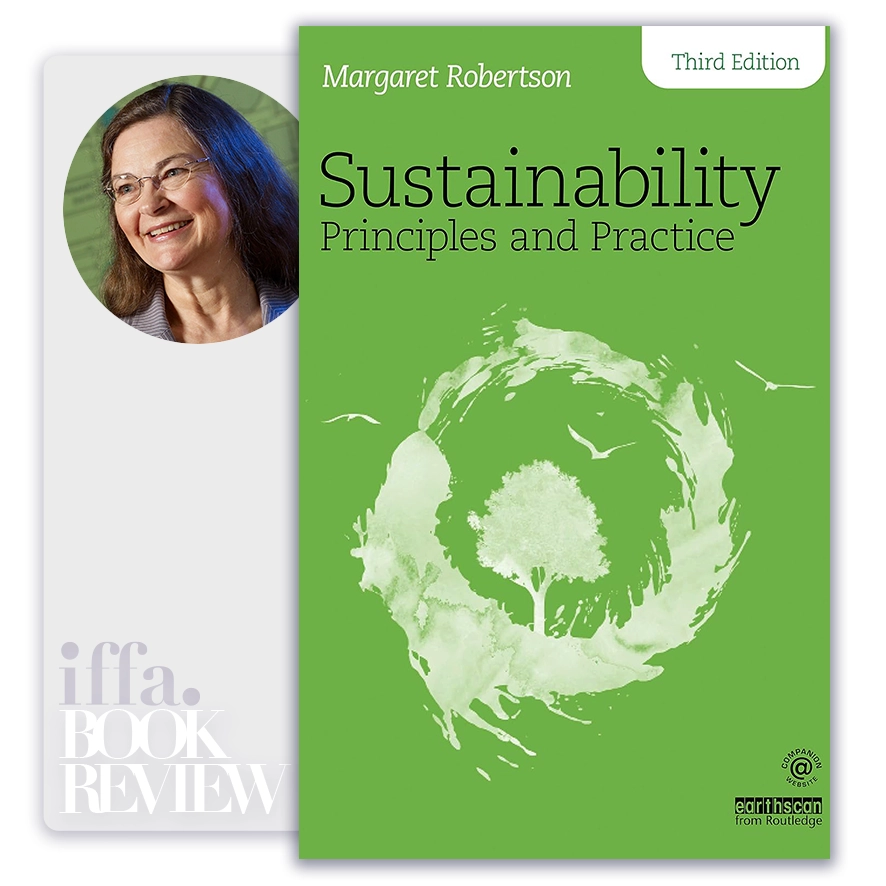
by Margaret Robertson
Summary Overview:
Sustainability Principles and Practice occupies a critical position between theory and execution. While many sustainability texts focus either on abstract ideals or narrow technical solutions, Margaret Robertson addresses the hard middle ground where leaders must translate complexity into coherent action. The book remains relevant because sustainability today is no longer a future aspiration—it is a present operational, strategic, and governance challenge affecting every sector.
For CEOs, board members, policymakers, and long-term investors, the book matters because it treats sustainability as a systems problem that demands managerial literacy, not moral agreement alone. Robertson explains why well-intentioned initiatives often fail when leaders underestimate interdependence, feedback loops, and unintended consequences. In a world shaped by climate risk, resource constraints, and social pressure, the book equips decision-makers to act with rigor rather than rhetoric.
About The Author
Margaret Robertson is a sustainability educator and practitioner whose work focuses on translating environmental and social principles into practical organizational decision-making.
Her perspective is distinctive for its balance of systems thinking and applied management, emphasizing how sustainability concepts must be operationalized within real institutions, constraints, and trade-offs.
Core Idea:
The central thesis of Sustainability Principles and Practice is that sustainability can only be achieved when leaders understand systems, limits, and interconnections. Robertson argues that fragmented solutions—isolated environmental projects or social programs—cannot succeed without a holistic understanding of how economic, ecological, and social systems interact.
At a deeper level, the book presents a worldview in which sustainability is a continuous practice rather than a fixed goal. It requires learning, adaptation, and humility. Leaders must accept uncertainty, manage trade-offs explicitly, and design organizations capable of responding to change rather than optimizing for static efficiency.
Lasting progress comes from understanding relationships, not chasing isolated outcomes.
Key Concepts:
- Systems Thinking Is Foundational
Robertson emphasizes seeing wholes, not parts.
- Linear solutions fail in complex systems.
- Interdependencies determine outcomes.
- Environmental Limits Are Non-Negotiable
Natural boundaries constrain economic activity.
- Ignoring limits creates future instability.
- Overshoot leads to systemic correction.
- Sustainability Integrates Three Domains
Economic, environmental, and social dimensions are inseparable.
- Trade-offs must be acknowledged, not hidden.
- Balance requires governance, not slogans.
- Feedback Loops Shape Results
Actions produce delayed and indirect effects.
- Short-term gains can create long-term costs.
- Awareness improves decision quality.
- Measurement Influences Behavior
Indicators guide priorities.
- What is measured becomes managed.
- Poor metrics distort action.
- Scale Matters
Local solutions do not always scale safely.
- Scaling amplifies both benefits and harm.
- Design must anticipate expansion.
- Resilience Outperforms Optimization
Highly optimized systems are often fragile.
- Resilience absorbs shock.
- Redundancy can be strategic.
- Ethics Are Embedded in Decisions
Values influence outcomes even when unstated.
- Neutrality is an illusion.
- Choices encode priorities.
- Learning Is Continuous
No sustainability solution is final.
- Adaptation sustains relevance.
- Rigidity accelerates failure.
- Leadership Shapes System Behavior
Authority influences how systems evolve.
- Leadership decisions ripple outward.
- Responsibility scales with power.
Kaizen works not because it is simple, but because it is sustained.
Executive Insights:
Sustainability Principles and Practice reframes sustainability as a capability leaders must develop, not a department they can delegate. Robertson shows that sustainability failures often stem from cognitive gaps—leaders trained in linear thinking applying inappropriate tools to non-linear problems.
For boards and executive teams, the implication is clear: strategic sustainability competence is now a governance requirement. Organizations that understand systems, limits, and feedback are better equipped to manage risk, adapt to disruption, and preserve long-term value. Those that do not accumulate hidden liabilities despite good intentions.
- Systems literacy improves strategic judgment.
- Transparency strengthens decision credibility.
- Resilience protects long-term performance.
- Measurement drives real behavior change.
- Leadership mindset determines sustainability depth.
Actionable Takeaways:
Effective sustainability practice begins with disciplined thinking.
- Build systems thinking capability in leadership teams.
- Make trade-offs explicit and governable.
- Design metrics that reflect long-term impact.
- Prioritize resilience alongside efficiency.
- Treat sustainability as an ongoing learning process.
Final Thoughts:
Sustainability Principles and Practice is a sober, clarifying work that strips sustainability of both idealism and complacency. Margaret Robertson demonstrates that doing sustainability well is intellectually demanding, requiring leaders to confront complexity rather than simplify it away.
For executives and stewards of long-term institutions, the book offers a lasting insight: sustainability is not achieved through isolated actions, but through sustained, informed judgment applied over time. Organizations that endure will be those led by people capable of thinking in systems, acting with restraint, and learning continuously.
In the long run, sustainability belongs to leaders who understand not just what to do—but how the world actually works.
The ideas in this book go beyond theory, offering practical insights that shape real careers, leadership paths, and professional decisions. At IFFA, these principles are translated into executive courses, professional certifications, and curated learning events aligned with today’s industries and tomorrow’s demands. Discover more in our Courses.
Applied Programs

- Course Code : SBM-409
- Delivery : In-class / Virtual / Workshop
- Duration : 2-4 Days
- Venue: DUBAI HUB

- Course Code : PMA-613
- Delivery : In-class / Virtual / Workshop
- Duration : 3-5 Days
- Venue: DUBAI HUB

- Course Code : CIF-505
- Delivery : In-class / Virtual / Workshop
- Duration : 3-5 Days
- Venue: DUBAI HUB

- Course Code : CIF-512
- Delivery : In-class / Virtual / Workshop
- Duration : 2-4 Days
- Venue: DUBAI HUB
Related Books