
The Executive Summary of
Net Zero: How We Stop Causing Climate Change
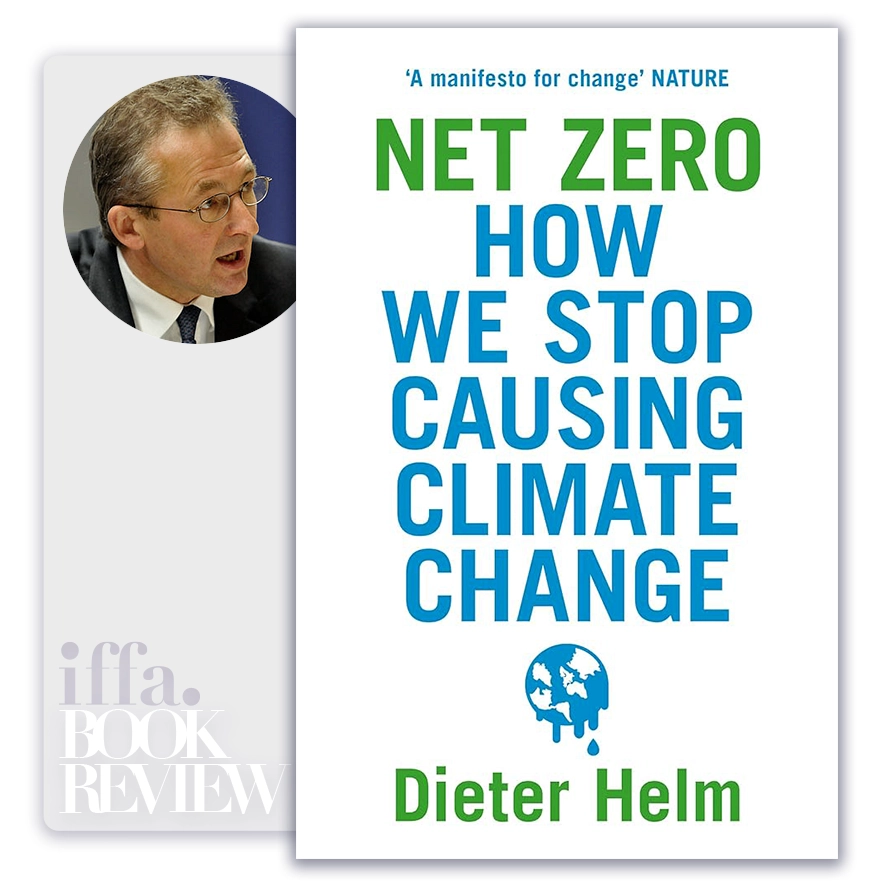
by Dieter Helm
Summary Overview:
“Net zero” has become one of the most widely adopted—and most poorly understood—policy goals of the modern era. Governments, corporations, and financial institutions commit to it enthusiastically, yet emissions continue to rise, costs escalate, and public trust erodes. Net Zero confronts this disconnect head-on. Dieter Helm argues that most current net-zero strategies are economically flawed, politically fragile, and physically unrealistic.
This book matters because climate policy has moved from aspiration to systemic transformation, affecting energy systems, infrastructure, trade, industry, and living standards. Helm does not deny climate change or the need for action; instead, he challenges how action is being pursued. He shows that poorly designed net-zero pathways risk higher energy costs, deindustrialization, social backlash, and failure to reduce global emissions. For executives and policymakers, Net Zero provides a hard-nosed, systems-based framework for achieving climate goals without undermining economic and social stability.
About The Author
Dieter Helm is a leading British economist specializing in energy, climate policy, and infrastructure. He has advised governments and regulatory bodies and is known for combining economic realism with environmental urgency.
Helm’s credibility lies in his refusal to trade rigor for popularity. He approaches climate change not as a moral slogan, but as a complex economic and engineering problem that demands disciplined thinking, honest trade-offs, and long-term planning.
Core Idea:
The central thesis of Net Zero is blunt and provocative:
We will not achieve net zero by focusing only on emissions targets, renewables expansion, and consumer behavior. We must redesign the entire energy and industrial system—starting with supply, not demand.
Helm argues that current net-zero approaches suffer from:
- Overreliance on intermittent renewables
- Neglect of system costs and reliability
- Unrealistic assumptions about consumer sacrifice
- Excessive focus on territorial emissions
- Ignoring imported carbon and global supply chains
True net zero requires structural change, not incremental policy layering.
Net zero without firm power and carbon capture is fantasy.
Key Concepts:
- Net Zero Is a System Problem, Not a Target
Helm emphasizes that climate change is driven by stock (accumulated carbon), not flow (annual emissions).
Targets do not cut emissions—systems do. Focusing on dates and percentages distracts from the real challenge: replacing fossil-fuel-based systems with zero-carbon ones at scale.
- Supply Comes First—Demand Follows
One of the book’s most important arguments is that decarbonization must start with clean, reliable energy supply.
Current policy often:
- Penalizes consumption
- Raises prices to curb demand
- Assumes behavioral change
Helm argues this is politically unsustainable.
People will not accept lower living standards for climate goals—nor should they have to. Abundant clean energy enables decarbonization without coercion.
- The Myth of Cheap Renewables
While renewables are cheap at the point of generation, Helm shows that system costs are often ignored:
- Grid reinforcement
- Backup capacity
- Storage
- Balancing and intermittency
What matters is not the cost of electricity—but the cost of the system. Ignoring these costs leads to unreliable grids and rising consumer prices.
- Nuclear, CCS, and Hard Choices
Helm challenges the selective technology preferences of many climate strategies.
He argues that:
- Nuclear power is essential for firm, zero-carbon supply
- Carbon capture and storage (CCS) is unavoidable for industry
- Hydrogen must be produced cleanly, not assumed clean
Net zero without firm power and carbon capture is fantasy. Ideological opposition to certain technologies increases cost and risk.
- Carbon Offsets and the Accounting Illusion
The book is highly critical of offsets and net-zero accounting tricks.
Problems include:
- Double counting
- Questionable permanence
- Weak additionality
- Greenwashing
Offsetting emissions is not the same as eliminating them. Helm insists that real net zero means stopping emissions at source, not compensating for them elsewhere.
- Consumption, Imports, and Carbon Leakage
A major blind spot in climate policy is imported carbon.
Countries can cut domestic emissions by:
- Offshoring industry
- Importing carbon-intensive goods
You cannot decarbonize by exporting emissions. Helm advocates consumption-based carbon accounting and border carbon adjustments to prevent leakage.
- The Role of the State and Long-Term Planning
Markets alone will not deliver net zero at the required scale or speed.
Helm argues for:
- Strategic state planning
- Public investment in infrastructure
- Stable policy frameworks
- Long-term contracts
Net zero is a public-goods problem—and markets need structure to deliver it. Short-termism is incompatible with system transformation.
- Natural Capital and Carbon Sinks
The book expands net zero beyond energy to include:
- Forests
- Soils
- Wetlands
Nature-based solutions matter—but only when:
- Properly measured
- Maintained over time
- Integrated with emission reductions
Nature can help—but it cannot substitute for decarbonization.
- Costs, Distribution, and Political Reality
Helm stresses that who pays determines whether net zero survives politically.
Badly designed policies:
- Hit lower-income households hardest
- Fuel populist backlash
- Undermine climate consensus
A transition that is unfair will not last. Cost transparency and fair burden-sharing are essential.
- From Climate Targets to Climate Delivery
Ultimately, Net Zero is a call to shift from ambition to execution.
Helm argues for:
- Fewer slogans
- More engineering
- Clear cost accounting
- Honest trade-offs
The climate problem is solvable—but not with wishful thinking.
A transition that is unfair will not last.
Executive Insights:
Net Zero reframes climate action as economic and infrastructure strategy, not moral signaling.
Strategic Implications for Leaders and Policymakers:
- System design matters more than targets
- Supply-side decarbonization is foundational
- Firm power is essential
- Offsets cannot replace real reductions
- Carbon leakage undermines progress
- State planning must complement markets
- Fair cost distribution is critical
- Political sustainability determines climate success
Actionable Takeaways:
Helm’s framework translates into concrete leadership action.
Practical Actions for Executives and Policymakers:
- Focus on building zero-carbon supply
- Account for full system costs
- Invest in firm power and CCS
- Design policy for reliability and affordability
- Measure consumption-based emissions
- Avoid overreliance on offsets
- Plan infrastructure decades ahead
- Communicate trade-offs honestly
- Align climate goals with industrial strategy
Final Thoughts:
Net Zero is a necessary corrective to climate optimism untethered from reality. Dieter Helm does not argue against climate action—he argues for climate action that actually works.
The book’s ultimate message is both urgent and practical:
Net zero is achievable only if we replace fossil-fuel systems—not if we merely penalize their use.
For leaders navigating climate commitments, energy security, industrial competitiveness, and social cohesion, Net Zero offers a foundational truth:
The success of climate policy will be judged not by promises made—but by systems built and emissions eliminated.
The ideas in this book go beyond theory, offering practical insights that shape real careers, leadership paths, and professional decisions. At IFFA, these principles are translated into executive courses, professional certifications, and curated learning events aligned with today’s industries and tomorrow’s demands. Discover more in our Courses.
Applied Programs

- Course Code : SBM-409
- Delivery : In-class / Virtual / Workshop
- Duration : 2-4 Days
- Venue: DUBAI HUB

- Course Code : PMA-613
- Delivery : In-class / Virtual / Workshop
- Duration : 3-5 Days
- Venue: DUBAI HUB

- Course Code : CIF-505
- Delivery : In-class / Virtual / Workshop
- Duration : 3-5 Days
- Venue: DUBAI HUB

- Course Code : CIF-512
- Delivery : In-class / Virtual / Workshop
- Duration : 2-4 Days
- Venue: DUBAI HUB
Related Books